
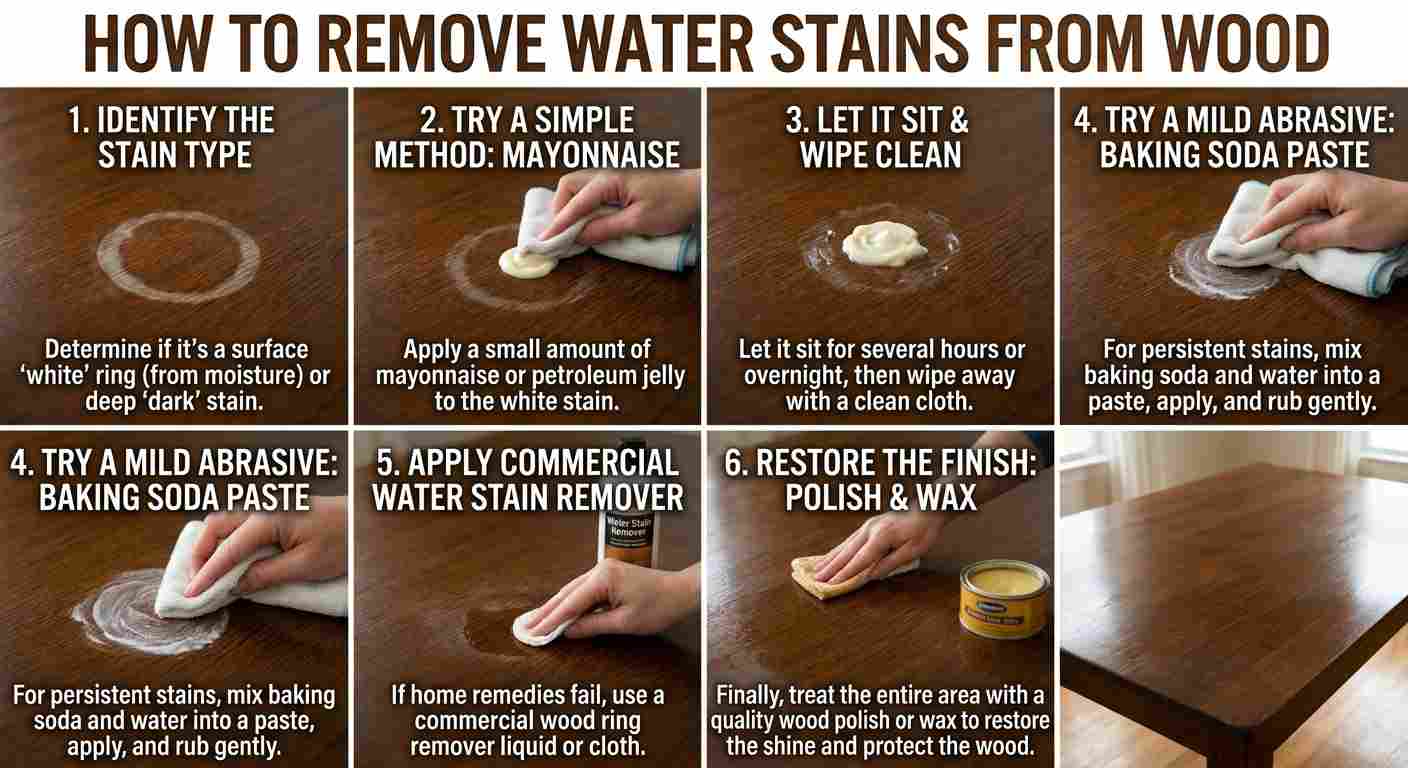
If you’ve ever lifted a coffee mug off a wooden table and found a pale ring underneath, you know how frustrating water stains can be. The good news: learning how to remove water stains from wood is usually simpler than people expect. In most cases, you won’t need to sand, refinish, or replace anything. With a bit of patience and a few kitchen staples, that mark can often disappear within an hour.
Why Wood Gets Water Stains in the First Place
Wood finishes protect the surface, but they’re not invincible. A damp glass or a spilled drink can sit too long, and moisture starts working its way into the finish. That trapped moisture scatters light differently than the surrounding surface, which creates the cloudy white ring you see. Over time, moisture can push past the finish and reach the wood fibers themselves. That’s when stains turn darker and harder to treat. This difference is the real starting point for how to remove water stains from wood effectively, since the method you choose depends on how deep the damage goes.
White Stains vs. Dark Stains: Why the Difference Matters
Before you try any remedy, look closely at the mark. A white or hazy ring almost always means water is sitting in the finish, not the wood itself. That makes it the easier of the two to fix. A dark or blackish stain tells you something different: moisture has broken through the finish and soaked into the grain. Treating a dark stain like a white one usually won’t work. This quick check helps you pick the right approach when you’re figuring out how to remove water stains from wood in your own home.
Simple Household Methods for Fresh or Light Stains
For light, white water stains, a few household tricks work surprisingly well. Spread a thin layer of mayonnaise or petroleum jelly over the mark. Let it sit for several hours, or overnight for stubborn spots. The oil helps draw out trapped moisture. A paste of baking soda and a little water, rubbed gently with the wood grain, can lift milder stains too. Non-gel white toothpaste is another option many people swear by. Apply it sparingly, then wipe it away with a damp cloth. These are some of the gentlest ways how to remove water stains from wood without risking the finish, which is why they’re worth trying first.
Using Heat to Lift a Water Ring
Heat works well too, especially on stains that are only a few hours or days old. Set a hair dryer to medium heat. Hold it a few inches from the stain and move it constantly for two to three minutes. The heat evaporates trapped moisture right out of the finish. Some people use a clothes iron over a dry cotton cloth instead, applying short bursts of heat and checking often so the wood doesn’t scorch. This method draws moisture out rather than masking it, which is why it’s a go-to step in most guides on how to remove water stains from wood without causing damage.
Tackling Dark or Deep-Set Stains
Dark stains call for more patience. The moisture has already reached the wood fibers, so surface treatments like mayonnaise or heat often don’t do much. Try a specialized wood cleaner or a commercial wood restorer instead. These products pull discoloration out while reviving the surrounding finish. For stubborn marks, very fine sandpaper or oxalic acid-based wood bleach can help; both are available at most hardware stores. Always sand with the grain, and test any product on a hidden spot first. If you’re working on an antique or a high-value piece, research a dedicated resource before you start. This detailed guide from HowStuffWorks on treating wood water damage covers several deeper-stain techniques in more detail.
Restoring the Shine After the Stain Is Gone
Once the stain lifts, the wood underneath can look a little dull next to the rest of the piece. That’s normal — most stain-removal methods strip away some existing polish along with the moisture. Apply a light coat of furniture wax or a silicone-free polish, then buff it in with a soft cloth. This usually brings the shine back and blends the treated area into the rest of the surface. Skipping this step is one of the most common reasons people feel like the problem isn’t fully solved, even after the mark is gone.
Preventing Water Stains Before They Start
Once you’ve learned how to remove water stains from wood, you’ll probably want to avoid doing it again. Coasters and placemats offer the simplest fix. A few other habits help too: wipe up spills right away, keep furniture away from constant humidity, and reapply wax or polish every month or two. Well-sealed, well-cared-for wood naturally resists staining, so you’ll spend less time treating marks later.
When It’s Time to Call a Professional
Most water stains, even stubborn dark ones, respond well to the methods above. But watch for warning signs: if the wood feels soft or warped, or the stain keeps returning after treatment, you may be dealing with deeper water damage. At that point, a professional furniture restorer can assess whether the piece needs refinishing or more serious repair — especially worth considering for antiques or sentimental pieces.