
Turmeric is a kitchen staple loved for its flavor and golden color. But that same pigment, called curcumin, is what makes it so hard to clean. If you’ve ever spilled curry or splashed turmeric powder, you know the panic that follows.
The good news is that learning how to remove turmeric stains isn’t hopeless. With the right approach, most stains can be lifted completely. It just takes a bit of patience.
Why Turmeric Stains Are So Stubborn
Curcumin is a dye. Like most dyes, it binds tightly to porous materials like cotton, grout, and skin. Heat and sunlight can actually set the stain further.
This is why throwing a turmeric-stained shirt in the dryer is a bad idea. Acting quickly matters more than scrubbing hard. Choosing the right method matters even more.
How to Remove Turmeric Stains From Clothes
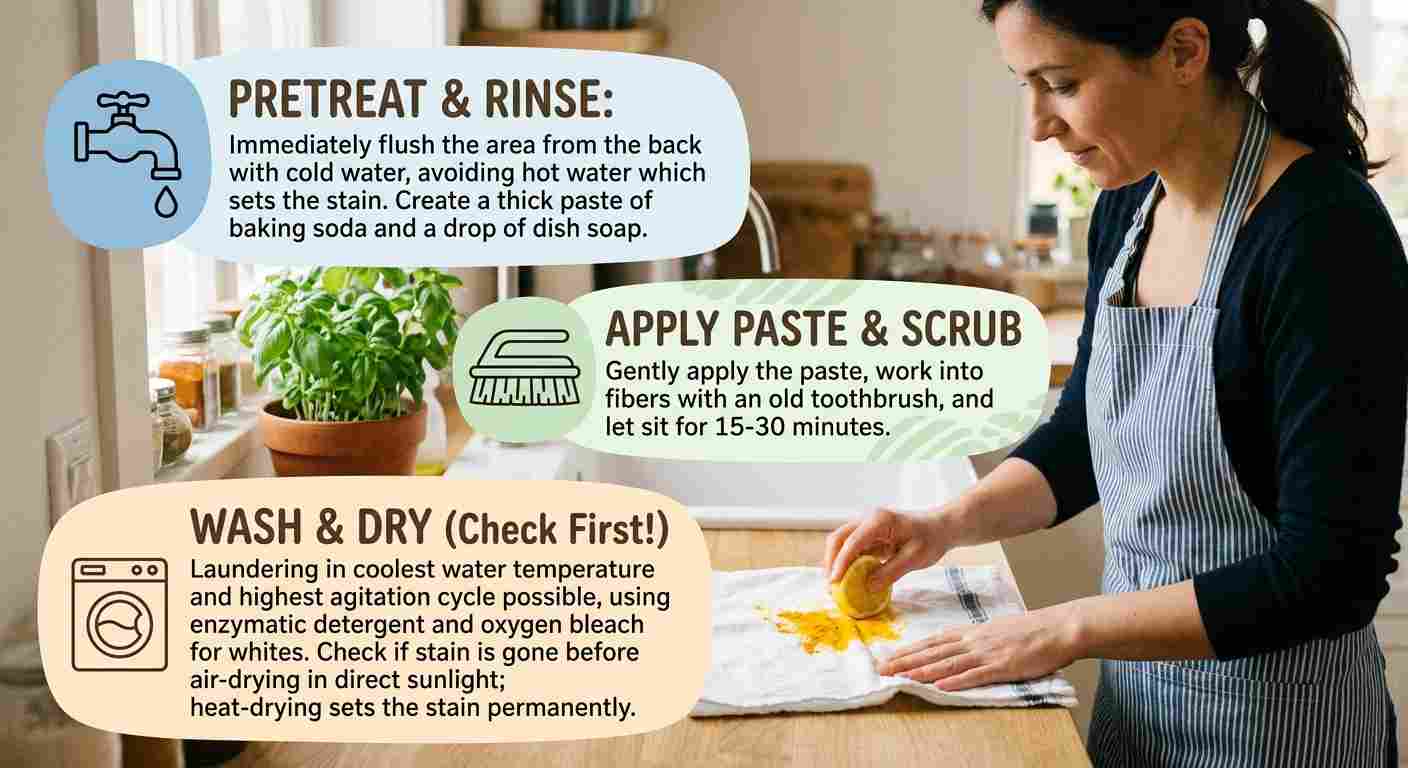
For fabric, avoid hot water until the stain is gone. Heat locks the pigment into the fibers. Start by rinsing the stain under cold water, working from the back of the fabric.
This pushes turmeric out instead of further in. Next, apply liquid dish soap or a stain remover directly onto the mark. Gently work it in with your fingers or a soft brush.
Let it sit for about fifteen minutes before washing as usual. Sunlight can help too. Laying the damp, pre-treated garment outdoors for a few hours bleaches out leftover color naturally.
If the stain persists after washing, check Good Housekeeping’s stain removal guide. It has fabric-specific tips, including advice for delicate materials like silk and wool.
How to Remove Turmeric Stains From Skin
Skin stains need a gentler approach since harsh chemicals aren’t an option. Mix baking soda with a little water into a paste. Massage it over the stained area for a minute or two, then rinse.
Oil-based removers also work well. Coconut oil or even cooking oil can help, since curcumin binds more easily to oil than water. This makes oil surprisingly effective at lifting the color.
Turmeric stains on skin usually fade within a day or two on their own. This happens naturally as skin cells turn over. Don’t scrub hard if a method doesn’t work right away. For more on skin pigments and safe exfoliation, the American Academy of Dermatology is a solid resource.
How to Remove Turmeric Stains From Kitchen Counters
Countertops and cutting boards hold onto turmeric color easily. Baking soda paste is one of the best tools here. Mix it with water into a thick paste.
Spread it over the stain and let it sit for ten to fifteen minutes. Then scrub gently with a damp cloth. For plastic containers, sunlight works wonders.
Placing them outdoors for a few hours bleaches out the yellow tint. UV light breaks down the curcumin pigment over time. White vinegar is another good option for stone or laminate counters. Its mild acidity lifts stains without damaging the surface.
How to Remove Turmeric Stains From Carpets and Upholstery
Carpets and upholstery need extra care since you can’t rinse them. Blot the spill right away with a clean, dry cloth. Never rub, since rubbing pushes the stain deeper into the fibers.
Once blotted, mix one part dish soap with two parts warm water. Dab the solution onto the stain, then blot with a fresh cloth. Repeat until the color lifts.
For tougher, set-in stains, try glycerin mixed with water. Apply it overnight before washing to loosen the pigment. Always test any solution on a hidden patch first, so you avoid discoloring the carpet further.
Tips to Prevent Turmeric Stains in the Future
Knowing how to remove turmeric stains is useful, but prevention saves time. Wear an apron while cooking with turmeric. Use a splash guard on pots to limit spills.
Wipe up spills the moment they happen. Keeping a dedicated “turmeric cloth” in the kitchen is a simple trick many cooks use. It takes the pressure off your good towels.
If spills are a regular problem, switch your storage. Use a container with a tight pour spout instead of a wide-mouthed jar. This small change cuts down on accidental messes significantly.
Turmeric stains feel permanent when they happen, but they rarely are. Quick action and the right combination of cold water, baking soda, dish soap, and sunlight handle most of them. The key is matching the method to the surface and acting before the stain sets.