How to Use Vinegar to Get Rid of Weeds in Driveway and Sidewalk Cracks
If you’ve ever looked down at your driveway and noticed stubborn green sprouts pushing through the concrete, you already know how annoying they can be. The good news is that you don’t need harsh chemicals to deal with them. Learning how to use vinegar to get rid of weeds in driveway and sidewalk cracks is one of the easiest, cheapest, and safest ways to reclaim your outdoor space, and most people already have everything they need sitting in the kitchen cupboard.
Why Vinegar Works So Well on Weeds
Vinegar works because of its acetic acid content, which draws moisture out of plant leaves and stems on contact. Once the leaves dry out, the plant loses its ability to photosynthesize and eventually dies. This is exactly why so many homeowners turn to vinegar when they want to know how to use vinegar to get rid of weeds in driveway and sidewalk cracks without reaching for a bottle of synthetic herbicide. According to research from Oklahoma State University’s extension program, household vinegar with 5% acetic acid can effectively burn back young, tender weeds, while stronger horticultural vinegar works on tougher growth. If you want a deeper look at how acetic acid affects plant cells, the EPA’s pesticide fact sheets explain the science in more detail.
What You’ll Need Before You Start
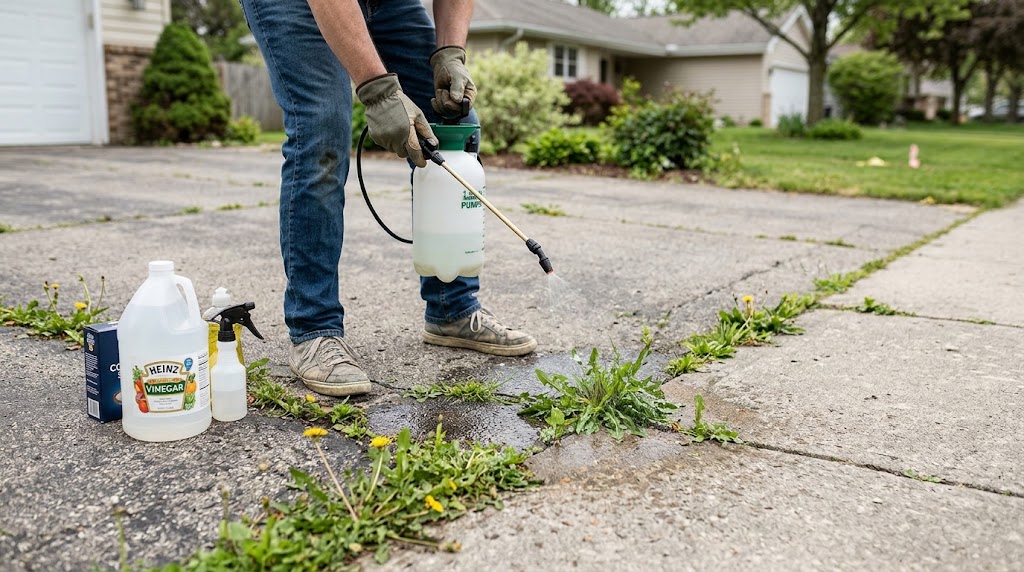
Before jumping into how to use vinegar to get rid of weeds in driveway and sidewalk cracks, gather a few simple supplies. You’ll want plain white household vinegar or, for faster results, horticultural vinegar with a higher acetic acid concentration. A spray bottle or a pump sprayer makes application much easier than pouring vinegar straight from the jug. A small funnel helps if you’re mixing dish soap into the solution, which helps the vinegar stick to narrow leaves instead of rolling off. Gloves are a good idea too, since vinegar can irritate skin with repeated contact. If you’re curious about other natural cleaning solutions you already have at home, our guide on eco-friendly cleaning hacks covers several household staples worth keeping on hand.
Step-by-Step: How to Use Vinegar to Get Rid of Weeds in Driveway and Sidewalk Cracks
The actual process is refreshingly simple. Pick a dry, sunny day, since rain will wash the vinegar away before it has time to work and sunlight speeds up the wilting process. Pour undiluted white vinegar into your sprayer, add a teaspoon of dish soap per cup of liquid, and shake gently to combine. Spray the mixture directly onto the leaves and stems of the weeds growing in your driveway or sidewalk cracks, making sure to soak the foliage thoroughly rather than just misting it. Within a few hours on a hot day, you should start seeing the leaves wilt and brown. For anyone still working out how to use vinegar to get rid of weeds in driveway and sidewalk cracks for the first time, it helps to treat weeds in the early morning so the solution has the whole day to bake into the leaves under direct sun.
Tips for Better Results
A few small adjustments can make a big difference. Using a stronger horticultural vinegar, typically around 20% acetic acid, tends to kill weeds faster than regular kitchen vinegar, though it should be handled carefully since it’s more corrosive. Reapplying every few days until the roots give up is often necessary for perennial weeds with deeper root systems, since a single spray mostly damages the visible leaves rather than the root. Targeting weeds while they’re still small and before they flower or go to seed also makes the vinegar method far more effective, since mature weeds have tougher tissue that resists wilting. If your property also deals with pests near these same cracks and crevices, you might find our article on natural pest control tips helpful alongside your weed-control routine.
Things to Keep in Mind
Vinegar is a non-selective treatment, which means it will damage or kill any plant it touches, not just weeds. Be careful when spraying near grass, flower beds, or garden borders, since overspray can harm plants you actually want to keep. It’s also worth noting that vinegar lowers the pH of the soil it lands on, so repeated heavy use in the same spot over time can affect what grows there afterward. Because of this, most people reserve vinegar specifically for hardscape areas like driveways, sidewalks, and patio cracks rather than open garden beds. If you’re rethinking your whole yard’s upkeep, our piece on lawn and garden care walks through how to balance natural treatments with the rest of your outdoor maintenance.
Keeping Weeds From Coming Back
Once you’ve cleared the weeds, a little prevention goes a long way. Sweeping loose dirt and debris out of cracks regularly removes the organic matter that gives new weed seeds a place to take root. Sealing driveway cracks with a basic concrete filler closes off the gaps weeds rely on to grow in the first place. Spot-treating any new sprouts the moment you see them, rather than waiting for a full infestation, keeps the job small and manageable. Many homeowners find that once they’ve mastered how to use vinegar to get rid of weeds in driveway and sidewalk cracks, a quick monthly check-and-spray routine is all it takes to keep their pavement looking clean for the rest of the season.