The Best Nuts and Seeds to Feed Birds in Winter—and Keep Them Coming Back
Cold mornings bring hungry visitors to the feeder. What you put out decides whether they stay or move along. If you want to find the best nuts and seeds to feed birds in winter—and keep them coming back—start with how a bird’s body works. Small songbirds burn through fat reserves overnight just to stay warm. They need food that packs calories and sits somewhere easy to find at first light. That’s the whole secret behind the best nuts and seeds to feed birds in winter—and keep them coming back: give them something worth the trip.
Why Fat and Calorie Content Matter More Than Variety
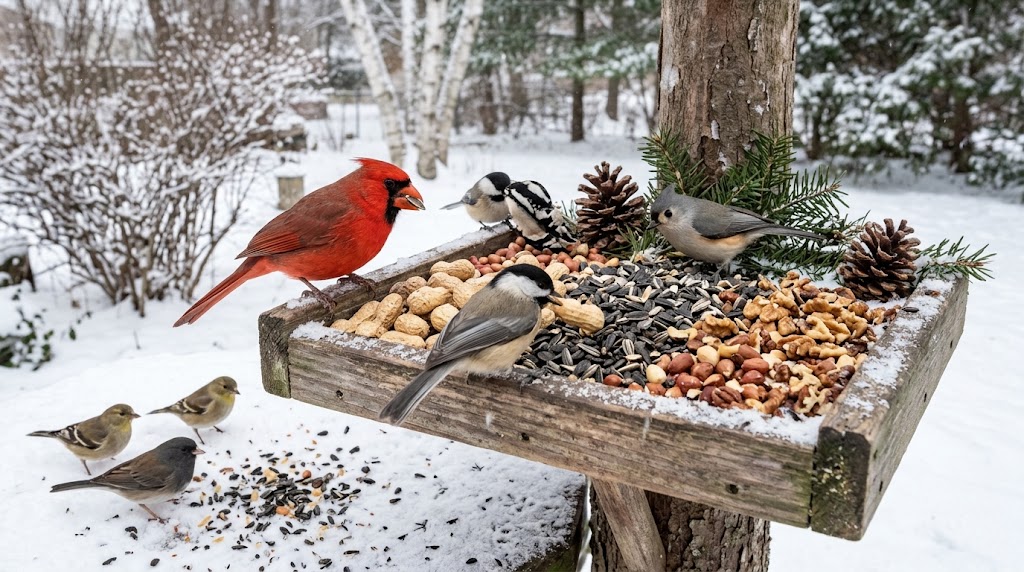
A lot of people grab whatever seed mix looks cheapest at the store. That’s usually a mistake. Birds eat efficiently, and they skip filler ingredients to reach the good stuff. Black oil sunflower seeds are a reliable favorite. Their thin shells crack easily, and the kernel inside carries plenty of fat. Peanuts do something similar, whether whole, shelled, or chopped. Woodpeckers, jays, and chickadees especially go for them. The Cornell Lab of Ornithology notes that high-fat foods like these help small birds survive long, cold nights. If you want the best nuts and seeds to feed birds in winter—and keep them coming back, swap cheap filler mixes for sunflower and peanut-heavy blends.
Nyjer Seed for Finches and Smaller Songbirds
Maybe goldfinches or pine siskins skip your feeder entirely. The seed might be the problem. These smaller birds prefer nyjer, sometimes called thistle seed. It’s tiny and oil-rich, and it needs a feeder with small ports so it doesn’t spill out. It’s a bit of a specialty item. Still, it’s worth the investment if finches visit your yard often. Try pairing nyjer with sunflower hearts in a separate feeder. This trick ranks among the best nuts and seeds to feed birds in winter—and keep them coming back, since it serves multiple bird sizes without one seed type taking over.
Suet and Nut Blends for Woodpeckers and Nuthatches
Suet cakes mixed with nuts are a winter staple for a reason. They combine rendered fat with chopped peanuts, walnuts, or almonds. Birds get a concentrated energy source they can chip away at over several visits. Woodpeckers, nuthatches, and chickadees especially seek these blends out. They also hold up well in freezing weather, unlike softer foods that spoil or freeze solid. Building a winter feeding station from scratch? A suet-and-nut combination is one of the easiest wins on any list of the best nuts and seeds to feed birds in winter—and keep them coming back.
Safflower Seed: The Squirrel-Resistant Option
Squirrels often clean out a feeder before birds get a chance at it. Safflower seed offers a clever workaround. Cardinals and chickadees eat it happily. Squirrels and some less-welcome birds tend to avoid it because of its bitter taste. It’s not the flashiest choice, but it solves a real problem. If squirrel raids keep emptying your feeder, safflower deserves a spot among the best nuts and seeds to feed birds in winter—and keep them coming back without a daily refill.
Keeping Food Fresh and Feeders Accessible
None of these seeds matter much if they sit wet or moldy in a clogged feeder. Winter weather turns seed soggy fast. Clumped, damp seed can even make birds sick. Check feeders every few days. Scrape out any wet buildup, and keep feeders somewhere sheltered from direct wind and snow. A little maintenance goes a long way. It makes sure the best nuts and seeds to feed birds in winter—and keep them coming back actually get eaten instead of wasted. If you enjoy practical, family-friendly outdoor projects like this one, check out our guide to simple backyard activities for kids on Edgabicated for more ideas on turning feeder-watching into a family morning ritual.
Building a Routine Birds Can Count On
Birds are creatures of habit. Once they find a reliable food source, they return daily and often bring others along. Try to refill feeders around the same time each morning. That consistency often separates an occasional feeder stop from a spot on a flock’s regular route. Combine a few different offerings — sunflower seed, peanuts, suet, and the occasional nyjer refill — to attract the widest range of visitors. The National Audubon Society also suggests keeping water nearby, even a shallow heated dish, to make your yard more appealing in freezing months. For more seasonal ideas for your outdoor space, visit Edgabicated’s home and garden section too.
Winter feeding doesn’t have to be complicated. Stock the right mix, keep it fresh, and stay consistent. You’ll earn a reliable audience of regulars for the whole season.