Why Crows Suddenly Take Over a Yard
If you’ve noticed more black wings overhead than usual, you’re not imagining it. Crows are smart, social, and endlessly opportunistic, and once they decide your yard is worth visiting, they tend to stick around. What to do if crows have taken over your yard, according to bird experts, starts with understanding why they showed up in the first place. Crows follow food, water, and safe roosting spots, and a yard that offers all three quickly becomes a regular stop on their daily rounds. Open trash cans, unattended pet food, fruit trees, and bird feeders are common invitations you may not even realize you’ve extended.
Signs You’re Dealing With More Than a Few Visitors
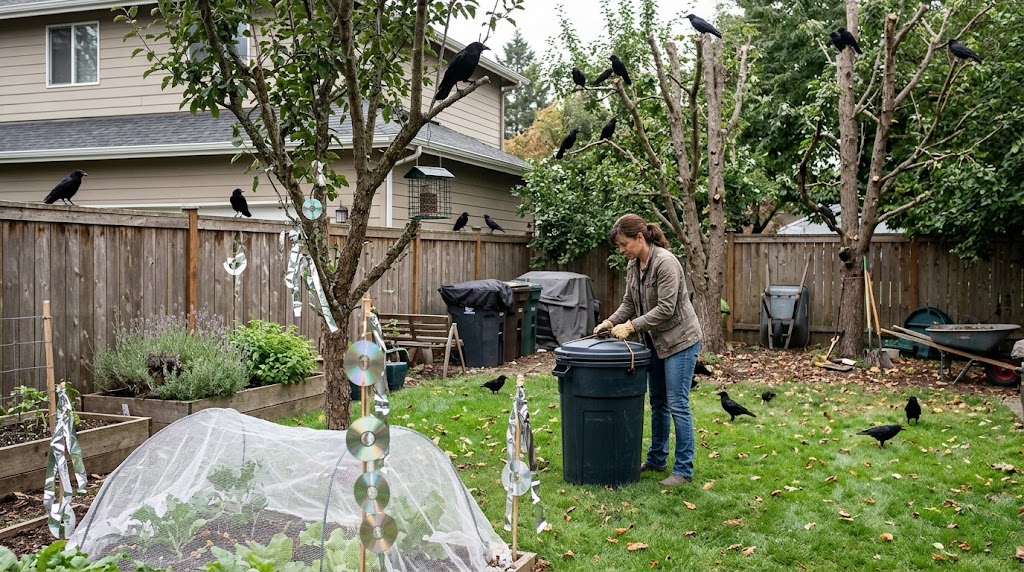
A couple of crows passing through is normal. A full takeover looks different: loud group calls at dawn, birds returning to the same trees night after night, and noticeable mess on your lawn, patio, or car. Ornithologists note that crows are famously social, often traveling and roosting in family groups, which is why one visit can quickly turn into a dozen birds claiming your space as their own. If you’re trying to figure out exactly what to do if crows have taken over your yard, according to bird experts, the first step is simply watching their patterns for a few days before acting.
What to Do If Crows Have Taken Over Your Yard, According to Bird Experts
Wildlife specialists consistently point to one truth: you can’t out-stubborn a crow, but you can out-smart one. According to researchers at the Cornell Lab of Ornithology, crows are among the most intelligent birds in North America, capable of problem-solving and remembering faces for years. That means a single scare tactic used once won’t work twice. Experts recommend combining several strategies — removing attractants, varying your deterrents, and protecting specific areas like gardens or patios — rather than relying on one fix. Consistency matters more than intensity here, since crows adapt quickly to anything predictable.
Remove the Food Sources That Keep Them Coming Back
The single most effective step is cutting off their food supply. Secure trash cans with locking lids, pick up fallen fruit promptly, and bring pet food indoors overnight. If you keep a backyard garden, a lightweight row cover or netting can protect vulnerable crops without harming the birds. For families who already manage a yard full of outdoor gear and play equipment, this is also a good moment to check our guide on organizing a family-friendly backyard for tips on tidy storage that doubles as crow-proofing.
Use Sound and Visual Deterrents Crows Actually Notice
Reflective tape, scarecrow decoys, and predator silhouettes can work, but only when moved or rotated regularly. The National Wildlife Federation notes that crows quickly learn to ignore static objects, so experts suggest shifting decoys every few days and pairing them with occasional loud noise, like a clap or an air horn, rather than constant sound machines. If you’re also dealing with other backyard visitors, our piece on keeping squirrels and raccoons out of garden beds covers overlapping strategies that work well alongside crow deterrents.
When to Call a Wildlife Professional
In most cases, a combination of removing food sources and rotating deterrents solves the problem within a couple of weeks. But if crows are nesting directly on your property, becoming aggressive, or you’re dealing with dozens of birds rather than a handful, it may be time to bring in a licensed wildlife control professional. Crows are protected under the Migratory Bird Treaty Act in the United States, so nests and eggs generally cannot be disturbed without proper authorization — another reason experts recommend professional guidance for larger infestations rather than DIY removal.
Living Alongside Crows Long-Term
Crows aren’t going anywhere, and in many neighborhoods, that’s not a bad thing — they help control insects and scavenge waste that might otherwise attract less welcome wildlife. Once you’ve addressed the immediate problem, maintaining a crow-free yard is mostly about habit: secure bins, tidy fruit trees, and the occasional deterrent rotation. If your family spends a lot of time outdoors, pairing this with our guide to creating low-maintenance outdoor spaces can help keep your yard both bird-smart and genuinely enjoyable. Ultimately, knowing what to do if crows have taken over your yard, according to bird experts, comes down to patience, variety, and a little consistency — and most households see real results within a few weeks of following these steps.