
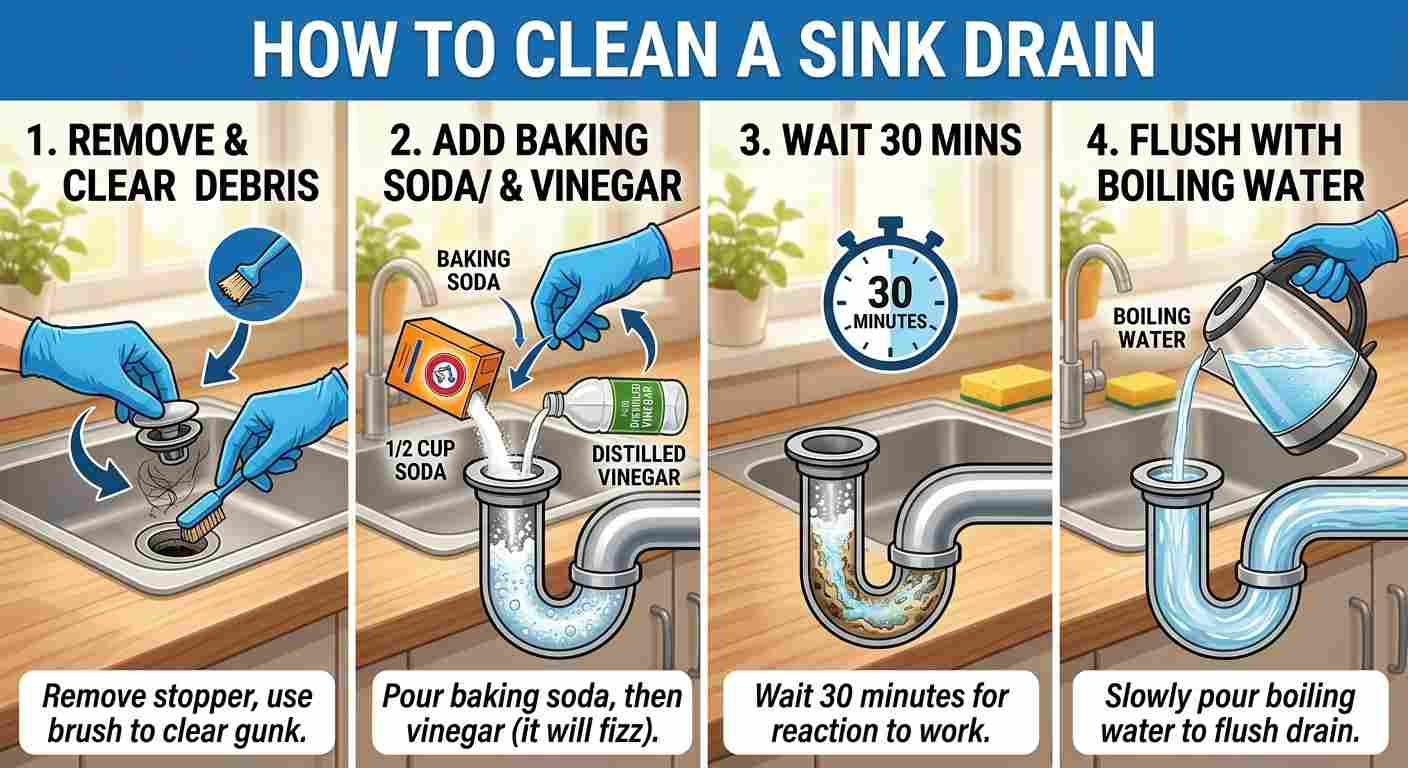
If your sink is draining slower than usual or you’ve noticed a funky smell creeping up from the plughole, you’re not alone — it’s one of the most common household headaches. The good news is that how to clean a sink drain properly doesn’t require a cabinet full of chemical cleaners or a call to a plumber every time. With a few things you probably already have at home, you can tackle most clogs yourself in under half an hour.
Why Your Sink Drain Gets Dirty in the First Place
Before jumping into how to clean a sink drain, it helps to understand what’s actually building up in there. In kitchen sinks, grease, food particles, and coffee grounds combine and harden along the pipe walls. In bathroom sinks, it’s usually hair, soap scum, and toothpaste residue. Over time, this buildup narrows the pipe, slows drainage, and creates the perfect environment for bacteria — which is where that unpleasant odor comes from. Knowing the cause makes it a lot easier to pick the right cleaning method and stop the problem from coming back.
How to Clean a Sink Drain With Baking Soda and Vinegar
This is the method most people reach for first, and for good reason — it’s cheap, safe for your pipes, and genuinely effective for everyday buildup. Start by pouring a kettle of boiling water down the drain to loosen any grease. Follow with half a cup of baking soda, then half a cup of white vinegar. You’ll hear it fizz immediately — that reaction is what helps break apart grime clinging to the pipe walls. Cover the drain with a cloth or stopper for about 15 minutes to keep the fizzing action contained, then flush it through with more hot water. The EPA’s Safer Choice program actually recognizes baking soda and vinegar-based solutions as safer alternatives to many commercial drain cleaners, which makes this a solid first step whenever you’re figuring out how to clean a sink drain without exposing yourself to harsh fumes.
How to Clean a Sink Drain With Just Boiling Water
Sometimes the simplest fix is the best one. If your clog is mostly grease-based — common in kitchen sinks — boiling water alone can do a surprising amount of work. Pour it down slowly, in two or three stages, giving it time to melt and move the grease along the pipe rather than just sitting on top of it. This isn’t a fix for serious blockages, but as a regular maintenance habit, it’s one of the easiest ways to keep learning how to clean a sink drain into something you barely have to think about.
Using a Drain Snake or Zip Tool for Stubborn Clogs
When baking soda and vinegar don’t quite cut it, a plastic drain snake (sometimes called a zip tool) is your next move. These inexpensive tools slide down the drain and have small barbs along the side that grab hair, debris, and sludge as you pull them back out. It’s not glamorous work, but it’s often where the actual clog is hiding, especially in bathroom sinks. According to Hunker, mechanical tools like these are a safer long-term option than relying on chemical cleaners, which can corrode older pipes with repeated use. If you’re serious about how to clean a sink drain for the long haul, keeping one of these tools under the sink is a smart habit.
How to Clean a Sink Drain to Get Rid of Bad Smells
A slow drain is annoying, but a smelly one is worse. If water is flowing fine but the odor persists, the smell is likely coming from organic matter coating the inside of the pipe rather than an actual blockage. Running the baking soda and vinegar treatment described above usually clears this up. For a stronger refresh, try pouring a cup of white vinegar down the drain and letting it sit overnight before rinsing. Dropping a few citrus peels down the garbage disposal (if you have one) afterward can also leave things smelling noticeably fresher. This is one of the most frequent reasons people search for how to clean a sink drain in the first place, and thankfully, it’s also one of the easiest to solve.
Keeping Your Drain Clear Going Forward
Once you’ve got the drain running clean, a little prevention goes a long way. Use a mesh drain cover to catch hair and food scraps before they go down. Avoid pouring grease or oil down the kitchen sink — let it cool and bin it instead. And make the hot water flush part of your regular cleaning routine, maybe once a week, rather than something you only think about when there’s already a problem. If you’ve bookmarked this guide on how to clean a sink drain, doing a quick maintenance pass monthly will mean you rarely need the drain snake at all. [If you’ve got other home maintenance questions, check out our guide on (link to another post on your site).]
When It’s Time to Call a Plumber
Most clogs respond well to the methods above, but there are signs that mean it’s time to stop DIYing. If multiple drains in your home are backing up at once, if water is draining unusually slowly throughout the house, or if you’re hearing gurgling sounds from other fixtures when you run the tap, you could be dealing with a blockage further down the main line — not something a home remedy will fix. In that case, it’s worth bringing in a professional rather than repeating the same steps and hoping for a different result.
The Bottom Line
Learning how to clean a sink drain really comes down to a few reliable habits: regular hot water flushes, the baking soda and vinegar combo for buildup, a drain snake for anything stubborn, and knowing when a problem is bigger than a DIY fix. Keep at it consistently, and you’ll spend a lot less time standing over a slow-draining sink wondering what went wrong.