
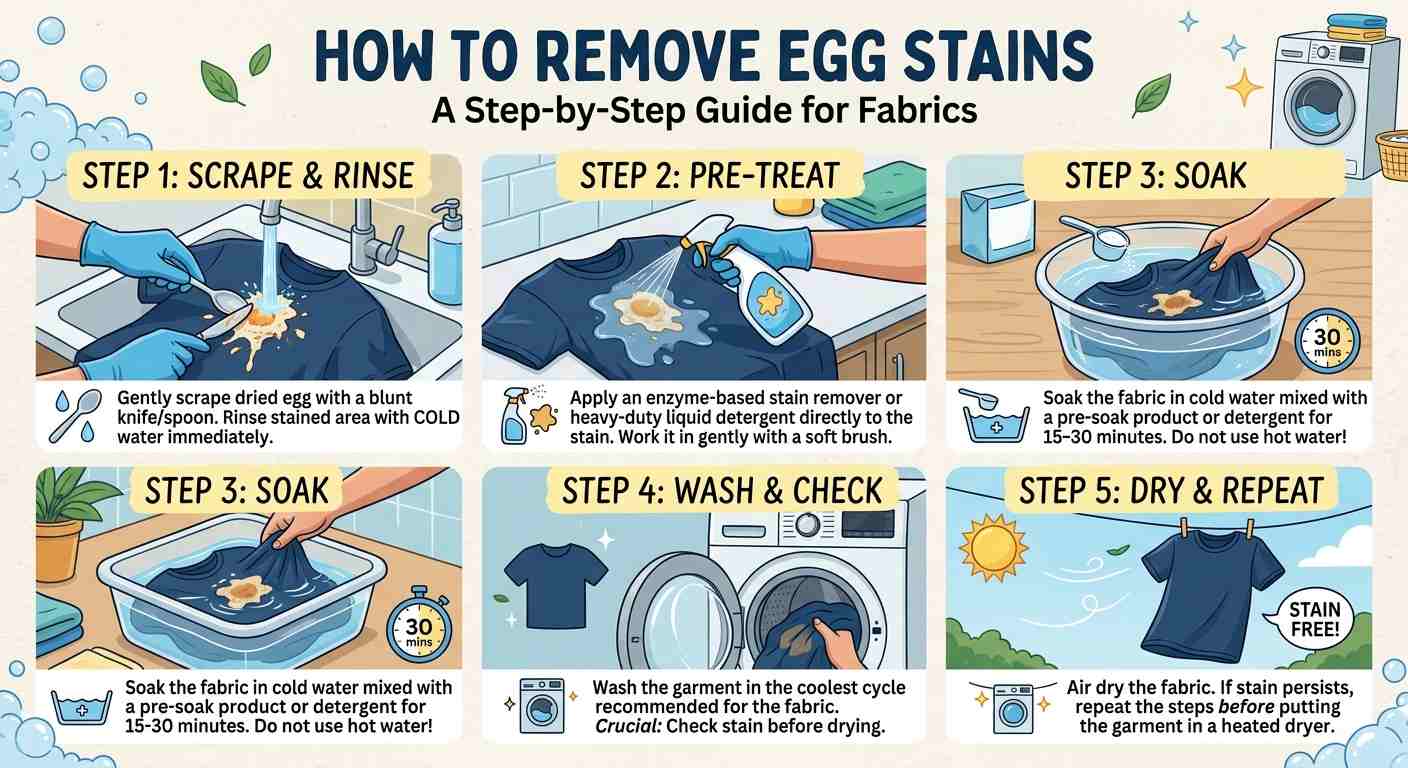
Cracking an egg onto your shirt, carpet, or tablecloth feels like a disaster. But how to remove egg stains isn’t complicated once you know one key fact: egg is mostly protein. Proteins react badly to heat. Get that detail right, and the rest just takes patience and the right products.
Why Egg Stains Are So Stubborn
Egg white is almost pure protein (albumin). Egg yolk adds fat and pigment. Heat makes proteins firm up fast — think of an egg hitting a hot pan. That same reaction happens on fabric. Heat bonds egg protein permanently to fibers and carpet backing. So remember this rule before you touch the stain: never use warm or hot water on fresh egg. Cold water is your best tool from start to finish.
What You’ll Need
You don’t need fancy products to learn how to remove egg stains. Grab a spoon or dull knife. Add a clean white cloth or paper towels. Keep cold running water nearby. A dab of dish soap handles the fatty yolk. An enzyme-based laundry detergent finishes the job. For carpets and upholstery, mix mild dish soap with cool water instead. Enzyme detergents matter most here. Their enzymes break down protein bonds — exactly the chemistry you’re fighting.
How to Remove Egg Stains from Clothes, Step by Step
Scrape off excess egg first. Use the edge of a spoon and work from the outside in. Don’t rub — rubbing pushes protein deeper into the weave. Next, turn the garment inside out. Rinse the stain under cold water, flushing it from the back. This pushes egg out of the fibers instead of further in.
Apply enzyme detergent directly to the stain. Work it in gently with your fingers or a soft brush. For yolk stains, add one drop of dish soap first to break down the fat. Let the detergent sit for 15 to 20 minutes. Then launder on a cold cycle. Check the stain before drying — heat can permanently set any leftover protein. Repeat the treatment if any trace remains. Most professional cleaning resources confirm this cold-water approach, including the laundering guidance from the American Cleaning Institute, a solid reference for unusual fabric types.
How to Remove Dried or Set-In Egg Stains
Dried egg needs a slightly different approach, since the protein has already bonded to the fibers. Start by scraping away crusted residue with a dull knife or soft brush. Work carefully to avoid damaging the fabric. Soak the item in cold water mixed with enzyme detergent for at least 30 minutes. Extend the soak to a couple of hours for stubborn, heat-set stains. Launder in cold water afterward. Inspect the fabric before drying. For tough spots, try an oxygen-based bleach that’s safe for the fabric. Skip chlorine bleach — it reacts with leftover protein and can leave a yellow tint instead of removing it.
How to Remove Egg Stains from Carpet and Upholstery
The same rules apply off the laundry line. Blot — don’t rub — any excess egg with a white paper towel. Lift as much as you can before adding liquid. Mix one tablespoon of dish soap with two cups of cool water. Sponge the solution onto the stain with a clean white cloth. Blot repeatedly until the liquid absorbs. Rinse with plain cold water, then blot dry. This gentle method matches the upholstery guidance from the University of Illinois Extension’s stain removal reference — a great bookmark for food and grease stains beyond egg. Repeat the process if a faint mark remains once the carpet dries. Repetition beats stronger chemicals every time.
Mistakes That Make Egg Stains Worse
Most failed attempts share the same few mistakes. Hot water cooks the protein directly into fibers. Rubbing spreads the stain and drives it deeper. Drying a stained item before the stain is fully gone sets it permanently. Chlorine bleach can discolor fabric instead of cleaning it. Keep the process gentle, cold, and slow. Learning how to remove egg stains becomes far easier once you avoid these traps.
Quick Recap
Remember this sequence for how to remove egg stains: scrape the excess, rinse or blot with cold water, treat with enzyme detergent or mild dish soap, then check before any heat touches the fabric. This same cold-water approach works on shirts, carpets, and tablecloths alike — and it’s far less stressful than the mess first suggests.