
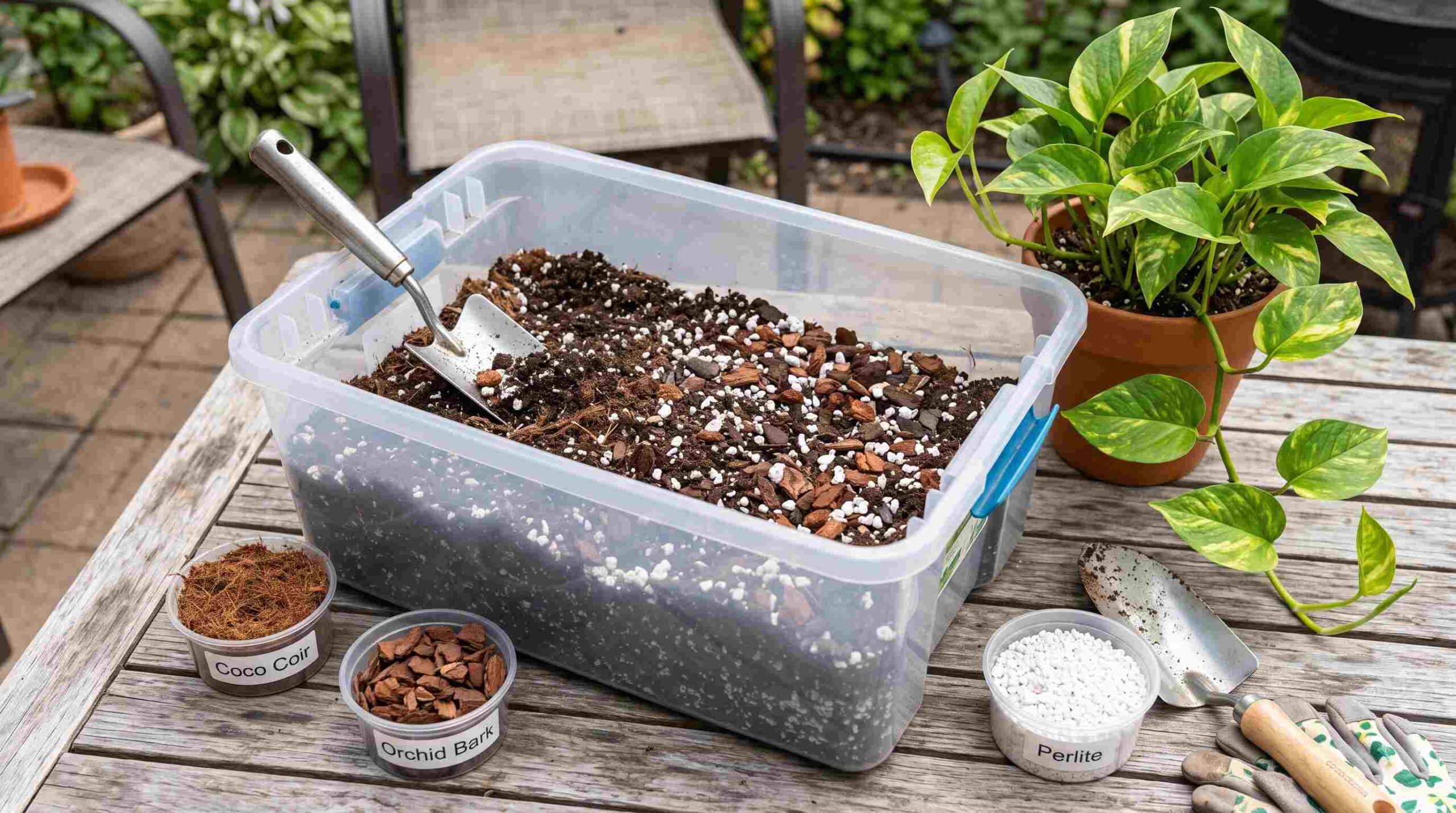
If you’ve ever wondered why your pothos looks a little sad even though you’re watering it on schedule, the soil might be the real problem. Finding the best soil for pothos isn’t complicated, but it does matter more than most new plant owners expect. Pothos is famous for being low-maintenance, yet even the toughest houseplant can struggle in the wrong mix.
In this guide, we’ll walk through what makes a good pothos soil, how to build your own mix at home, and a few mistakes to avoid along the way.
Why the Best Soil for Pothos Matters So Much
Pothos roots are sensitive to sitting in water. In their natural habitat, these plants grow on forest floors and climb trees, rooting in loose, airy organic matter rather than dense, compacted dirt. That’s why the best soil for pothos always prioritizes drainage and airflow over moisture retention.
When soil stays wet for too long, roots can’t breathe, and that’s usually when root rot shows up. A well-draining mix lets water pass through quickly while still holding onto just enough moisture for the roots to absorb what they need.
What Makes Up the Best Soil for Pothos
A good pothos mix usually includes a combination of the following:
Regular potting soil – This forms the base of the mix and holds some moisture and nutrients.
Perlite – These small white particles create air pockets, which helps prevent compaction and improves drainage.
Orchid bark – Chunky bark pieces mimic the natural debris pothos would root into in the wild, and they help keep the mix loose.
Coco coir or peat moss – This adds a bit of moisture retention without making the mix heavy.
Combining these ingredients gives you the best soil for pothos, since no single ingredient on its own does the whole job. According to the Missouri Botanical Garden, golden pothos thrives in soil that drains well and is kept slightly moist rather than soggy, which lines up with the recipe above.
A Simple DIY Recipe
If you want to mix your own instead of buying a pre-made blend, this ratio works well for most pothos varieties:
- 2 parts regular potting soil
- 1 part perlite
- 1 part orchid bark
- A small handful of coco coir
Mix everything together in a bucket or large container until it’s evenly distributed. This combination gives you the best soil for pothos because it balances structure, drainage, and just enough moisture retention to keep your plant happy between waterings.
If you’d rather skip the mixing, many brands now sell pre-made aroid or houseplant mixes that are already close to this ratio. Just check the label for perlite or bark content before buying.
Signs Your Current Soil Isn’t Working
Not sure if your soil is actually the problem? Here are a few clues:
If water pools on top of the soil and takes a long time to drain, your mix is likely too dense. If the soil feels like a brick when dry, it may be compacted and lacking the organic matter pothos needs. Yellowing leaves combined with constantly damp soil often point to poor drainage rather than overwatering itself, since the best soil for pothos should dry out at a reasonable pace, not stay wet for days.
On the other hand, if your soil dries out within a day or two and the plant wilts quickly, it may be too light and could use a bit more potting soil or coco coir to retain moisture.
Repotting Into the Best Soil for Pothos
If you’ve decided your current mix isn’t cutting it, repotting is fairly simple. Gently remove the plant from its current pot, shake off as much old soil as you can, and inspect the roots. Healthy roots are white or light tan and firm. Dark, mushy roots are a sign of rot and should be trimmed away with clean scissors.
Place a layer of your new mix at the bottom of the pot, position the plant, and fill in around the roots with more soil. Avoid packing it down too tightly, since the best soil for pothos needs to stay loose to allow airflow. Water thoroughly after repotting, then let the top inch or two dry out before watering again.
For more detail on watering schedules after a soil change, check out our guide on pothos watering tips over on our tools and plant care resources page.
Pot Choice Matters Too
Soil isn’t the only factor in drainage. A pot without a drainage hole can undo even the best soil for pothos mix, since excess water has nowhere to go. Terracotta pots are a popular choice because the material is porous and allows some moisture to evaporate through the sides, which pairs nicely with a well-draining mix.
If you love a particular decorative pot that doesn’t have drainage holes, consider using it as a cachepot and keeping your pothos in a plastic nursery pot with holes on the inside. This way you get the look you want without sacrificing drainage.
Final Thoughts
Getting the best soil for pothos isn’t about finding one magic product. It’s about understanding what the plant naturally wants: loose, airy, well-draining soil that doesn’t stay soggy for long. Whether you buy a pre-made aroid mix or build your own with potting soil, perlite, and bark, the goal is the same.
Pay attention to how your plant responds after a soil change. Pothos is forgiving, and most plants bounce back quickly once they’re growing in a mix that actually suits them. Get the soil right, and the rest of pothos care becomes a lot easier.