
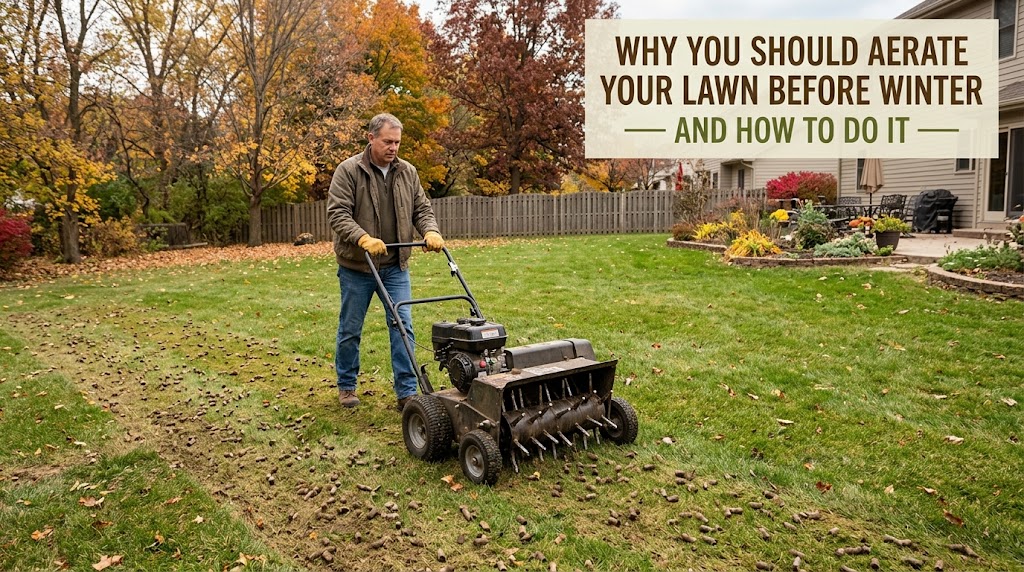
Why You Should Aerate Your Lawn Before Winter—and How to Do It
If you’ve ever wondered why your grass looks tired every spring, the answer might be sitting right under your feet. A long summer of foot traffic, mowing, and play compacts the soil. Compacted soil chokes the roots that keep your lawn alive. That’s why you should aerate your lawn before winter—and how to do it is simpler than most homeowners expect.
Plenty of people skip this step simply because nobody explained it well. Once you see the before-and-after, it stops feeling like a chore. This is why you should aerate your lawn before winter—and how to do it matters.
What Aeration Actually Does for Your Soil
Aeration means pulling small plugs of soil out of your lawn. That opens channels so air, water, and nutrients can reach the roots again. Grass roots need oxygen as much as they need sunlight. When tightly packed soil chokes those roots, they stay shallow and weak. That’s the core reason why you should aerate your lawn before winter—and how to do it. The Iowa State University Extension explains that aeration relieves soil compaction. Looser soil lets roots stretch deeper before the ground freezes. That’s why you should aerate your lawn before winter—and how to do it really matters.
Why Fall Is the Right Moment
Grass does most of its root growth in cooler weather, not in summer heat. Fall aeration opens the soil right when your lawn shifts energy into its roots instead of its blades. That timing is why you should aerate your lawn before winter—and how to do it works best now. The soil stays soft enough to pull clean plugs, but cool weather keeps the grass from feeling stressed. Wait too long and the ground hardens. Aerate too early and you miss the window. Timing is the real reason why you should aerate your lawn before winter—and how to do it matters so much. The North Dakota State University Extension notes that fall aeration lines up with when grasses recover and store energy for winter.
Signs Your Lawn Needs It
Not every yard needs aerating every year, but a few signs make it obvious. These signs form a good checklist for why you should aerate your lawn before winter—and how to do it on your own schedule. Watch for water that pools instead of soaking in. Watch for grass that feels more like a mat than individual blades. Bare or thinning patches in high-traffic areas are another clue. If your grass has been thinning despite regular care, read what it means when your grass starts to thin first. In most of these cases, the honest answer is why you should aerate your lawn before winter—and how to do it.
How to Do It Yourself
You don’t need to hire anyone to get this done. A core aerator pulls small plugs of soil as it rolls across your yard. You can rent one from most hardware or garden stores. Go over high-traffic areas twice. Leave the soil plugs where they land—they break down on their own and feed the lawn. This hands-on approach is why you should aerate your lawn before winter—and how to do it yourself. It saves money and gives you more control than a service call.
What to Do Right After Aerating
Aeration opens a short window where your lawn is especially receptive to help. This is where why you should aerate your lawn before winter—and how to do it really pays off. It’s the best time to overseed thin spots, since seed settles into the holes instead of sitting on dense soil. It’s also a smart moment to apply fall fertilizer, since nutrients travel straight to the roots instead of running off. The Illinois Extension points out that pairing aeration with fertilizing works better than either step alone. While you’re at it, tidy nearby garden beds too. Pruning roses now means less cleanup come spring. It’s one more answer to why you should aerate your lawn before winter—and how to do it as one fall routine.
Watering and Mowing Afterward
Keep watering normally for the next couple of weeks. This helps the soil plugs break down and lets any new seed germinate. Mow a little higher than usual. Keep heavy foot traffic off the lawn while it recovers. None of this is hard. Skipping it undercuts why you should aerate your lawn before winter—and how to do it. Rethinking your front yard layout for next year? Our guide to front lawn garden design is a good next read.
A Small Job With a Big Payoff
An afternoon with an aerator you rent is a small investment. You get back deeper roots, better drainage, and grass that bounces back faster instead of limping through winter. If your yard has struggled in past springs, this fixes the cause instead of the symptoms. That’s the whole case for why you should aerate your lawn before winter—and how to do it. If weeds keep creeping into thin patches, pair aeration with our tips on how to get rid of weeds naturally. It helps your grass win that space back. In short: why you should aerate your lawn before winter—and how to do it comes down to one idea. Healthy roots now mean a healthier lawn later.