
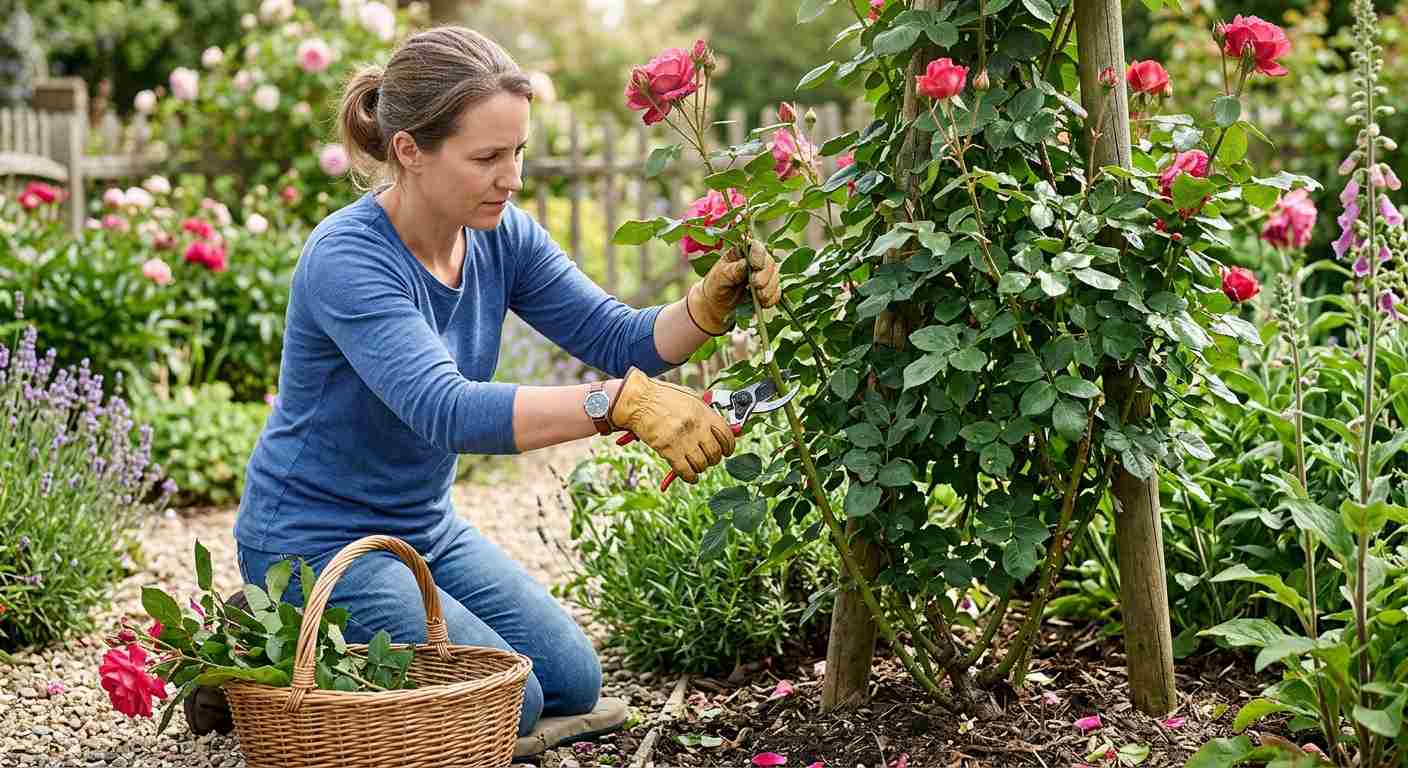
Roses reward a little effort with a lot of beauty. But many gardeners hesitate to pick up the secateurs because they’re not sure where to cut or when. Learning how to prune roses isn’t complicated once you understand the logic behind it. You remove what’s weak, dead, or crowded so the plant can put its energy into strong new growth and better flowers. This guide walks through everything you need to prune roses confidently, whether you have one bush by the front door or a whole bed of them.
Why How to Prune Roses Matters for a Healthy Garden
Pruning isn’t just about tidiness. A rose that never gets pruned turns into a tangle of old, woody stems. It flowers less each year and becomes more vulnerable to disease. Knowing how to prune roses helps the plant redirect its energy toward fresh canes. It also improves air circulation, which cuts down on fungal problems like black spot and powdery mildew, and it shapes the plant the way you want. The RHS pruning guide notes that well-pruned roses stay healthier, live longer, and flower more reliably than neglected ones.
When Is the Best Time to Prune Roses
Timing depends a bit on your climate and the type of rose. Most gardeners prune in late winter or very early spring, just as the buds begin to swell but before new leaves fully open. In temperate climates, that’s usually February or March. Pruning too early risks frost damage to fresh cuts. Pruning too late means you’re removing growth the plant has already invested energy in. Repeat-flowering roses also benefit from light deadheading through summer. Think of it as a gentler, ongoing form of pruning that encourages more blooms.
The Tools You Need Before You Prune Roses
Before you start, gather a few essentials. You’ll want a sharp pair of bypass secateurs for thin stems, loppers for thicker canes, and a pruning saw for very old or woody growth. Add a pair of thick gardening gloves, since rose thorns are no joke. Clean, sharp blades matter more than people expect. A dull or dirty blade crushes stems instead of cutting them cleanly, and that leaves the plant open to disease. Wipe your blades with rubbing alcohol between plants. This simple habit stops infections from spreading from one rose to the next.
How to Prune Roses Step by Step
Once you’re set up, the process of how to prune roses follows a simple sequence. Start by removing the three D’s: dead, damaged, and diseased wood. Cut these stems back to healthy, white or pale green pith, well below any discoloration. Next, clear out any stems that cross or rub against each other, since friction wounds invite disease. Then look for thin, weak, twiggy growth and remove it. The plant shouldn’t waste energy on stems that won’t produce good flowers.
For the remaining healthy canes, cut about a quarter inch above an outward-facing bud. Angle the cut slightly downward, away from the bud, so water runs off instead of pooling on it. A cut above an outward-facing bud encourages the new shoot to grow away from the center of the plant. This keeps the bush open and airy rather than congested in the middle. Aim for an open, vase-like shape with three to five strong, evenly spaced canes.
How to Prune Roses for Different Rose Types
Not every rose takes the same approach, so it helps to know what you’re working with before you cut. Hybrid tea and floribunda roses, the classic bush types, can handle fairly hard pruning each year. Cut their canes back by a third to a half to encourage vigorous new growth and larger blooms. Shrub roses, including many David Austin varieties, need lighter treatment. The RHS shrub rose guide recommends removing just a stem or two at the base each year, rather than cutting the whole plant back hard.
Climbing roses work differently again. Instead of shortening the main framework canes, you mostly trim the side shoots that grow off them, since that’s where most flowers appear. Miniature and patio roses need only light, careful trimming on a smaller scale, since they naturally grow compact.
Common Mistakes to Avoid When You Prune Roses
A few habits trip up even experienced gardeners. Pruning with dull tools tops the list, since crushed stems heal poorly. Cutting too close to a bud, or at the wrong angle, can damage the bud or leave it prone to rot. Over-pruning young, newly planted roses is another frequent mistake. Established roses can take a hard cut, but a rose that’s only a year or two old needs a gentler hand so it keeps enough structure to establish strong roots. Finally, avoid leaving stubs where you removed an old cane. Cut flush to the base or to a healthy junction instead, since stubs give disease an easy way in.
Caring for Roses After Pruning
Once you finish, clear away all the prunings and any fallen leaves around the base of the plant. Old foliage can harbor fungal spores and pests over winter. Feed the rose with a balanced, rose-specific fertilizer to support the new growth you just encouraged. Add a layer of mulch around the base to retain moisture and suppress weeds. Water deeply, especially if the soil dried out over winter. Within a few weeks, you should see fresh red shoots emerging just below your cuts. That’s a good sign the pruning worked well.
Final Thoughts on How to Prune Roses
The more you practice, the more intuitive it becomes. Once you understand the basic principles behind how to prune roses, you can apply that logic to almost any rose in your garden, regardless of variety. Remove what’s dead or weak, open up the center, and cut just above an outward-facing bud. A little attention each year keeps your roses healthier, more floriferous, and far less prone to disease, which makes the whole garden easier to enjoy.

