
Walk through any tropical fruit market and you’ll likely spot two spiky, pink-red fruits sitting side by side that look almost identical from a distance. The rambutan vs lychee comparison confuses a lot of first-time buyers, and honestly, it’s an easy mistake to make. Both fruits belong to the same botanical family, both have juicy white flesh hiding under a colorful shell, and both are prized across Southeast Asia and beyond. But once you look closer — and definitely once you taste them — the differences become obvious. This guide breaks down everything you need to know in the rambutan vs lychee debate, from appearance to flavor to nutrition, so you can decide which one deserves a spot in your fruit bowl.
What Makes Rambutan and Lychee Different at First Glance
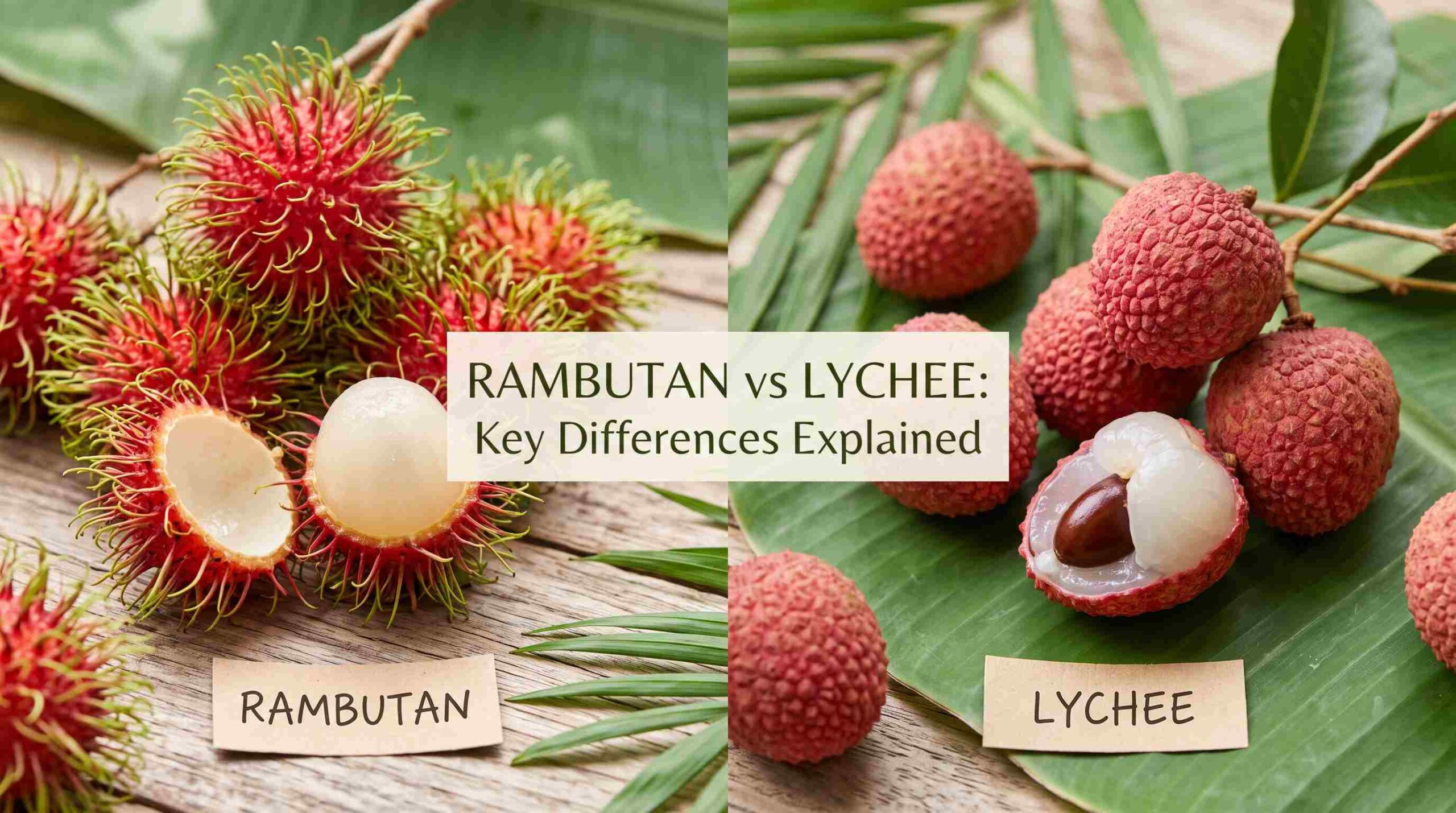
The easiest way to settle the rambutan vs lychee question visually is to look at the skin. Lychee has a thin, bumpy, rose-red shell that looks almost like dried leather. Rambutan, on the other hand, is covered in soft, hair-like spines (the name actually comes from the Malay word for “hair”). Once you peel past the exterior, though, both reveal a translucent, pearly-white fruit wrapped around a single seed. If you’re shopping at a local market and can’t remember which is which, just remember: hairy skin means rambutan, smooth bumpy skin means lychee. You can read more about the visual traits of each fruit on Britannica’s lychee entry.
Rambutan vs Lychee: Taste and Texture Compared
Flavor is where most people form a strong opinion in the rambutan vs lychee discussion. Lychee tends to be sweeter and more floral, with a juicy, almost grape-like texture that bursts the moment you bite into it. Rambutan is slightly less sweet, with a milder, more subtle flavor that some describe as a cross between lychee and a light grape with a hint of tartness. Texture-wise, rambutan flesh is a touch firmer and clings a little more to the seed, while lychee flesh separates more easily. If you enjoy intensely sweet, fragrant fruit, lychee usually wins. If you prefer something a bit more mellow and refreshing, rambutan might be your pick. Neither is objectively better — it really comes down to personal taste, which is why trying both side by side is the best way to settle your own rambutan vs lychee preference.
Nutritional Showdown: Rambutan vs Lychee
Nutrition is another area worth examining in the rambutan vs lychee comparison, especially if you’re choosing fruit with health goals in mind. Both are relatively low in calories and are excellent sources of vitamin C, which supports immune health and skin repair. Lychee generally contains slightly more vitamin C per serving, while rambutan offers a good dose of fiber, copper, and manganese. Both fruits are naturally fat-free and contain antioxidants that may help combat inflammation. For a deeper look at the specific vitamins and minerals in each fruit, Healthline’s breakdown of lychee nutrition is a solid resource. If you’re tracking sugar intake, note that both fruits are naturally high in fructose, so moderation is key regardless of which side of the rambutan vs lychee debate you land on.
Where Each Fruit Comes From and When to Find Them
Understanding origin and seasonality adds useful context to the rambutan vs lychee conversation. Lychee originated in southern China and has been cultivated for over a thousand years, eventually spreading to India, Southeast Asia, and parts of Africa and the Americas. Rambutan is native to the Malay Archipelago — primarily Malaysia and Indonesia — and thrives in hot, humid climates. Both fruits have overlapping but slightly different peak seasons depending on the growing region, generally appearing in local markets during the late spring through summer months. If you’re outside the tropics, your best bet for finding either fresh is an Asian grocery store, though canned versions of both are widely available year-round. For readers curious about sourcing fresh exotic produce locally, check out our guide to shopping at Asian markets for practical tips.
Rambutan vs Lychee — Which One Should You Buy?
If you’re standing in the produce aisle trying to make a final call in the rambutan vs lychee decision, here’s a simple way to think about it. Choose lychee if you want a sweeter, more aromatic fruit that’s easy to find canned or bottled in syrup. Choose rambutan if you’re curious about trying something new with a milder flavor and don’t mind the slightly more hands-on peeling process. Price and availability can also tip the scales — rambutan is sometimes harder to find fresh outside Southeast Asia, which can make it pricier or limited to specialty stores. Lychee, by contrast, has become more mainstream in Western grocery stores, especially during peak season. Whichever you pick, both are refreshing, nutrient-rich additions to a summer fruit spread, and there’s really no wrong answer in the rambutan vs lychee face-off.
Final Thoughts
At the end of the day, the rambutan vs lychee comparison isn’t about crowning one true winner — it’s about understanding what makes each fruit unique so you can enjoy them for what they are. Lychee brings bold sweetness and fragrance, while rambutan offers a gentler, slightly earthier bite with its own charm. Both are packed with vitamin C, both have fascinating histories rooted in Asian agriculture, and both are worth a spot in your next fruit salad. Next time you see these spiky, pink fruits side by side at the market, you’ll know exactly what sets them apart — and maybe you’ll even pick up both to compare for yourself.