
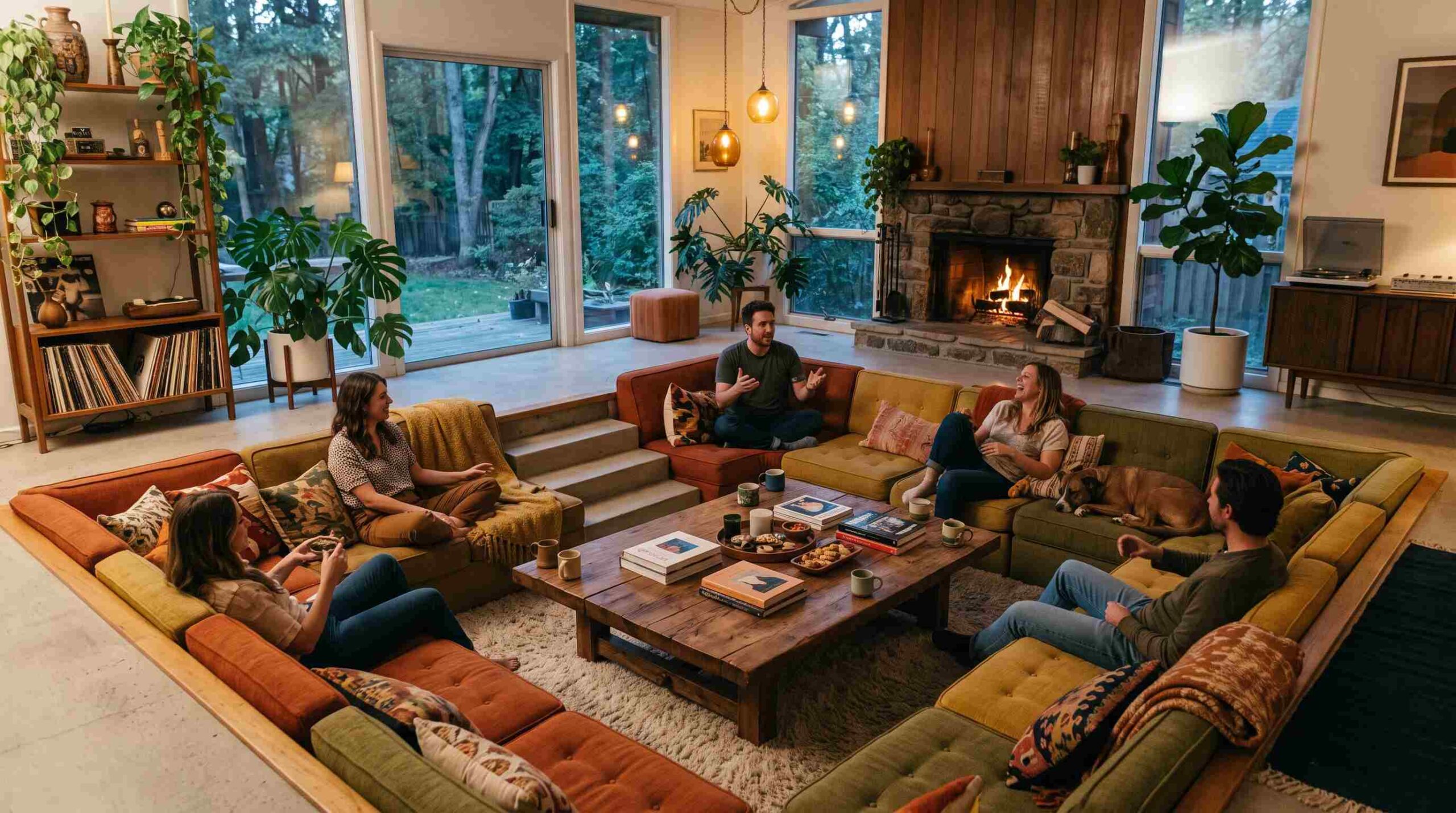
A conversation pit is a sunken seating area built right into the floor of a living room, usually a step or two below the main level. Instead of arranging furniture around a room, you’re arranging it around a hole in the floor filled with built-in benches, cushions, and low tables. The idea first caught on in the mid-20th century, and it’s having a real moment again. If you’ve scrolled through home design accounts lately, you’ve probably seen a conversation pit in someone’s renovation reveal, often paired with shag rugs and warm lighting that make the whole space feel like a hug.
Where the Conversation Pit Trend Came From
The conversation pit isn’t a new invention, it’s a revival. Architects in the 1950s and 60s, including Bruce Goff and later popularized by designers working on mid-century modern homes, used sunken seating to create a sense of intimacy in otherwise open floor plans. You can read more about this design era on <a href=”https://www.architecturaldigest.com/story/the-history-of-the-conversation-pit” target=”_blank” rel=”nofollow”>Architectural Digest’s history of the conversation pit</a>, which traces how these spaces became a status symbol in homes built for entertaining. Back then, a conversation pit signaled that you had the square footage, and the imagination, to do something different with your floor plan.
Why the Conversation Pit Is Trending Again
So why now? A lot of it comes down to how people actually want to use their living rooms. Open-concept homes can feel a little cold and directionless, and a conversation pit solves that by literally carving out a destination. It tells your body and your guests, “this is where we sit, this is where we talk.” There’s also a nostalgia factor at play, since so much of current interior design is pulling from the 70s and 80s, and a conversation pit fits right into that warm, textured, low-to-the-ground aesthetic. For more on how retro design elements are shaping 2026 interiors, <a href=”https://www.elledecor.com/design-decor/trends/” target=”_blank” rel=”nofollow”>Elle Decor’s trend coverage</a> is worth a look.
Is a Conversation Pit Right for Your Home?
Before you start picturing your own conversation pit, it’s worth being honest about what it actually takes. This isn’t a weekend DIY project. A proper sunken seating area usually means structural changes to your subfloor, which means permits, a contractor, and a real budget. If you’re renting, or you’re not planning to stay in your home long-term, a conversation pit probably isn’t practical. But if you own your home, you’re doing a bigger renovation anyway, and you love the idea of a cozy, low-slung gathering spot, it can be a genuinely great investment in how your space feels day to day.
How to Build a Conversation Pit Without a Full Renovation
Not everyone can drop a few feet into their living room floor, and that’s okay. You can borrow the feeling of a conversation pit without the structural overhaul. Try grouping low-profile sofas or floor cushions in a circular or square layout around a central coffee table. Add a slightly raised platform or a sunken rug to visually separate the “pit” zone from the rest of the room. Layer in warm lighting, think floor lamps or a statement pendant, rather than harsh overhead light. The goal is the same as a true conversation pit: a defined, cozy zone that pulls people in and encourages them to linger instead of scattering around the room.
Materials and Furniture That Make a Conversation Pit Work
The furniture inside a conversation pit matters just as much as the pit itself. Built-in bench seating with deep, plush cushions is the classic choice, since it maximizes seating without cluttering the space with individual chairs. Boucle and velvet upholstery are popular right now because they add texture and softness, which fits the inviting mood a conversation pit is supposed to create. Low wooden or stone side tables work well too, keeping sightlines open across the pit so no one feels boxed in. If you want to go further into styling a cohesive retro-modern look, our guide to mid-century living room styling on this site walks through color palettes and furniture pairings that complement a conversation pit setup.
Common Mistakes to Avoid With a Conversation Pit
A conversation pit can go wrong fast if it’s not planned well. The most common mistake is making it too deep, which can feel more like a trap than a cozy nook, and can genuinely be a safety hazard for kids or older guests. Aim for a drop of no more than one or two steps. Another mistake is skimping on lighting, since a sunken space can get visually dark if it’s not lit intentionally from multiple angles. Lastly, don’t ignore accessibility. A conversation pit without a clear, well-lit edge is a tripping hazard, so adding subtle step lighting or a contrasting trim along the edge is worth the extra effort.
Final Thoughts on Bringing Back the Conversation Pit
The conversation pit is proof that good design ideas don’t really go out of style, they just wait for the right moment to come back. Whether you go all in with a full sunken seating area or simply borrow the layout and mood for a smaller space, the core idea is the same: create a spot in your home that pulls people together instead of letting them drift apart. That’s a trend worth bringing back.