
Silk feels different from every other fabric in your closet. It’s smooth, it catches the light, and it drapes in a way synthetic fibers just can’t copy. But that delicate structure also makes silk easy to damage if you treat it like an ordinary shirt. If you’ve ever wondered how to wash silk without ruining it, you’re not alone. It’s one of the most common laundry questions people ask.
Why Knowing How to Wash Silk Matters
Silk fibers are protein-based, similar in structure to human hair. That’s part of why silk feels so soft. It’s also why heat, harsh detergents, and rough handling can weaken the fibers over time. Learning how to wash silk properly isn’t about being overly cautious. It’s about giving the fabric what it actually needs, so it keeps its shine, strength, and shape for years instead of fading after a few washes.
Check the Care Label Before You Wash Silk
Before you do anything else, check the care label. Some silk garments say “dry clean only,” and that’s not just a suggestion — certain dyes and blends don’t hold up to water. Still, many silk pieces, especially simple blouses and scarves, handle a careful hand wash at home just fine, even if the label says dry clean. If you’re unsure, try a quick test first: dab a hidden seam with a damp cloth and check if the color bleeds. Silk comes from a natural protein fiber that certain insect larvae produce to build their cocoons, and people have prized its texture and luster for centuries. That delicate origin explains why gentle handling matters so much.
How to Wash Silk by Hand
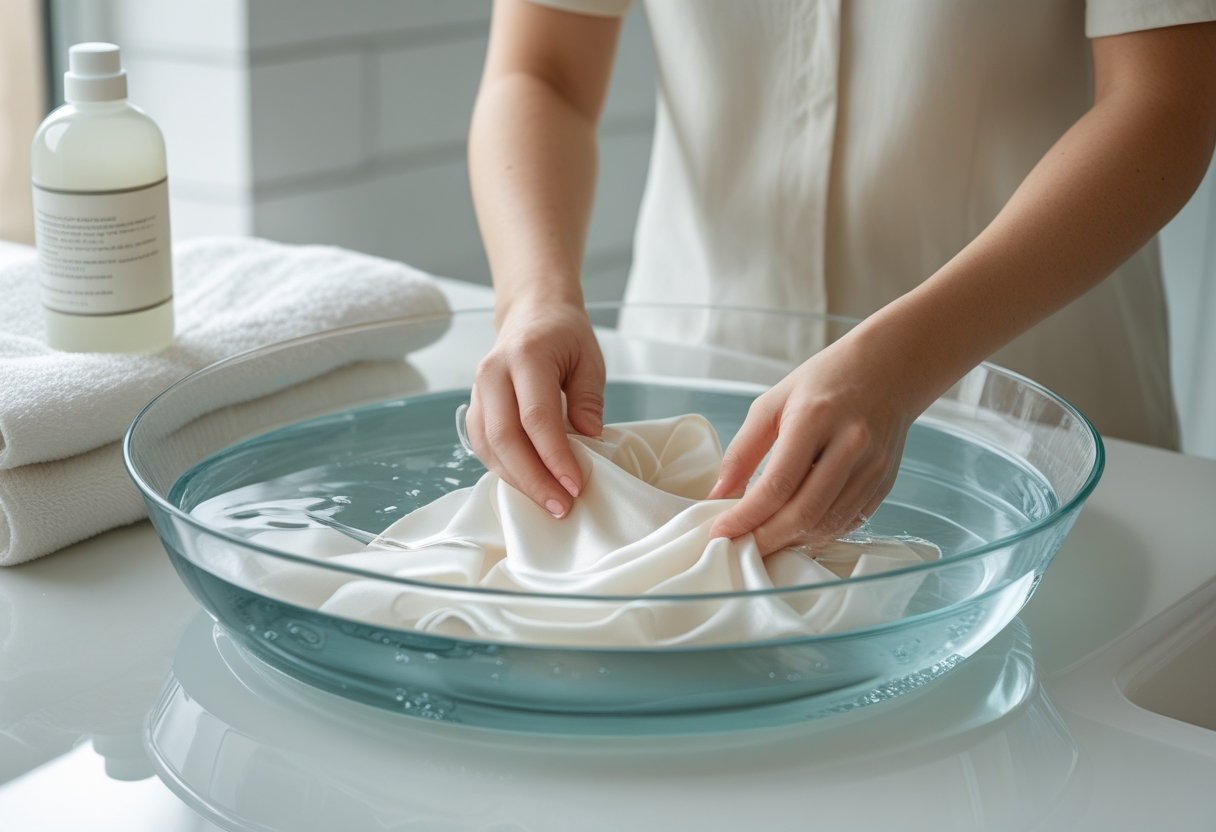
Hand washing is the safest, most reliable method for how to wash silk at home. Here’s a simple process that works for most silk garments:
Fill a basin with cool or lukewarm water — never hot. Add a small amount of mild detergent made for delicates, or try gentle baby shampoo, which works surprisingly well on silk. Submerge the garment and swirl it gently with your hands for a minute or two. Skip the wringing, twisting, or scrubbing. Silk fibers are weakest when wet, and rough handling can cause permanent creasing or tearing.
Once it’s clean, drain the soapy water and refill the basin to rinse. Repeat until no soap remains. Press the water out gently against the side of the basin instead of wringing the fabric.
How to Wash Silk in a Machine (When It’s Safe)
Hand washing takes effort, so sometimes a machine makes more sense — but only under the right conditions. Place the item in a mesh laundry bag to protect it from friction. Choose the delicate or hand-wash cycle with cold water, and add a silk-safe detergent. Keep the load small so the garment doesn’t tangle with other clothing. This method works well for sturdier silk items like simple tops, but skip it for anything with embellishments, pleating, or delicate trim.
Choosing the Right Detergent When You Wash Silk
Your choice of detergent matters as much as your technique. Regular laundry detergent often contains enzymes and brighteners built to break down stains aggressively. Those ingredients can strip silk’s natural proteins and dull its shine. Look for a detergent labeled specifically for silk or wool, or a pH-neutral formula made for delicates. Experts generally steer people away from detergents with enzymes, bleach, or optical brighteners for silk, since these ingredients weaken the fibers and cause discoloration over repeated washes. For a trusted recommendation, check this guide to delicate fabric detergents, which breaks down a few solid options.
How to Dry Silk After Washing
Drying trips up a lot of people, even after they nail how to wash silk itself. Never wring or twist silk to remove water. Instead, lay the garment on a clean, dry towel, roll the towel up gently to absorb moisture, then unroll it. Next, lay the silk flat on a fresh dry towel or a drying rack, away from direct sunlight and heat sources like radiators or vents. Sunlight and heat cause silk to yellow or turn brittle, so patience pays off here. Don’t hang wet silk — the weight of the water can stretch and distort its shape.
Common Mistakes to Avoid When You Wash Silk
A few habits ruin more silk garments than almost anything else: hot water, heated tumble drying, and spraying perfume or deodorant directly onto silk, since the alcohol content can cause spotting. Ironing bone-dry silk causes problems too. If you need to iron silk, do it while the fabric is still slightly damp. Use the lowest heat setting, and place a thin cloth between the iron and the fabric to prevent scorch marks or shine.
Final Thoughts on How to Wash Silk
Once you understand how to wash silk the right way, it stops feeling intimidating. It becomes just another part of your normal laundry routine. Cool water, gentle handling, a mild detergent, and air drying away from heat will keep silk looking as good as the day you bought it. A little extra care goes a long way with a fabric this special. Once you get the hang of it, hand washing silk only takes a few extra minutes compared to tossing it in with the rest of your laundry.