
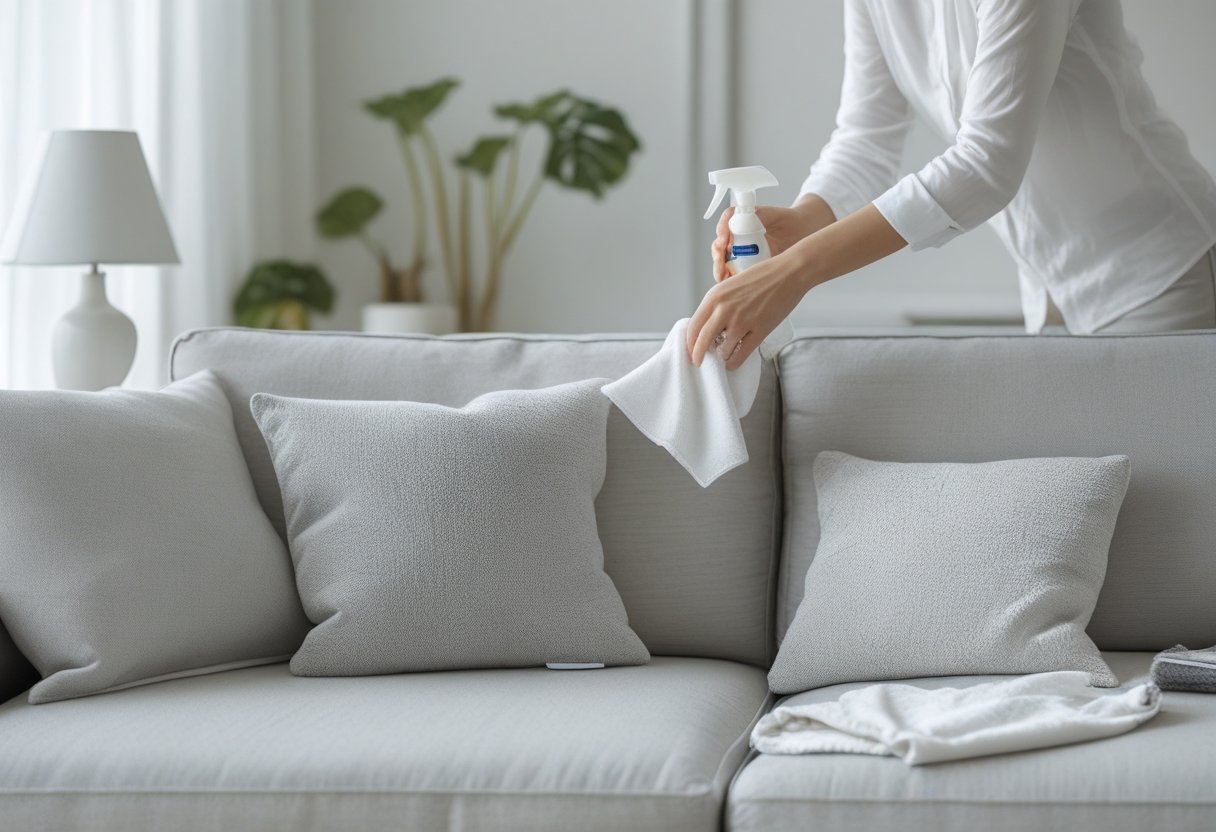
Microfiber is one of the most popular couch fabrics because it looks soft, feels cozy, and resists stains better than cotton or linen. But it’s not stain-proof, and if you don’t know how to clean microfiber couch fabric the right way, you can end up with water rings, stiff patches, or a couch that looks worse than before you started. The good news is that cleaning microfiber is actually simple once you understand a few basic rules, and you don’t need expensive products to do it well.
Check the Cleaning Code Before You Start
Before you search for how to clean microfiber couch upholstery, flip over a cushion or check the tag underneath the couch. You’ll usually find a letter code: W, S, WS, or X. A “W” means you can use water-based cleaners. An “S” means you should only use a solvent-based cleaner, since water can leave permanent stains or watermarks on that type of microfiber. “WS” means either works, and “X” means vacuum only, no liquid at all. Skipping this step is the most common mistake people make, so always check the tag first — it changes everything about your approach.
How to Clean Microfiber Couch Stains Step by Step
If your couch is tagged “W” or “WS,” here’s how to clean microfiber couch stains safely. Start by vacuuming the entire surface with a soft brush attachment to remove crumbs, dust, and pet hair, since cleaning over debris can grind it deeper into the fabric. Next, mix a small amount of mild dish soap, like Dawn, with warm water until it’s foamy, and use only the foam, not the liquid, on a clean white cloth. Dab the stain gently in circular motions rather than scrubbing, which can damage the fibers. Rinse your cloth often and keep blotting until the stain lifts, then use a dry cloth to absorb excess moisture. Let the cushion air dry fully before anyone sits on it.
How to Clean Microfiber Couch Fabric Tagged “S”
If your tag says “S,” water isn’t your friend here. To clean microfiber couch upholstery with this code, you’ll need rubbing alcohol instead. Pour a small amount of 90% isopropyl alcohol into a spray bottle and lightly mist the stained area rather than soaking it. Use a soft-bristled brush or a clean sponge to work the alcohol into the fabric in small circles. As it dries, the alcohol evaporates and the fibers loosen, so a final brushing in one direction restores the couch’s original soft texture. This method is a favorite among professional upholstery cleaners because alcohol doesn’t leave rings the way water can on solvent-only fabric. You can read more about solvent-safe upholstery care from the Association of the Nonwoven Fabrics Industry.
How to Clean Microfiber Couch Using Household Items
You don’t need specialty sprays to clean microfiber couch fabric effectively. Baking soda is especially useful for odors and light surface dirt. Sprinkle it generously over the cushions, let it sit for 15–20 minutes, then vacuum it up along with the grime it absorbed. For tougher spots, a vinegar and water solution in equal parts, applied with a cloth in the same dabbing motion described earlier, works well on water-safe microfiber. Many home organization sites, including Good Housekeeping, recommend keeping both baking soda and alcohol on hand specifically for microfiber furniture, since they cover almost every type of stain you’ll encounter.
Deep Cleaning: How to Clean Microfiber Couch Cushions and Covers
For a more thorough refresh, remove any detachable cushion covers and check the care label again, since many are machine washable on a gentle, cold cycle even if the couch frame itself requires spot cleaning only. Air dry them completely rather than using a dryer, because heat can shrink or warp microfiber fibers. For cushions that can’t be removed, go section by section rather than tackling the whole couch at once. This keeps you from oversaturating one area while another dries unevenly, which is one of the main reasons people end up with blotchy, two-toned upholstery after a deep clean.
Common Mistakes to Avoid When Cleaning Microfiber
Even with the right products, there are a few habits that can ruin your results. Using too much liquid is the biggest issue, since microfiber absorbs moisture quickly and dries slowly, which can lead to mildew smells if the couch stays damp too long. Scrubbing hard instead of blotting is another common error, as it can fray or mat the fibers permanently. Skipping the brush step after cleaning is also a mistake, since microfiber tends to dry stiff and patchy unless you brush it while it’s still slightly damp to restore its soft texture. Keeping these in mind makes the whole process of learning how to clean microfiber couch fabric much less frustrating.
How to Keep Your Microfiber Couch Clean Longer
Once you’ve put in the work to clean microfiber couch upholstery properly, a little maintenance goes a long way. Vacuum weekly to prevent dirt from settling into the fibers, and treat spills immediately instead of letting them set, since fresh stains are always easier to remove than old ones. Rotating cushions regularly also helps the fabric wear evenly, so one section doesn’t flatten or discolor faster than the rest. With consistent care, you’ll rarely need a deep clean at all, just quick touch-ups whenever something spills.
Final Thoughts
Knowing how to clean microfiber couch fabric really comes down to one rule: match your cleaning method to the fabric’s tag. Water-safe fabrics respond well to dish soap and water, while solvent-only fabrics need alcohol instead. Beyond that, gentle blotting, proper drying, and a final brush are what separate a couch that looks brand new from one that ends up stiff or stained. With the right approach, your microfiber couch can stay soft, fresh, and spill-ready for years.