
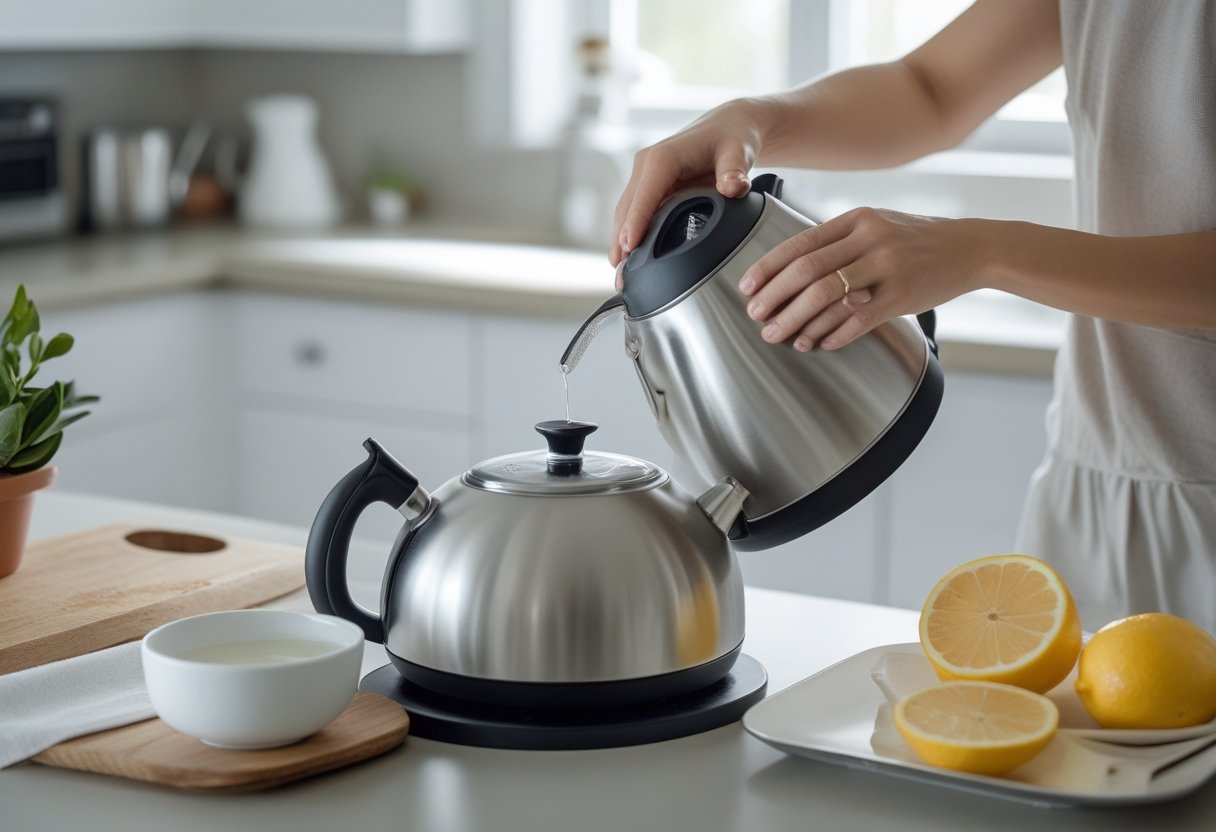
If your tea has started tasting a little off, or you’ve noticed chalky white flecks floating in your cup, your kettle is overdue for a clean. Learning how to clean a tea kettle properly isn’t complicated, but it does make a real difference to how your tea and coffee taste — and how long your kettle lasts. Here’s everything you need to know about how to clean a tea kettle, step by step.
Why You Should Bother Cleaning Your Tea Kettle
Every time you boil water, minerals like calcium and magnesium get left behind on the inside of the kettle. Over weeks and months, this builds up into limescale — that white, crusty layer you see near the base or spout. It’s not dangerous, but it does affect the taste of your drinks, slows down how quickly your kettle boils, and can eventually damage the heating element. That’s why knowing how to clean a tea kettle regularly is worth the five minutes it takes.
How Often Should You Clean a Tea Kettle?
This depends mostly on your water. If you live somewhere with hard water, limescale builds up fast, and you’ll want to clean your kettle every month or so. In softer water areas, every couple of months is usually fine. A good rule of thumb: if you can see or feel buildup on the inside walls, it’s time. Don’t wait for it to get bad — figuring out how to clean a tea kettle before the scale is thick makes the whole job much easier.
How to Clean a Tea Kettle With Vinegar
Vinegar is the easiest and most reliable way to descale a kettle, and you probably already have a bottle in your kitchen. Here’s the method:
Fill your kettle with equal parts white vinegar and water — about halfway is usually enough. Let it sit for 30 minutes to an hour; if the buildup is heavy, leave it overnight. The acidity in the vinegar slowly dissolves the mineral deposits without needing any harsh chemicals. Once the time is up, pour out the solution and rinse the kettle thoroughly. Then boil plain water in it once or twice and discard that too, just to make sure no vinegar taste lingers in your next cup. This simple approach is honestly the backbone of how to clean a tea kettle for most households, and it works on both electric and stovetop models. Tom’s Guide has a solid breakdown of this method if you want extra detail on timing for different kettle types.
How to Clean a Tea Kettle With Lemon Juice
If you’d rather skip the vinegar smell, lemon juice works through a similar process — citric acid breaks down limescale just as effectively. Slice a lemon, squeeze the juice into the kettle along with the rind, top it up with water, and bring it to a boil. Let it sit for 15–20 minutes afterward, then empty, rinse, and boil clean water through once more. This is a nice option if you’re wondering how to clean a tea kettle without the lingering vinegar odor, since lemon leaves a much more pleasant smell behind.
How to Clean a Tea Kettle With Baking Soda
For lighter, everyday grime rather than heavy limescale, baking soda is a gentler option. Mix a couple of tablespoons into a kettle full of water, bring it to a boil, then let it cool before rinsing well. It’s mild enough to use more frequently and is especially handy if you’re trying to get rid of a stale smell rather than hard mineral deposits. This method is a good complement to vinegar descaling as part of a regular how to clean a tea kettle routine.
Cleaning the Outside and the Spout
The inside gets most of the attention, but the outside matters too. Wipe down the exterior with a damp microfiber cloth and a little mild dish soap, especially around the base and handle where fingerprints and splashes build up. For the spout, an old toothbrush dipped in your vinegar solution works well to scrub away limescale in those hard-to-reach grooves. If your kettle has a removable limescale filter near the spout, take it out and rinse it under hot water separately — these filters catch a lot of debris and are easy to forget about.
Tips to Keep Your Kettle Cleaner for Longer
A few small habits go a long way. Try not to leave water sitting in the kettle between uses, since standing water speeds up limescale formation. Always use fresh water rather than reboiling water that’s already been heated once. If you’re in a hard water area, consider using filtered or bottled water occasionally, or invest in a kettle with a built-in limescale filter. These habits won’t eliminate the need to clean entirely, but they’ll stretch out the time between deep cleans considerably.
A Few Things to Avoid
Steel wool and abrasive scrubbers can scratch the inside of your kettle, so stick to soft cloths or brushes. Bleach and strong chemical descalers aren’t necessary for most households — natural acids like vinegar and lemon do the job just as well without the risk of leftover residue in something you’re about to drink from. And always double-check your kettle’s manual before trying any method, since some materials and finishes have specific care instructions.
Final Thoughts
Once you’ve done it a couple of times, how to clean a tea kettle becomes second nature — fill, soak, rinse, repeat. Whether you reach for vinegar, lemon, or baking soda, regular cleaning keeps your tea tasting the way it should and adds years to your kettle’s life. A quick monthly check is really all it takes to stay ahead of limescale for good.