
A leather couch is one of those furniture pieces that looks better the longer it’s cared for properly — but only if you know how to clean leather couch surfaces without damaging them. Spills, body oils, dust, and everyday use all take a toll on leather, and the wrong cleaning method can leave it dry, cracked, or discolored. This guide walks you through exactly how to clean leather couch upholstery safely, step by step, using things you probably already have at home.
Why Learning How to Clean Leather Couch Furniture Matters
Leather isn’t like fabric upholstery. It’s a natural material that reacts to moisture, heat, and harsh chemicals in ways cotton or polyester never will. If you scrub it like a regular sofa, you risk stripping its natural oils, which leads to cracking over time. That’s exactly why so many people search for how to clean leather couch surfaces specifically — the process is gentler, slower, and more deliberate than typical upholstery cleaning. Done right, it keeps the leather supple and extends the life of the couch by years.
What You’ll Need Before You Start
Before diving into how to clean leather couch cushions and frames, gather a few basics: a soft microfiber cloth, distilled water, a mild soap (castor oil-based soaps work well), a soft-bristled brush, and a leather conditioner. Avoid anything with alcohol, ammonia, or bleach — these are the fastest way to ruin leather. If you’re unsure what type of leather you have (finished, unfinished, or aniline), check the manufacturer’s tag or a resource like the Leather Research Laboratory, which breaks down different leather types and their care needs in plain language.
Step-by-Step: How to Clean Leather Couch Upholstery
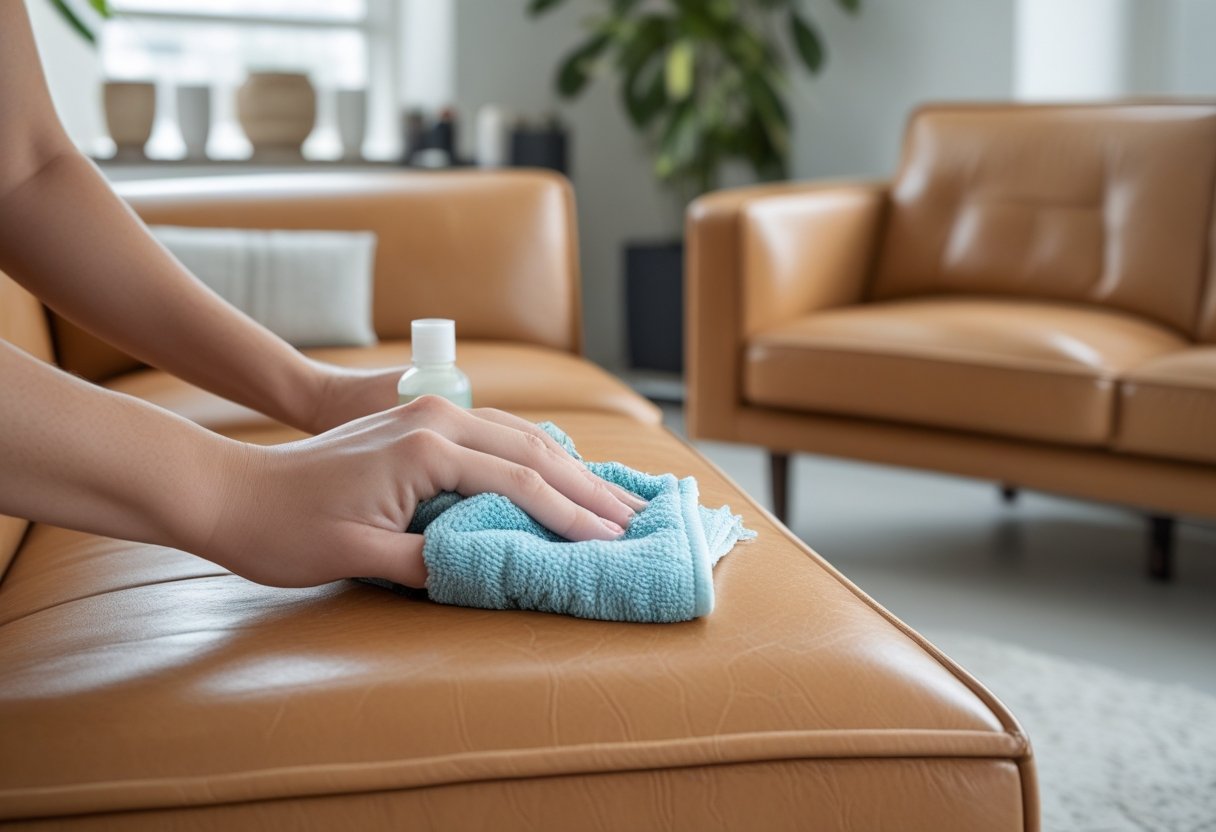
Start by vacuuming the couch with a soft brush attachment to remove loose dust and crumbs from the seams and crevices — this step alone prevents a lot of scratching during the wet-cleaning phase. Next, mix a small amount of mild soap with distilled water and dampen your cloth, wringing it out so it’s barely moist, not wet. Wipe the leather in small circular motions, working in sections rather than scrubbing the whole surface at once. This is the core of how to clean leather couch fabric without soaking it, since leather absorbs moisture quickly and too much water can cause staining or warping. After wiping each section, immediately dry it with a separate clean, dry cloth.
Treating Stains and Spills the Right Way
Spot-cleaning is a slightly different process from general upkeep. For fresh spills, blot — never rub — with a dry cloth to lift as much liquid as possible before it sinks in. For oil-based stains like lotion or food grease, sprinkle cornstarch or baking soda on the spot, let it sit for a few hours to absorb the oil, then brush it away gently. Ink stains are trickier and often need a dab of isopropyl alcohol on a cotton swab, applied carefully to avoid spreading it further. If a stain feels stubborn, resources like Good Housekeeping’s leather care guide offer tested approaches for specific stain types before you try anything abrasive.
Conditioning: The Step Most People Skip
Cleaning only handles half the job. Leather needs conditioning afterward to replace the oils lost during the cleaning process and to prevent future cracking. Once the couch is fully dry — usually after a few hours — apply a leather conditioner with a soft cloth in gentle, even strokes, following the grain of the material. Let it absorb for the time recommended on the product label, then buff off any excess with a dry cloth. This conditioning step is just as important as the cleaning itself, and skipping it is one of the main reasons leather couches start looking worn out well before they should.
Mistakes to Avoid Along the Way
A few habits quietly ruin leather over time. Using too much water is the most common mistake, since it can seep into the seams and cause the padding underneath to mildew. Direct sunlight is another issue — it fades and dries out leather faster than almost anything else, so positioning your couch away from windows helps a lot. Harsh household cleaners, including most all-purpose sprays, strip the protective finish and should never touch leather furniture. Keeping these mistakes in mind makes the whole process of how to clean leather couch upholstery far less risky.
How Often Should You Clean a Leather Couch?
A light dusting or vacuum once a week keeps grime from building up in the first place, while a deeper clean with soap and water is usually only needed every one to two months, depending on how much the couch gets used. Conditioning every three to six months is typically enough to keep the leather soft and crack-free. Cleaning more often than that isn’t necessary and can actually do more harm than good, since over-cleaning dries out the material faster than regular use does.
Final Thoughts
Caring for leather furniture doesn’t have to be complicated once you understand the basics. Knowing how to clean leather couch upholstery properly — gentle products, minimal water, regular conditioning — is really the whole secret to keeping it looking new for years. Take it slow, test any new product on a hidden spot first, and your couch will reward you by aging gracefully instead of cracking and fading.