
A messy closet can make your whole morning feel chaotic. Learning how to organize closet space properly doesn’t require a professional service or an expensive overhaul — just a clear plan and a bit of patience. This guide walks you through practical steps anyone can follow, whether you have a walk-in closet or a small coat closet that’s been crammed full for years.
Why Learning How to Organize Closet Space Matters
Before diving into the steps, it helps to understand why this project is worth your time. A cluttered closet doesn’t just look messy — it wastes your time every single day. When you know how to organize closet shelves and hanging space efficiently, you spend less time digging through piles and more time actually getting dressed. It also helps you see what you own, which means fewer duplicate purchases and more intentional shopping down the line.
Start by Emptying Everything Out
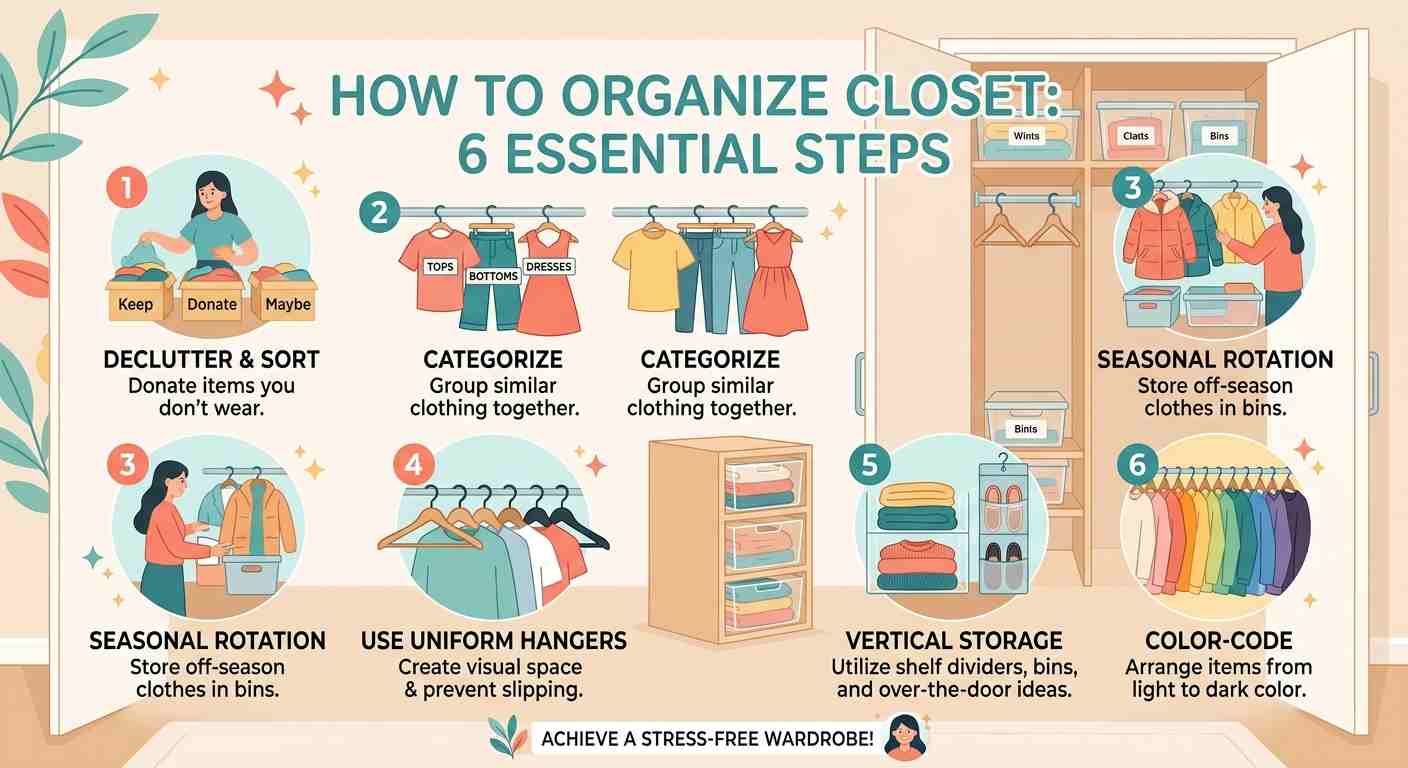
The first real step in how to organize closet spaces is the hardest for most people: take everything out. Pull every item of clothing, shoe, and box onto your bed or floor. This might feel overwhelming at first, but it’s the only way to see exactly what you’re working with. While your closet is empty, take the opportunity to wipe down shelves, vacuum the floor, and check for any repairs needed, like a loose rod or broken shelf bracket. Resources like The Spruce offer helpful checklists for deep-cleaning closets before reorganizing them.
Sort Everything Into Categories
Once everything is out, sort items into simple piles: keep, donate, and toss. Be honest with yourself here. If you haven’t worn something in over a year, it’s probably time to let it go. Organizations like Goodwill make donating easy, often with drop-off locations in most neighborhoods. This sorting stage is where real progress on how to organize closet contents actually happens, since you can’t organize clutter — you can only organize what you’ve decided to keep.
Group Clothing by Type and Frequency of Use
A key part of how to organize closet hanging space is grouping similar items together. Hang shirts with shirts, pants with pants, and dresses with dresses. Within those groups, consider organizing by color, which makes it easier to spot what you’re looking for at a glance. Items you wear often, like work clothes, should go at eye level and within easy reach. Seasonal pieces, like heavy coats in summer, can move to a higher shelf or a bin further back.
Choose the Right Storage Tools
You don’t need fancy furniture to master how to organize closet storage, but a few basic tools make a huge difference. Slim, matching hangers save space and create a cleaner look than a mismatched pile of wire hangers. Stackable bins work well for folded items like sweaters or accessories. Shoe racks or over-the-door organizers free up floor space that would otherwise collect clutter. Stores such as The Container Store carry a wide range of affordable organizing products if you need a starting point.
Use Vertical Space Wisely
Many closets have unused space near the ceiling or on the back of the door. When thinking through how to organize closet layouts, look up and look behind the door. Install an extra shelf for items you use rarely, like holiday decorations or out-of-season luggage. Over-the-door hooks are perfect for scarves, belts, or bags that would otherwise take up drawer space. Making use of every inch means you won’t need to cram everything onto one crowded rod.
Label Everything for Long-Term Success
Labels might sound like a small detail, but they’re one of the most effective tricks in how to organize closet bins and shelves so the system actually lasts. A simple label maker or even masking tape and a marker can mark bins for scarves, gloves, or off-season clothes. This step matters especially if you share a closet with family members, since everyone can put things back in the right spot without guessing.
Maintain the System Weekly
Organizing is only half the job — maintaining it is what keeps your closet from sliding back into chaos. Set aside ten minutes each week to return stray items to their spots and do a quick tidy. Every few months, revisit the keep, donate, and toss method, especially as seasons change and your wardrobe needs shift. This habit is the real secret behind how to organize closet spaces that stay neat for years instead of weeks.
Final Thoughts
Figuring out how to organize closet space isn’t a one-time weekend project — it’s a system you build and refine over time. Start by emptying everything out, sort honestly, group similar items, invest in a few simple tools, and make use of every inch of vertical space. With labels in place and a short weekly maintenance habit, your closet can stay functional and calm, no matter how busy life gets.