
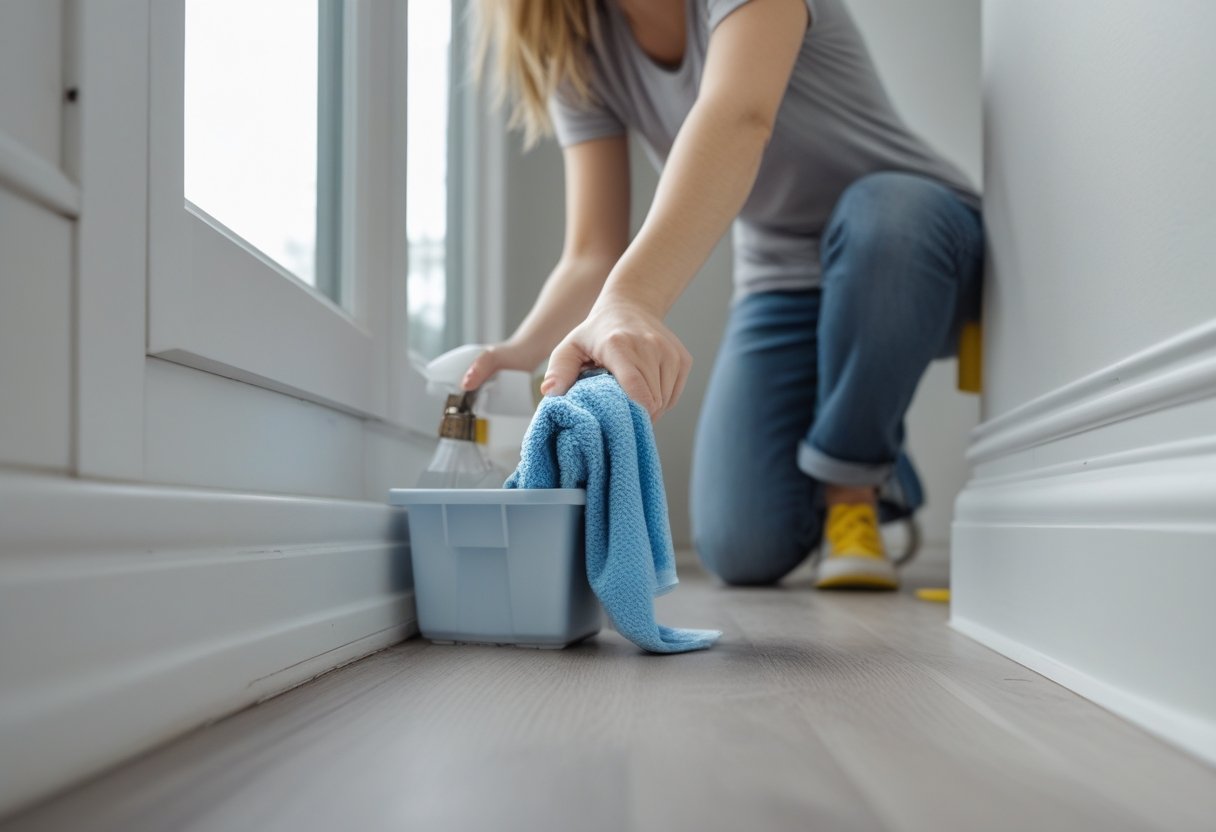
Baseboards are one of those spots that get ignored for months and then suddenly jump out at you — usually right before guests arrive. The good news is that learning how to clean baseboards properly doesn’t take much time, and once you get into a simple rhythm, you’ll never have to deal with that thick, gray dust buildup again. This guide walks through everything you need, from quick weekly wipe-downs to tackling baseboards that haven’t been touched in years.
Why How to Clean Baseboards Matters More Than You Think
Baseboards sit right at floor level, which means they catch dust, pet hair, lint, and whatever gets kicked up when you vacuum or sweep. Over time, that buildup doesn’t just look bad — it can trigger allergies and make a freshly cleaned room feel dirty even when everything else sparkles. Knowing how to clean baseboards the right way keeps your whole room looking finished, not just the parts you notice at eye level. It’s a small task with a surprisingly big visual payoff.
What You Need Before You Start Cleaning Baseboards
You don’t need anything fancy. A microfiber cloth, a vacuum with a brush attachment, warm water, and a mild all-purpose cleaner will handle almost every job. For tougher grime, a melamine foam sponge (the kind sold as a “magic eraser”) works wonders on scuffs and marks. If you’re using a commercial cleaning product, it’s worth checking the label for ventilation and safety guidance — the EPA’s Safer Choice program lists cleaners that are effective without harsh fumes, which is especially helpful if you’re cleaning in a small bathroom or bedroom.
Here’s a simple baseboard cleaning kit:
- Microfiber cloth or dusting wand
- Vacuum with a brush attachment
- Warm water and a few drops of dish soap
- Soft-bristle brush for corners and grooves
- Melamine sponge for scuff marks
The Best Way to Clean Baseboards Weekly
If you want to avoid the dreaded deep-clean session, the easiest way to clean baseboards is to fold it into your regular dusting routine. Start by vacuuming the baseboards with a brush attachment to lift loose dust and pet hair before it has a chance to stick. Then run a damp microfiber cloth along the length of each board, folding it as it picks up grime so you’re always wiping with a clean section. This two-minute habit, done once a week, is honestly the single best way to keep baseboards looking fresh without ever facing a big mess.
A lot of people skip the vacuum step and go straight to wiping, but that just pushes dust into a paste. Vacuuming first makes the whole process faster and keeps your cloth from turning gray in thirty seconds.
How to Clean Baseboards When They’re Really Dirty
If it’s been a while, you’ll need a slightly more thorough approach. Mix warm water with a small amount of dish soap or a gentle all-purpose cleaner, then dip your cloth and wring it out well — baseboards should be damp, not soaked, especially if they’re made of wood. Wipe along the length of the board, then go back over any sticky spots or scuff marks with a melamine sponge.
For grooved or decorative baseboards, an old toothbrush or a soft paintbrush works great for getting into the ridges where dust tends to collect. This is often the step people skip when figuring out how to clean baseboards, but it makes a noticeable difference in how finished the room looks.
If you’re dealing with stubborn marks, Good Housekeeping’s cleaning guides have some useful product comparisons for different baseboard materials, which can help you pick the right cleaner without damaging paint or finish.
How to Clean Baseboards on Different Materials
Not all baseboards are the same, and the material changes how you should approach the job:
- Painted wood: Stick to a damp cloth and mild soap. Avoid soaking, since water can seep into seams and cause swelling or peeling over time.
- Vinyl or PVC baseboards: These are more water-resistant, so you can use a slightly wetter cloth and a stronger cleaner if needed.
- Unfinished or stained wood: Use the driest cloth possible and avoid soap altogether — a dry microfiber dusting wand is usually enough.
Matching your method to the material is one of the most overlooked parts of how to clean baseboards correctly, and it’s the difference between baseboards that last for years and ones that need repainting sooner than expected.
Keeping Baseboards Clean Longer
Once you’ve done a deep clean, a little maintenance goes a long way. Dryer sheets are a popular trick — wiping baseboards with a used dryer sheet leaves a light anti-static layer that repels dust for a few extra days. Keeping pets groomed and vacuuming floors regularly also cuts down on how much debris settles at baseboard level in the first place.
Some people even build baseboard wiping into their weekly floor-cleaning routine, since it only adds a couple of minutes. If you’re curious about pairing this with other home upkeep tasks, The Spruce has a solid home-cleaning checklist that breaks tasks down by frequency, which is a handy reference if you like having a set routine rather than cleaning reactively.
Final Thoughts on How to Clean Baseboards
Baseboards aren’t glamorous, but they quietly shape how clean a room feels. Once you know how to clean baseboards properly — vacuum first, use the right amount of moisture for the material, and get into the grooves — it stops being a dreaded chore and becomes a quick five-minute task. Build it into your regular cleaning rhythm, and you’ll rarely have to deal with the thick, built-up grime that makes the job feel overwhelming in the first place.