If you have never made a potato pave, you are missing out on one of the most satisfying things you can pull out of your oven. It looks fancy, it tastes like a cross between a gratin and a hash brown, and it is honestly much easier than it looks once you understand the technique. This guide walks you through everything you need to know to make a potato pave that comes out crisp on the outside and meltingly soft in the middle, every single time.
What Is Potato Pavé?
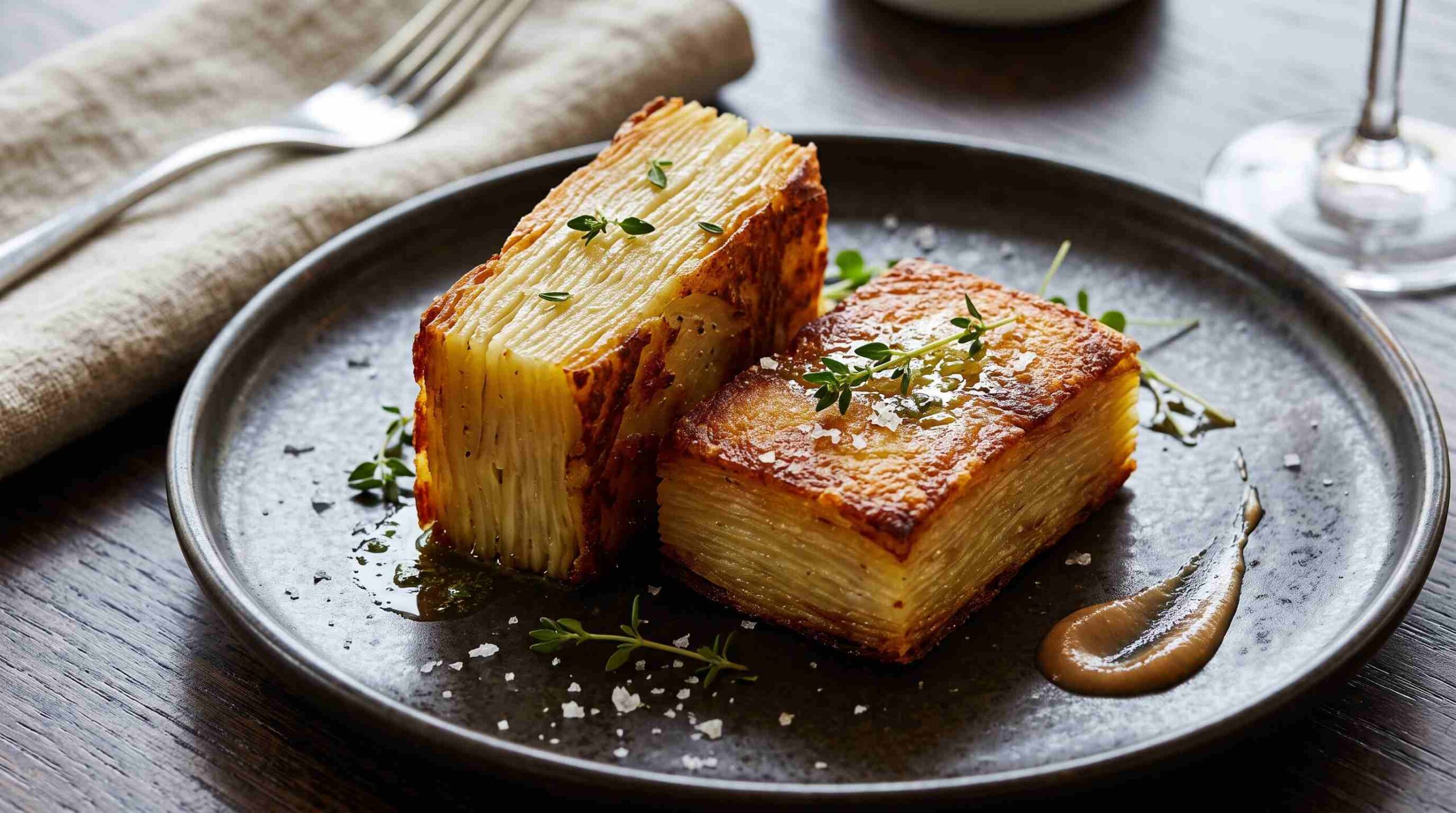
A potato pave is a French dish made by layering thinly sliced potatoes with butter, cream, and seasoning, then pressing and baking them into a dense, compact block. Once baked and chilled, the block is sliced into neat rectangles and pan-fried until golden and crisp on the outside. The name “pavé” literally means “paving stone” in French, which makes sense once you see the finished slices — they really do look like little cobblestones. Unlike a traditional gratin, which stays loose and saucy, a potato pave holds its shape completely, which is what makes it such a striking dish to serve.
Why You’ll Love This Potato Pavé Recipe
What makes a potato pave so appealing is the contrast in textures. You get a shatteringly crisp, buttery crust on the outside, and a soft, custardy layered interior on the inside. It is the kind of dish that makes people assume you spent hours in the kitchen, when really the active time is quite short. A potato pave is also incredibly versatile. You can serve it as an elegant side for a dinner party, pair it with a simple salad for a light lunch, or even make it ahead of time, since it actually improves after resting overnight in the fridge. If you enjoy recipes you can prepare in advance and finish quickly right before serving, this dish is going to become a regular in your rotation.
Ingredients for the Perfect Potato Pavé
You do not need anything exotic to make a great potato pave. The core ingredients are:
- Starchy or waxy potatoes (Yukon Gold works beautifully)
- Unsalted butter, melted
- Heavy cream or a mix of cream and milk
- Salt, pepper, and a touch of nutmeg
- Fresh thyme or rosemary, optional but recommended
- A clove of garlic, finely grated
The quality of your potatoes genuinely matters here. If you want to understand more about how starch content affects texture in layered potato dishes, Serious Eats has an excellent breakdown of potato starch and how it behaves when cooked, which is useful background even though that particular piece focuses on mashed potatoes.
How to Make Potato Pavé Step by Step
Start by peeling your potatoes and slicing them as thinly and evenly as possible — a mandoline makes this far easier than a knife. Toss the slices gently in melted butter, cream, salt, pepper, and your chosen herbs so every slice is coated.
Line a loaf pan or small baking dish with parchment paper, leaving enough overhang to lift the finished potato pave out later. Layer the potato slices tightly, slightly overlapping each one, pressing down firmly every few layers to remove air pockets. This pressing step is what gives a potato pave its signature dense texture, so do not rush it.
Cover the pan tightly with foil and bake at a moderate oven temperature until a knife slides through with no resistance. Once baked, place something heavy on top — another loaf pan weighted with cans works well — and refrigerate for at least four hours, ideally overnight. This chilling and pressing stage is non-negotiable if you want clean slices.
Once fully chilled, turn the block out, slice it into thick rectangles, and pan-fry each slice in butter or oil until deeply golden on both cut sides. That final sear is where the magic happens, transforming a chilled block into a hot, crispy, restaurant-quality potato pave.
Tips for Getting Your Potato Pavé Right Every Time
A few small details separate an average potato pave from a great one. First, slice your potatoes to a consistent thickness, since uneven slices cook unevenly and make the layers harder to compress. Second, do not skip the pressing and chilling step — it is tempting to serve it straight from the oven, but the texture will fall apart without time to set. Third, season generously between layers rather than only on top, since the inside of a potato pave needs just as much flavor as the crust.
If you want a deeper technical explanation of why pressed and layered potato dishes hold together the way they do, the cooking science resource ChefSteps has a helpful article on potato gratins and pressed potato techniques that pairs well with this recipe.
Serving Suggestions for Potato Pavé
A potato pave works beautifully alongside roasted meats, grilled fish, or a simple green salad with a sharp vinaigrette to cut through the richness. It also makes an excellent brunch component topped with a fried egg. Because a potato pave can be made entirely ahead of time and only needs a quick pan-fry before serving, it is a fantastic option for holiday dinners or dinner parties where you want an impressive side without last-minute stress. If you enjoy make-ahead sides like this, you might also like exploring more of our comfort food recipes on the blog, where we cover similar layered and baked potato dishes.
Final Thoughts on Potato Pavé
Once you make your first potato pave, you will understand why it has become such a favorite among home cooks who want restaurant-level results without restaurant-level stress. The combination of a crisp, buttery crust and a soft, layered interior makes this one of the most rewarding potato dishes you can learn. Give it a try for your next special dinner, and don’t be surprised if potato pave becomes your new go-to side dish.