What Counts as a Good Vanilla Extract Substitute
You’re halfway through a recipe and the vanilla bottle is empty. That’s usually the moment people start searching for a vanilla extract substitute. Vanilla mostly adds warmth and rounds out sweetness, so several pantry items can fill that role just fine. A good substitute doesn’t need to taste identical to vanilla — it only needs to support the other flavors already in your bowl. If you’re curious about other quick fixes, our guide to common baking substitutes covers swaps for eggs, butter, and more.
Pantry Staples That Work Instead
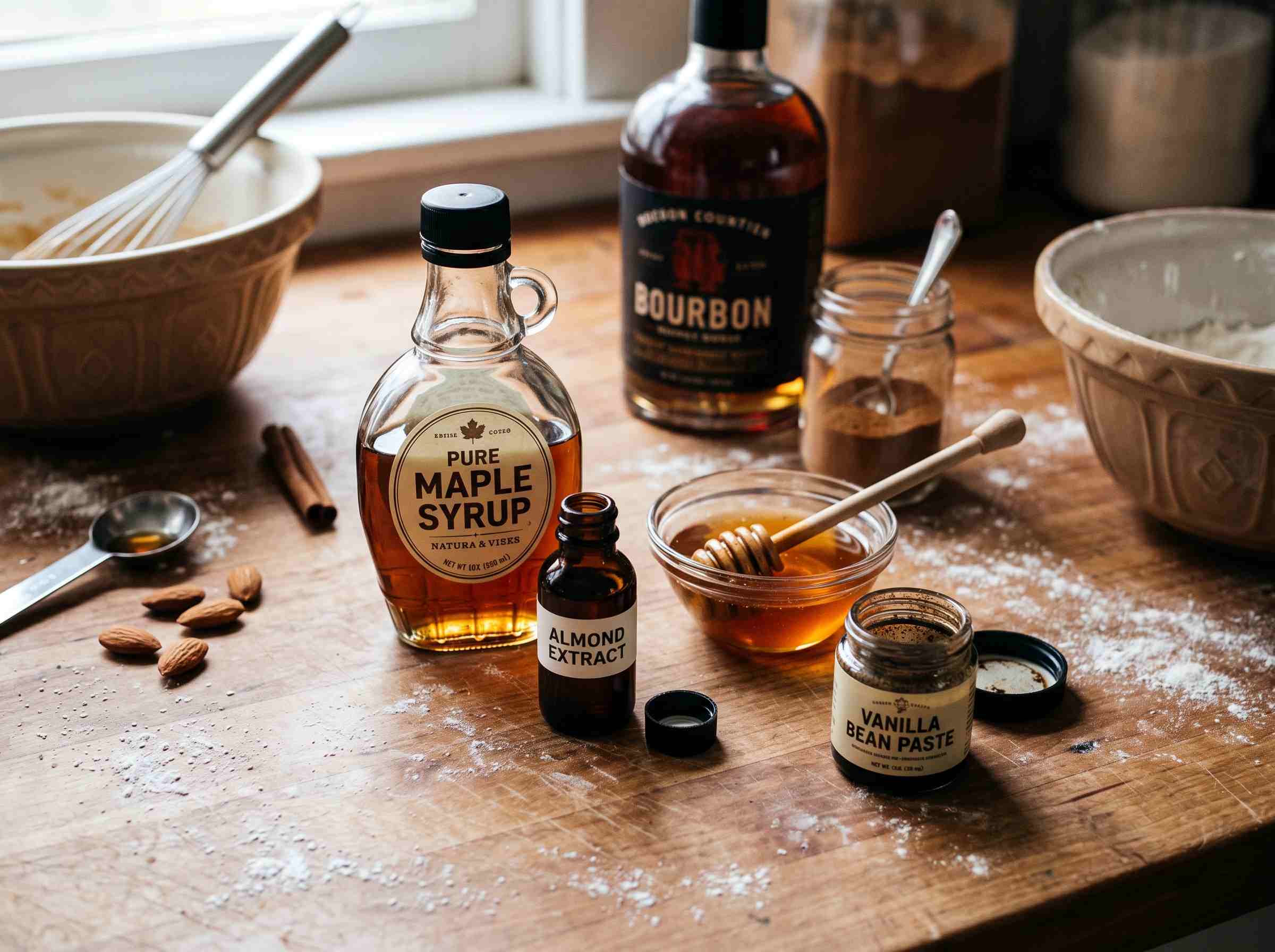
Maple syrup is one of the easiest swaps, since it already carries a warm sweetness close to vanilla. Honey works too, though it brings its own distinct flavor, so it’s best in recipes like oatmeal cookies where that’s welcome. Almond extract is much stronger, so use about half the amount the recipe calls for. A scraped vanilla bean gives the most authentic result of any option on this list. Bourbon, rum, or brandy can also stand in, since the alcohol carries a warm character on its own. You can read more about how vanilla extract is actually made if you want to understand why these swaps work.
Vanilla Bean Paste and Powder
Bakers who go through vanilla often keep paste or powder on hand as a backup. Vanilla bean paste is thicker than extract and shows visible flecks of seed, so it looks great in custards and ice cream bases. Swap it in at a 1:1 ratio — no adjustments needed. Vanilla powder, ground from whole beans, works well in dry mixes where added liquid isn’t wanted. Many bakers prefer it because commercial extract is often cut with corn syrup or added sugar. This comparison of vanilla extract, paste, and powder breaks down how each one behaves in a recipe.
Swaps for Coffee and Drinks
A reliable stand-in isn’t just for baking — it’s handy in drinks too. Out of vanilla for your morning coffee? A spoonful of maple syrup or a pinch of cinnamon rounds things out in a similar way. Almond extract also works in lattes and milkshakes, though its flavor is intense, so go light. Some people reach for vanilla-flavored liqueurs instead, since the alcohol already leans slightly sweet and vanilla-adjacent. Any option with alcohol will taste a touch different from pure extract, so taste a small batch before committing a whole pitcher to it. For more drink ideas, check our collection of homemade coffee recipes.
How Much to Use
Ratios matter as much as the swap itself. Maple syrup and honey work at a 1:1 ratio in most recipes, though you may want to trim back other liquids slightly. Almond extract should be cut in half, since it’s noticeably stronger. One scraped vanilla bean roughly equals one tablespoon of extract. Spirits like bourbon or rum work close to 1:1, but taste as you go, since raw alcohol flavor is sharper before baking mellows it. Getting this part right is what separates a seamless swap from a batch that tastes slightly off.
Picking the Right Option for Your Recipe
There’s no single best choice here — it depends on what you’re making. Maple syrup and honey suit everyday baking. Vanilla bean paste suits anything meant to look as good as it tastes. Almond extract and spirits suit recipes where a different flavor note is welcome. Next time the bottle turns up empty, you won’t need to pause the recipe. With a few pantry staples on hand, your cookies, cakes, and coffee will still turn out well.