
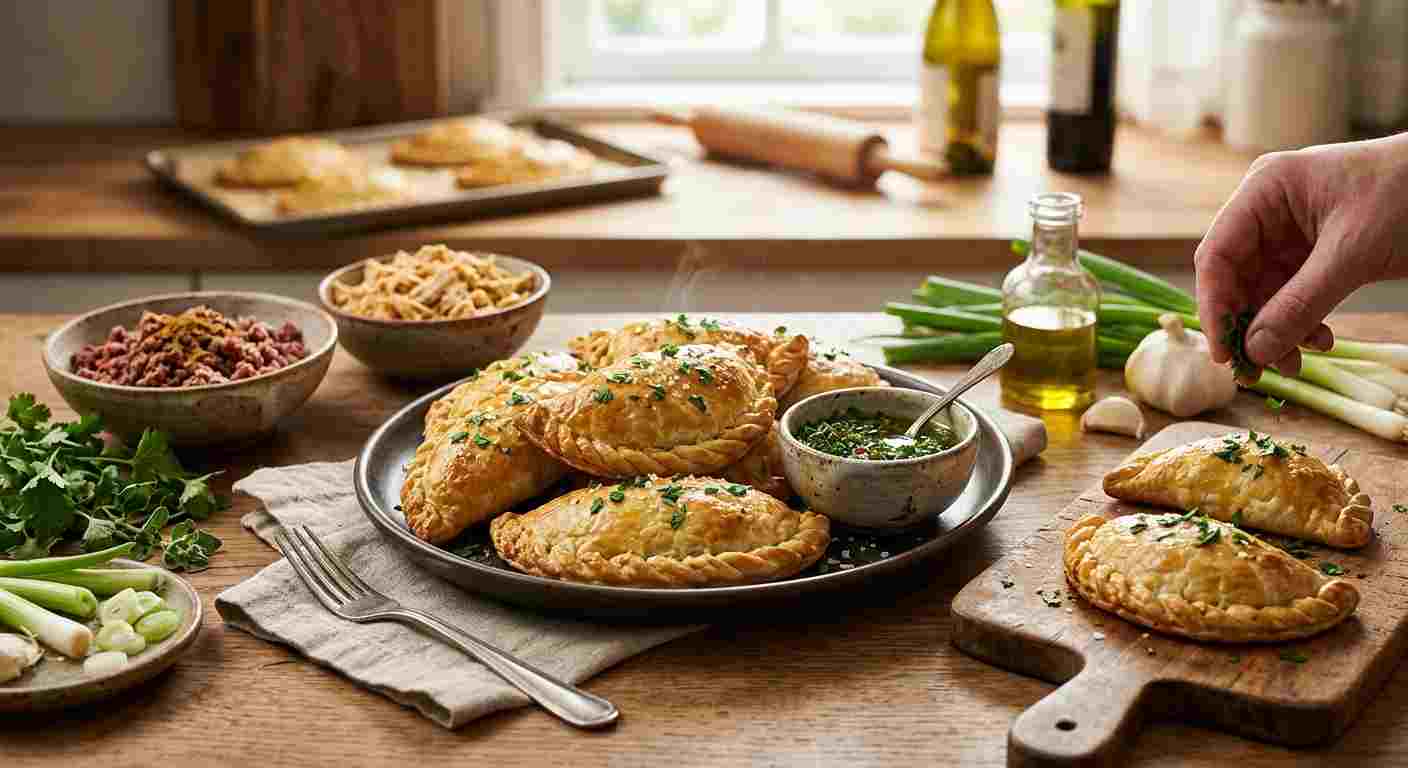
There’s something deeply comforting about biting into a warm, flaky empanada fresh out of the oven or fryer. Empanadas are one of those dishes that feel like a hug from your grandmother, even if your grandmother never made them. Originating in Spain and now beloved across Latin America, empanadas have traveled the world, picking up new fillings, new shapes, and new names along the way — but the heart of the dish stays the same: a tender pastry pocket wrapped around something delicious.
If you’ve ever wondered how to make empanadas at home without feeling intimidated, you’re in the right place. This guide walks you through everything, from the dough to the filling to the folding technique that keeps everything sealed in tight.
[Image alt text suggestion: “Freshly baked empanadas on a wooden tray”]
Why Empanadas Deserve a Spot on Your Table
Empanadas aren’t just a snack — they’re a whole experience. They’re portable, which makes them perfect for picnics, lunchboxes, or late-night fridge raids. They’re endlessly customizable, so whether you’re a meat lover, a vegetarian, or someone with a sweet tooth, there’s a version of empanadas waiting for you. And perhaps best of all, they freeze beautifully, so a weekend batch can feed you for weeks.
Across countries like Argentina, Chile, Colombia, and the Philippines, empanadas take on regional personalities. According to Serious Eats, the fillings and folding styles can vary so much from region to region that two empanadas from neighboring countries might barely resemble each other, yet both are unmistakably empanadas at their core.
The Dough Is Where Great Empanadas Begin
Good empanadas start with good dough. You want something sturdy enough to hold a filling without tearing, but tender enough to shatter pleasantly with each bite. A classic empanada dough uses flour, cold butter or lard, a pinch of salt, and ice-cold water, pulsed together until it just comes together — not overworked.
Cold fat is the secret here. When the butter stays cold and doesn’t fully melt into the flour, it creates little pockets that puff up during cooking, giving your empanadas that signature flaky texture. Let the dough rest in the fridge for at least thirty minutes before rolling — this relaxes the gluten and makes the dough far easier to work with.
If you’re short on time, store-bought empanada discs (often sold frozen as “discos”) are a completely respectable shortcut. Many home cooks swear by them for weeknight empanadas when there’s no time to make dough from scratch.
Choosing a Filling for Your Empanadas
This is where empanadas really get fun, because there’s no single right answer. The most classic version is the Argentine beef empanada, filled with ground beef, onions, hard-boiled egg, green olives, and a blend of cumin and paprika. The combination of savory meat and briny olive is what makes this filling so iconic.
Chicken empanadas are another crowd favorite — shredded chicken simmered with tomatoes, bell peppers, and a touch of smoked paprika makes a filling that’s rich without being heavy. For a vegetarian take, sautéed spinach with crumbled feta or a mix of black beans, corn, and melted cheese both work wonderfully.
Don’t overlook sweet empanadas either. Dulce de leche, guava and cream cheese, or spiced apple fillings turn empanadas into a dessert that feels just as satisfying as the savory versions. Whatever filling you choose, make sure it’s cooled completely before assembling — warm filling can make the dough soggy or difficult to seal.
[Image alt text suggestion: “Empanadas filled with seasoned ground beef and olives”]
Folding and Sealing Empanadas the Right Way
The fold is what gives empanadas their signature shape, and it’s easier than it looks. Place a spoonful of filling just off-center on a circle of dough, fold the dough over to form a half-moon, and press the edges together firmly to seal. A light brush of water or egg wash along the edge before folding helps everything stick.
For the classic braided edge, called “repulgue” in Spanish, fold small sections of the edge over themselves in a rope-like pattern, working your way around the empanada. It takes a bit of practice, but even imperfect folds taste just as good. If braiding feels like too much, simply crimping the edges with a fork does the job just fine and still gives your empanadas a tidy, homemade look.
Baking or Frying Empanadas
Once your empanadas are assembled, you have two main cooking paths: baking or frying. Baked empanadas are brushed with egg wash and baked at a high temperature, around 400°F (200°C), until deeply golden — usually 20 to 25 minutes. This method is lighter and less messy, making it a popular choice for everyday cooking.
Fried empanadas, on the other hand, deliver an irresistibly crisp, blistered crust. Frying in oil heated to around 350°F (175°C) for a few minutes per side gives empanadas that street-food crunch many people associate with the dish. Whichever method you choose, letting the empanadas rest for a few minutes after cooking helps the filling settle and prevents burnt tongues.
Serving and Storing Empanadas
Empanadas are often served with a bright, acidic dipping sauce to cut through the richness of the pastry. Chimichurri, a simple blend of parsley, garlic, vinegar, and olive oil, is a classic pairing — you can find a reliable version of the sauce over on The Spruce Eats. A simple salsa or spiced sour cream also works well alongside savory empanadas.
If you’ve made extra, empanadas freeze exceptionally well either before or after cooking. Freezing them uncooked means you can bake or fry a few straight from the freezer whenever a craving hits — just add a few extra minutes to the cooking time.
Final Thoughts on Mastering Empanadas
Making empanadas at home is less about following a rigid recipe and more about understanding the basic technique: a good dough, a flavorful filling, and a secure seal. Once you’ve got that foundation, you can experiment endlessly. For more ideas and filling inspiration as you keep exploring, check out the recipe collection on our tools and resources page.
Whether you fry them, bake them, fill them with beef or cheese or fruit, empanadas have a way of bringing people to the table. Once you’ve made your first batch, don’t be surprised if empanadas become a regular request in your house.


