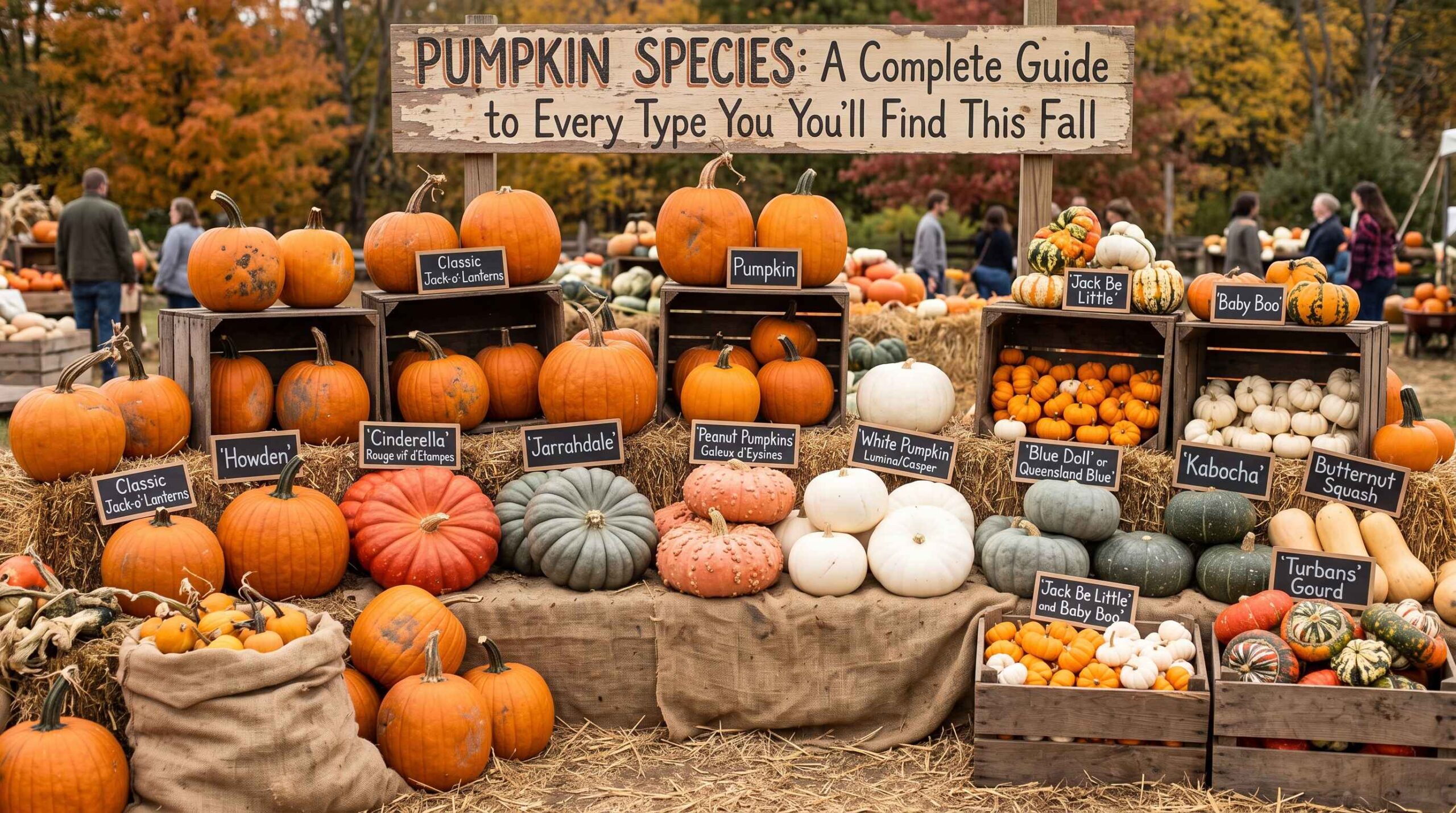
If you’ve wandered through a farmers market or a pumpkin patch in October, you’ve probably noticed something. Not all pumpkins look the same. Some are tall and ribbed. Others are squat and pale. A few look nothing like the pumpkin on your cereal box. That’s because there isn’t just one kind of pumpkin growing out there. Understanding the different pumpkin species can change how you shop, cook, and decorate this season.
What Are Pumpkin Species, Exactly?
“Pumpkin” is really a catch-all term, not a single plant. Botanically, pumpkins belong to the genus Cucurbita. Within that genus, you’ll find several distinct pumpkin species, each with its own shape, texture, and best use. The University of Illinois Extension confirms that pumpkins are technically a fruit. The differences between species go far beyond color or size. They affect flavor, storage life, and even how well a pumpkin survives frost.
The Four Main Pumpkin Species You’ll Come Across
Most pumpkins sold commercially fall into one of four main species. Knowing them makes a real difference when you choose one for a specific purpose.
Cucurbita pepo is the most common of all pumpkin species. It includes the classic jack-o’-lantern pumpkin, plus acorn squash and zucchini (yes, they’re relatives). These pumpkins have hard, ridged stems and grow quickly.
Cucurbita maxima covers the giant pumpkins you see at state fair weigh-offs. It also includes sweeter varieties like Hubbard squash. This species produces soft, corky stems and some of the largest fruits in the plant kingdom.
Cucurbita moschata includes butternut squash and many of the pumpkins used in canned pumpkin purée. Their flesh is naturally sweeter and less watery than other pumpkin species.
Cucurbita argyrosperma shows up less often in home gardens. Growers in parts of Mexico and the American Southwest prize it for its large, flat seeds, which people often roast separately as a snack.
How to Tell Pumpkin Species Apart at a Glance
You don’t need a botany degree to spot the differences between pumpkin species. Start with the stem. A hard, angular stem usually signals Cucurbita pepo. A soft, spongy stem points to Cucurbita maxima. Skin texture matters too. Smooth and tan skin often means a moschata variety. Deeply ridged, bright orange skin is a classic pepo trait. Weight gives you another clue — maxima pumpkins can balloon to hundreds of pounds, something you’ll rarely see from the other pumpkin species.
Which Pumpkin Species Are Best for Cooking?
If you’re baking a pie or making soup, not every pumpkin gives you the same result. Cucurbita moschata varieties, like butternut and Dickinson pumpkins, make the best cooking choice among pumpkin species. Their flesh is denser, sweeter, and less fibrous. The Old Farmer’s Almanac notes that most canned pumpkin comes from these moschata varieties, not the big orange pumpkins people picture. Have you ever cooked a standard jack-o’-lantern pumpkin and found the result watery or bland? Now you know why — growers simply didn’t breed it for the kitchen.
Which Pumpkin Species Work Best for Carving and Decorating?
Carving calls for something different: thin, even flesh that’s easy to cut and a sturdy shell that holds its shape. Cucurbita pepo varieties, especially ones labeled “jack-o’-lantern” or “connecticut field,” work best here. They’re not the sweetest of the pumpkin varieties, but their predictable round shape and smooth walls make carving far easier. For a more dramatic look, growers now breed some maxima varieties purely for ornamental use. These offer unusual colors like deep blue-green or pale pink.
Growing Your Own: What to Know Before You Plant
Thinking about growing your own? Decide early what you actually want — a giant showpiece, a reliable carving pumpkin, or something sweet enough for pies. Each type needs different space and soil. Giant varieties can need 20 feet or more of garden space per plant. Smaller sugar pumpkins grow well in a much more modest bed. The Clemson Cooperative Extension offers solid growing guides broken down by variety, with details on spacing, watering, and harvest timing.
If you enjoy this kind of seasonal gardening content, check out more growing guides and seasonal tips on our site — we cover everything from vegetable patches to fall décor projects.
Final Thoughts
Next time you pick out a pumpkin, take a second look before grabbing the first orange one you see. The differences between pumpkin species aren’t just trivia. They genuinely affect how your pumpkin tastes, how long it lasts, and how it looks on your porch. Whether you’re planning a pie, a jack-o’-lantern, or a record-breaking garden project, a pumpkin species exists that suits the job exactly.