Broccoli looks sturdy at the store. But it wilts fast once it gets home. You open the fridge drawer two days later. The broccoli has already turned sad and yellow. Sound familiar? Learning how to store broccoli properly fixes this problem. Do it right, and you’ll enjoy crisp, green florets for ten days or more. This guide covers the best methods. You’ll learn how to keep it fresh in the fridge, freeze it for later, and store it after cooking.
Why Knowing How to Store Broccoli Properly Matters
Broccoli keeps living after harvest. It releases moisture. It burns through its own sugars. That’s why it turns limp so fast. It can also develop a sulfur-like smell. Understanding how to store broccoli the right way slows this process. It keeps the nutrients intact. It helps you avoid food waste. The USDA recommends proper refrigeration and humidity control for extending the shelf life of fresh produce like broccoli. A little effort at the storage stage pays off. Your broccoli stays firm and bright green, even days later.
How to Store Broccoli in the Refrigerator
Most of us keep broccoli in the fridge. That’s the right call for short-term storage. The trick to how to store broccoli in the refrigerator comes down to moisture. Too much moisture causes rot. Too little dries it out and makes it rubbery.
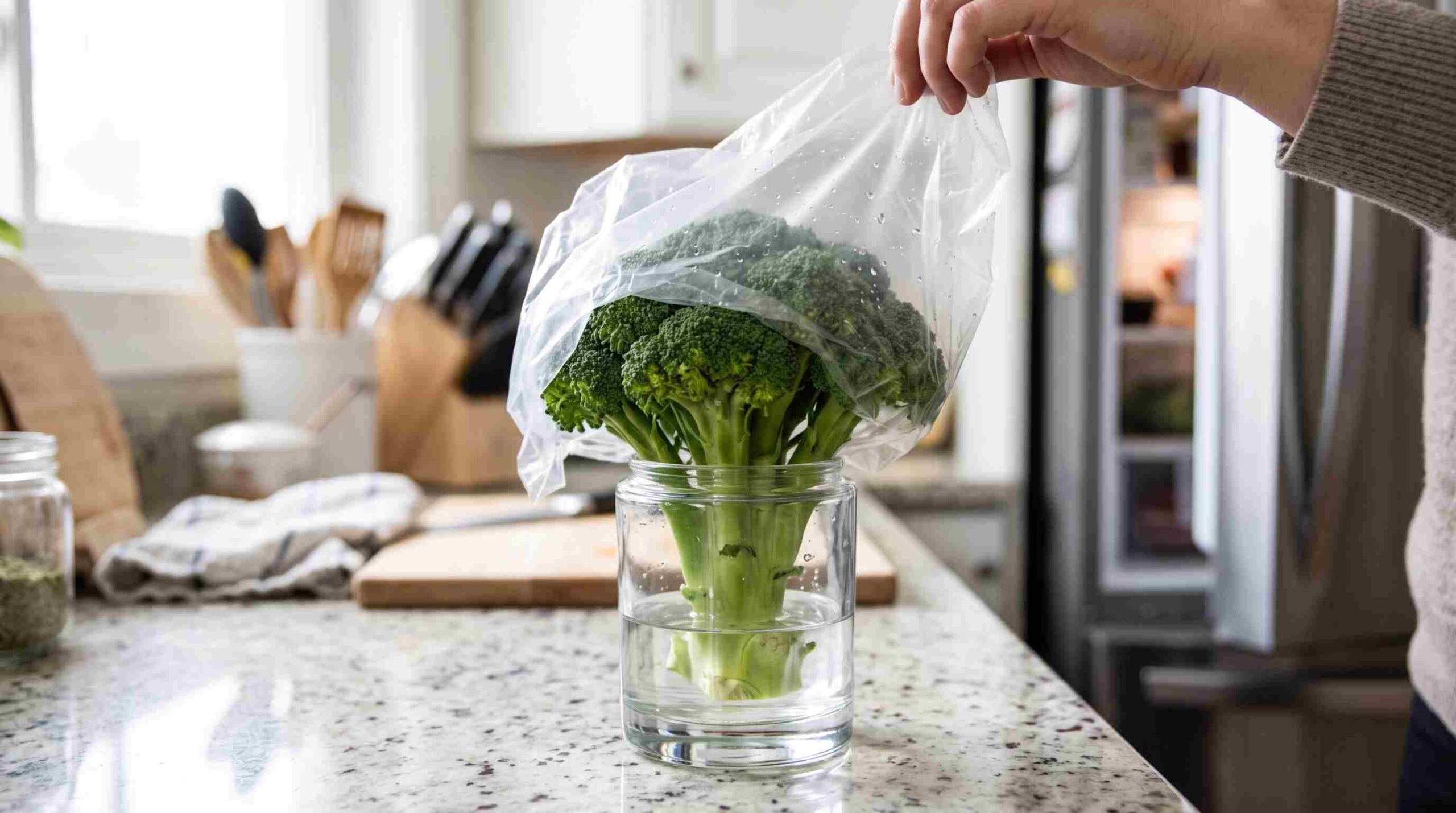
Don’t wash the broccoli before storing it. Washing adds excess water, and that speeds up spoilage. Instead, wrap the head loosely in a damp paper towel. Place it inside a perforated plastic bag or a reusable produce bag. This keeps some humidity around the florets. It also prevents condensation from building up. Store it in the crisper drawer. Set it to high humidity if you can. Keep the temperature around 32–36°F (0–2°C). Fresh broccoli stored this way lasts five to seven days. A very fresh head can last even longer.
Skip the airtight container or tight plastic wrap. Broccoli needs some airflow. Without it, condensation builds up and mold follows.
How to Store Broccoli for Long-Term Use in the Freezer
Did you buy more broccoli than you’ll use this week? Freezing is your best option. Most people ask how to store broccoli for months instead of days. The answer is simple: blanch it first, then freeze it.
Blanching stops the enzymes that break down flavor, texture, and color over time. Here’s how to do it. Cut the broccoli into florets. Boil them for two to three minutes. Then move them straight into a bowl of ice water. This stops the cooking process immediately. Drain the florets well once they’ve cooled. Pat them dry. Spread them out on a baking sheet. Freeze for an hour or two before moving them to a freezer bag. This step stops the pieces from clumping into one block.
Food science research confirms this approach works. Blanching vegetables before freezing preserves color, flavor, and nutrients far better than freezing them raw. Broccoli prepared this way lasts 10 to 12 months in the freezer. The quality barely drops.
How to Store Broccoli Without Blanching
Short on time? You can skip blanching, though it’s not ideal. Wash and dry raw broccoli florets thoroughly, then freeze them directly. The texture turns softer once thawed. The color fades faster too. But the broccoli still works well in soups, stir-fries, and casseroles, where a softer bite doesn’t matter much. If you’re wondering how to store broccoli without the extra step, just know the trade-off: faster prep, shorter shelf life. Expect one to two months before the flavor starts to decline.
How to Store Cooked Broccoli
Leftover broccoli needs care too. Figuring out how to store broccoli after steaming, roasting, or sautéing comes down to two things: cool it fast, and seal out air. Let the cooked broccoli reach room temperature. Don’t leave it out longer than two hours. Transfer it to an airtight container right after. Stored this way, cooked broccoli stays good for three to five days in the fridge. Reheat it gently in a pan or microwave. Add a splash of water so it doesn’t dry out.
You can freeze cooked broccoli too. The texture will soften further after thawing. It works best in soups or purees rather than as a side dish.
Signs Your Broccoli Has Gone Bad
Even good storage has limits. Broccoli won’t last forever. Watch for these warning signs so you can use it in time, or toss it safely:
- Yellowing florets signal the broccoli has passed its peak, though it may still be edible
- A strong, sulfurous smell usually means it has turned
- Slimy or mushy stalks are a clear sign of spoilage
- Black or dark spots spreading across the head mean it’s time to toss it
Catch the yellowing early, and you can often still cook it. Expect a slightly more bitter flavor, though.
Quick Tips That Make a Big Difference
A few small habits make a real difference in how to store broccoli successfully. Buy heads with tightly packed, deep green florets and firm stalks. This gives you a longer shelf life from the start. Keep broccoli away from apples and bananas in your fridge. These fruits release ethylene gas, and that speeds up spoilage in vegetables nearby. Don’t cut it up ahead of time either. Whole heads last noticeably longer than pre-cut florets, since cut surfaces lose moisture faster.
Final Thoughts
Storing broccoli well isn’t complicated. Keep it dry but slightly humid in the fridge for short-term use. Blanch and freeze it for long-term storage. Cool leftovers quickly to lock in freshness. Follow these habits, and you’ll waste less food. You’ll save money too. Best of all, you’ll always have crisp broccoli ready when you need it.