
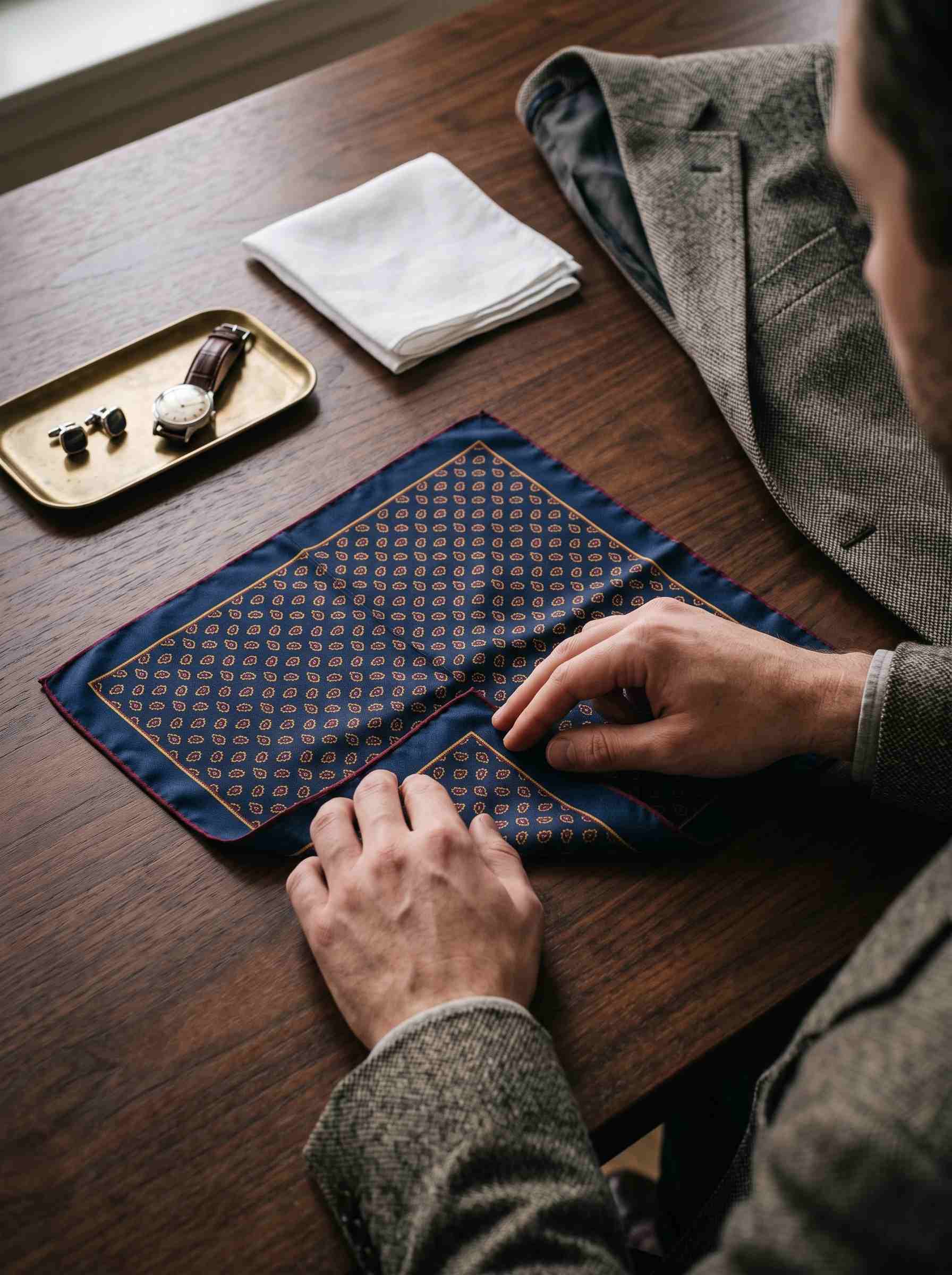
A pocket square is one of the easiest ways to lift a jacket from plain to polished, but most people skip it because they assume it’s complicated. It isn’t. Once you know a few basic folds, you’ll never look at a blazer pocket the same way again. This guide walks through exactly how to fold a pocket square, step by step, so you can get it right the first time and repeat it in seconds whenever you need to.
Why Learning How to Fold a Pocket Square Matters
Before getting into the folds themselves, it helps to understand why this small habit makes such a big difference. A pocket square draws the eye upward, toward your face, and frames the rest of your outfit. A tie says “I dressed carefully.” A pocket square says “I noticed the details.” Learning how to fold a pocket square isn’t about following strict rules — it’s about having a reliable move you can do without thinking, the same way you’d tie your shoes.
What You Need Before You Start
You don’t need much. A square of fabric — usually cotton, linen, or silk — somewhere between 10 and 17 inches per side, and a flat surface to work on, like a table or the top of a dresser. Silk slides more and holds a sharper line, while linen and cotton are a little more forgiving for beginners, since they hold their shape without needing to be pressed. If you’re picking your first square, a cotton one is a good place to start. For background on fabric weights and how they behave, Real Men Real Style has a helpful breakdown of pocket square materials worth skimming before you buy.
The Straight Fold (The One to Learn First)
This is the fold most people mean when they ask how to fold a pocket square for a job interview, a wedding, or any occasion where you want to look put-together without looking fussy. Lay the square flat, then fold it in half, then in half again, until you have a long rectangle slightly narrower than your jacket pocket. Tuck it into the pocket so a thin strip of fabric peeks over the edge, about half an inch to an inch. Straighten the top line with your fingers. That’s it — clean, symmetrical, and appropriate for almost any setting, from the office to a funeral.
The Puff Fold (Effortless and Relaxed)
If the straight fold feels too formal, the puff fold is the move for casual blazers and daytime events. Instead of folding the square into neat lines, pinch the center of the fabric and let it bloom upward, then gather the base and tuck it into the pocket. There’s no crisp geometry here — the goal is a soft, slightly rumpled look that reads as effortless. This is the fold most stylists reach for when someone asks how to fold a pocket square without it looking too stiff or try-hard. It works especially well with linen, which naturally has a bit of texture and doesn’t need to lie perfectly flat.
The Two-Point and Three-Point Fold (A Bit More Formal)
Once you’re comfortable with the basics, the two-point and three-point folds add a little more structure. Fold the square diagonally into a triangle, then fold the two outer corners toward the center so they peek above the pocket line like small peaks. For the three-point version, fold again so three tips show instead of two. These folds take a bit more patience, but once you’ve practiced the motion a couple of times, your hands remember it. This is a good next step once you’ve mastered how to fold a pocket square the simple way and want something a little more detailed for formal events like weddings or black-tie dinners.
Matching Your Pocket Square Without Matching Too Much
One rule experienced dressers follow closely: your pocket square should never match your tie exactly. If they’re identical, the outfit starts to look like a matching set rather than something you put together with intention. Instead, aim for a shared color or complementary tone — if your tie has navy and burgundy stripes, a solid burgundy square pulls the look together without mirroring it. GQ’s guide to pattern mixing covers this idea in more depth if you want to go further into coordinating prints and textures.
Common Mistakes to Avoid
The biggest mistake people make when learning how to fold a pocket square is over-ironing it. A crisp, machine-pressed look can actually work against you — pocket squares are meant to look slightly imperfect, like you adjusted it with your hands rather than a flat iron. Another common issue is folding it too large, so it overwhelms the pocket, or too small, so it disappears and loses its visual impact. Aim for that half-inch to inch of fabric showing above the pocket line, no more.
Practice Makes It Automatic
The first few times you try these folds, it might take a minute or two to get the proportions right, and that’s completely normal. Keep a spare square nearby and practice while you’re doing something else, like watching TV. After a handful of tries, folding becomes second nature, and you’ll be able to do it in the time it takes to put on your jacket. If you’re building out a small accessories collection, our guide to building a capsule wardrobe covers how a few well-chosen pieces, pocket squares included, go a long way.
Final Thoughts
Knowing how to fold a pocket square is a small skill with an outsized payoff. It takes almost no time, costs almost nothing beyond the square itself, and instantly signals that you put thought into your outfit. Start with the straight fold, get comfortable with it, and branch out to the puff or point folds as you get more confident. Once the motion is in your hands, you’ll never leave a jacket pocket empty again.