
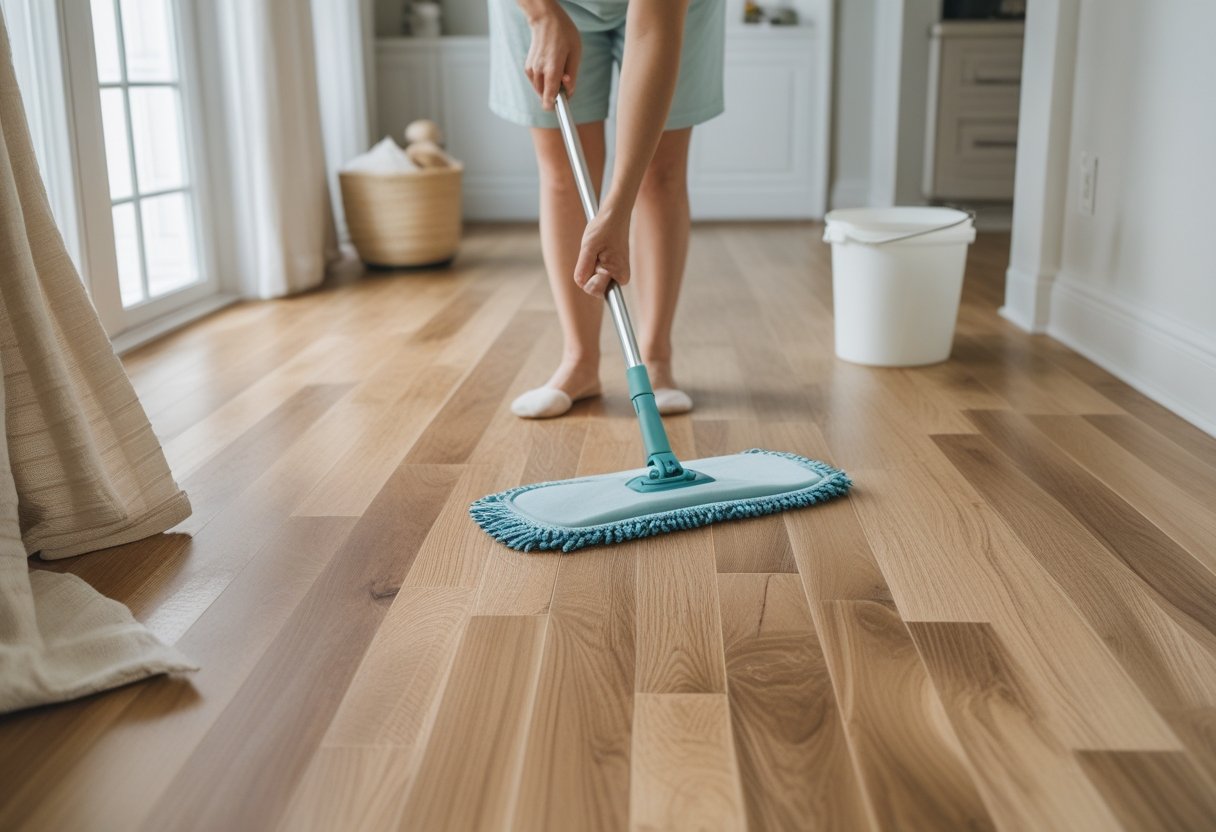
If you’ve ever wondered how to clean hardwood floors without scratching, dulling, or warping them, you’re not alone. Hardwood floors add warmth and value to a home, but they’re also more sensitive than tile or laminate. Water, harsh chemicals, and the wrong tools can strip the finish or leave permanent marks. The good news is that once you understand the basics, keeping your floors spotless takes only a few simple habits.
[Image alt text: how to clean hardwood floors with a microfiber mop]
Why Learning How to Clean Hardwood Floors Properly Matters
Hardwood is a natural material, and it reacts to moisture, sunlight, and friction differently than synthetic flooring. That’s exactly why how to clean hardwood floors isn’t a one-size-fits-all question — the finish on your floor (oil-based, water-based, or wax) determines what products are safe. Using the wrong cleaner can dull the shine or, worse, cause the wood to swell and buckle over time. Before you start, check your manufacturer’s care guide if you have one, since some brands have specific recommendations.
Gather the Right Tools Before You Start
You don’t need a cabinet full of products to clean hardwood floors well. A soft-bristle broom or a microfiber dust mop, a vacuum with a hard-floor setting, a well-wrung mop, and a pH-neutral hardwood floor cleaner are really all you need. Avoid steel wool, scrub brushes, or anything abrasive — these will leave fine scratches that show up under sunlight. According to Home Depot’s cleaning guide, sticking to a consistent maintenance schedule is one of the best ways to keep floors in shape long-term, and that’s a principle worth borrowing no matter which products you use.
[Image alt text: how to clean hardwood floors supplies broom mop cleaner]
Step-by-Step: How to Clean Hardwood Floors at Home
Start by clearing the room of small furniture, rugs, and clutter so you have full access to the floor. Sweep or dry-mop first to lift loose dirt, dust, and pet hair — this step matters more than people realize, because dragging debris around with a wet mop is what causes those fine surface scratches.
Next, vacuum using a hard-floor attachment (never a beater-bar brush, which can chip the finish). Once the floor is free of grit, dampen your mop with a hardwood-safe cleaning solution. The mop should feel barely moist, not wet — excess water is the number one cause of warped boards and cloudy finishes. Work in small sections, following the direction of the wood grain, and wipe up any pooling liquid immediately with a dry towel.
If you’re dealing with sticky spots or scuff marks, a slightly damp microfiber cloth with a drop of dish soap usually lifts them without needing a stronger chemical. This gentler approach to how to clean hardwood floors protects the finish while still getting the job done.
Products to Avoid When Cleaning Hardwood Floors
Not every “all-purpose” cleaner belongs on wood. Vinegar and water is a popular DIY mix, but repeated use can actually break down polyurethane finishes over time, leaving floors looking dull instead of shiny. Ammonia-based glass cleaners, bleach, and oil soaps also tend to leave residue or strip the protective coating. Stick to cleaners labeled specifically for hardwood — Bissell’s guide to hardwood floor care recommends checking the manufacturer’s instructions first, since floor washing is really only appropriate for sealed, finished wood.
Daily and Weekly Habits That Keep Floors Looking New
Deep cleaning is only part of the picture. The bigger factor in how your floors age is what you do day to day. A quick daily sweep or dry-mop keeps grit from grinding into the finish underfoot. Vacuuming once a week catches what sweeping misses, especially in corners and along baseboards. Save the damp mopping for high-traffic areas every couple of weeks, and do a full clean with a proper hardwood cleaner about once a month.
[Image alt text: how to clean hardwood floors daily maintenance routine]
Small preventive habits go a long way too. Place mats at every entrance so people wipe their feet before walking across the wood. Use felt pads under furniture legs to prevent scratches, and consider rugs in high-traffic zones like hallways and in front of the kitchen sink. Trimming pets’ nails regularly also helps, since claws are a surprisingly common source of surface scratches.
Dealing With Spills and Stains
Hardwood floors don’t forgive standing water, so the golden rule is: wipe up spills the moment they happen. For sticky messes like juice or wine, a barely damp cloth with a drop of mild soap usually does the trick. For white rings or watermarks left by cups or plants, a little non-gel toothpaste rubbed gently in the direction of the grain, then buffed dry, can often lift the mark without needing to refinish anything.
When to Call in Professional Help
If your floors look dull no matter how carefully you clean them, that’s usually a sign the finish itself needs attention rather than the surface. Buffing can restore shine to a worn coat, while deep scratches or heavy wear may call for a professional refinish. As a general rule, most hardwood floors benefit from a fresh coat of finish every three to five years, and a full sand-and-refinish every decade or so, depending on foot traffic.
Final Thoughts
Knowing how to clean hardwood floors really comes down to a few consistent habits: sweep often, mop gently and infrequently, use the right products, and protect the wood from grit and moisture. Do that, and your floors will stay beautiful for decades rather than needing an expensive refinish every few years.