
Why Knowing How to Clean Granite Countertops Matters
If you’ve just had granite installed, or you’ve lived with it for years without really thinking about care, learning how to clean granite countertops properly can save you a lot of frustration. Granite is tough and beautiful, but it’s also a natural stone with tiny pores that can absorb liquids, oils, and stains if you’re not careful. The good news is that cleaning granite countertops isn’t complicated once you know what to use and what to avoid. This guide walks you through everyday cleaning, stain removal, and the small habits that keep your counters looking like the day they were installed.
What You’ll Need to Clean Granite Countertops
Before you start, gather a few simple supplies: a soft microfiber cloth, warm water, a mild dish soap, and a stone-safe cleaner if you want something a bit stronger. You don’t need anything fancy to clean granite countertops effectively — in fact, the simpler your routine, the better, because harsh chemicals can wear down the sealant over time. If you want a dedicated product, This Old House has a helpful breakdown of stone-safe cleaners worth trying. Avoid anything with bleach, ammonia, or vinegar, since these can slowly strip the protective seal that keeps granite stain-resistant.
Step-by-Step: How to Clean Granite Countertops Every Day
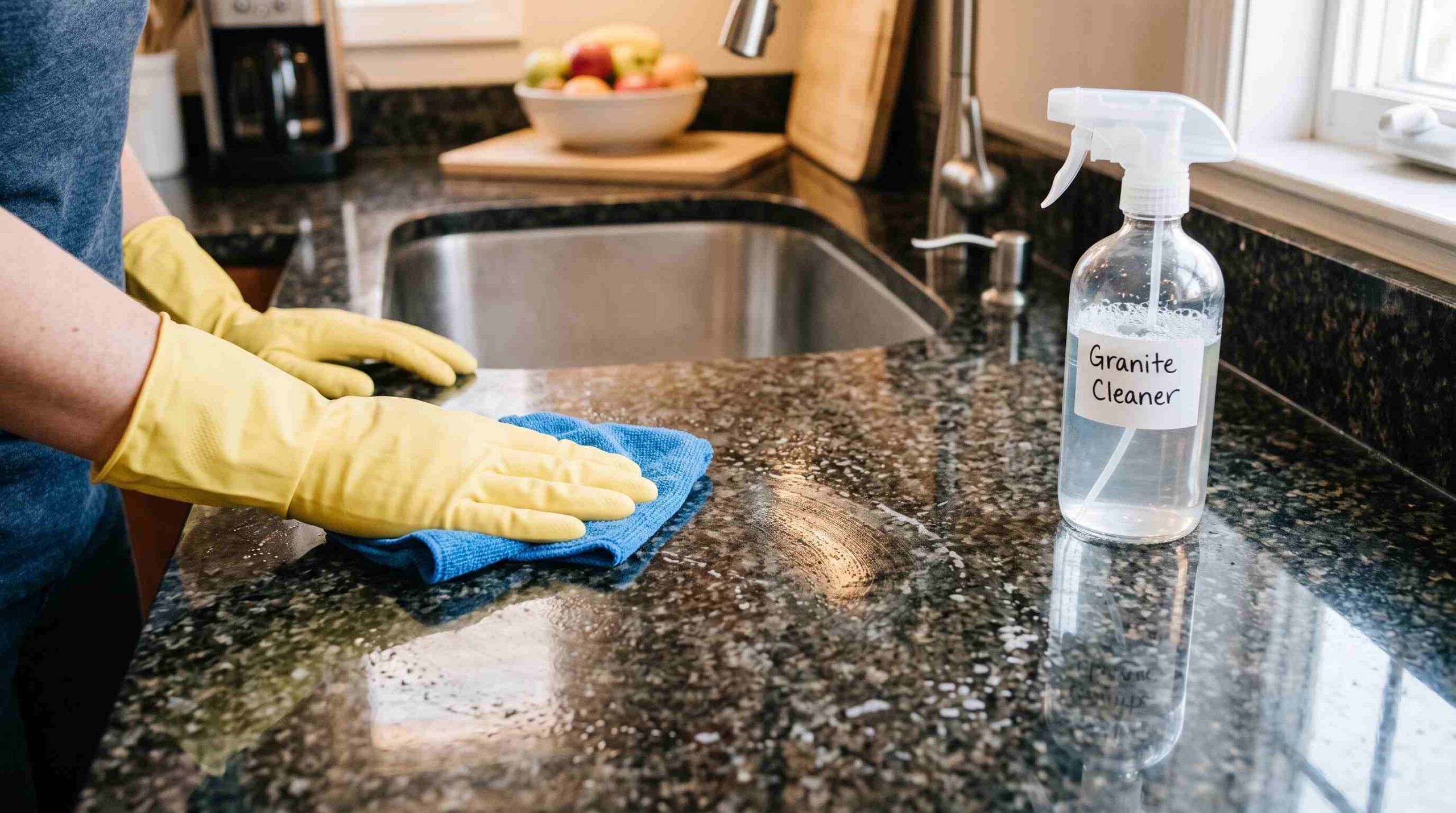
For daily upkeep, how to clean granite countertops comes down to a short routine you can do in under five minutes. Start by wiping away crumbs and debris with a dry cloth. Then mix a few drops of mild dish soap into warm water, dampen your microfiber cloth, and wipe the surface in gentle circular motions. Rinse the cloth, go over the counter again with clean water to remove soap residue, and dry it with a separate towel. Drying is actually one of the most overlooked steps — leaving water to air-dry can cause mineral spots, especially if your tap water is hard. Doing this once a day keeps oils and spills from sitting long enough to cause problems.
How to Clean Granite Countertops When You Have Tough Stains
Sometimes a quick wipe-down isn’t enough, and that’s when you need to know how to clean granite countertops with a bit more effort. For oil-based stains, like cooking grease, make a paste using baking soda and water, apply it to the stain, cover it with plastic wrap, and let it sit overnight. For water stains or hard mineral deposits, a paste of baking soda and a small amount of hydrogen peroxide works well, left on for a few hours before rinsing. Always test any new method on a small, hidden area first. The Natural Stone Institute publishes detailed stone-care guidelines if you’re dealing with a particularly stubborn or unusual stain and want expert-backed advice.
How to Clean Granite Countertops Without Damaging the Seal
One of the biggest mistakes people make is using the wrong products, which is why understanding how to clean granite countertops safely matters just as much as cleaning them regularly. Skip anything acidic — lemon juice, vinegar, and citrus-based cleaners can etch the surface and dull its shine over time. Also avoid abrasive scrubbers, steel wool, or powdered cleansers, since these can create tiny scratches where bacteria and stains can collect. Stick to soft cloths and pH-neutral cleaners made specifically for natural stone, and your sealant will last much longer between reapplications.
Mistakes to Avoid When You Clean Granite Countertops
A few habits can undo all your hard work. Letting spills, especially wine, coffee, or tomato sauce, sit for hours gives them time to soak into the stone. Using dish sponges that have touched raw meat or strong cleaning agents can also transfer bacteria or chemicals onto the surface. And placing hot pots directly on granite, while it won’t usually crack the stone, can sometimes weaken the sealant over repeated exposure. If you keep these in mind every time you clean granite countertops, you’ll avoid most of the common problems homeowners run into.
How Often Should You Clean and Reseal Granite Countertops?
Daily wiping handles the basics, but granite also needs periodic resealing to stay protected. A simple water-drop test tells you when it’s time: splash a little water on the counter, and if it beads up, the seal is still good; if it soaks in within a few minutes, it’s time to reseal. Most granite needs resealing every one to three years, depending on how often the counter is used and how porous the specific stone is. Pairing regular resealing with your routine for how to clean granite countertops will keep stains from ever becoming a real issue.
Final Thoughts on How to Clean Granite Countertops
Once you build the habit, how to clean granite countertops stops being a chore and becomes second nature — a quick daily wipe, the right gentle products, and an eye on when it’s time to reseal. Treat your counters well, and they’ll stay as striking as the day they were installed, handling years of meals, spills, and everyday life without losing their shine.