
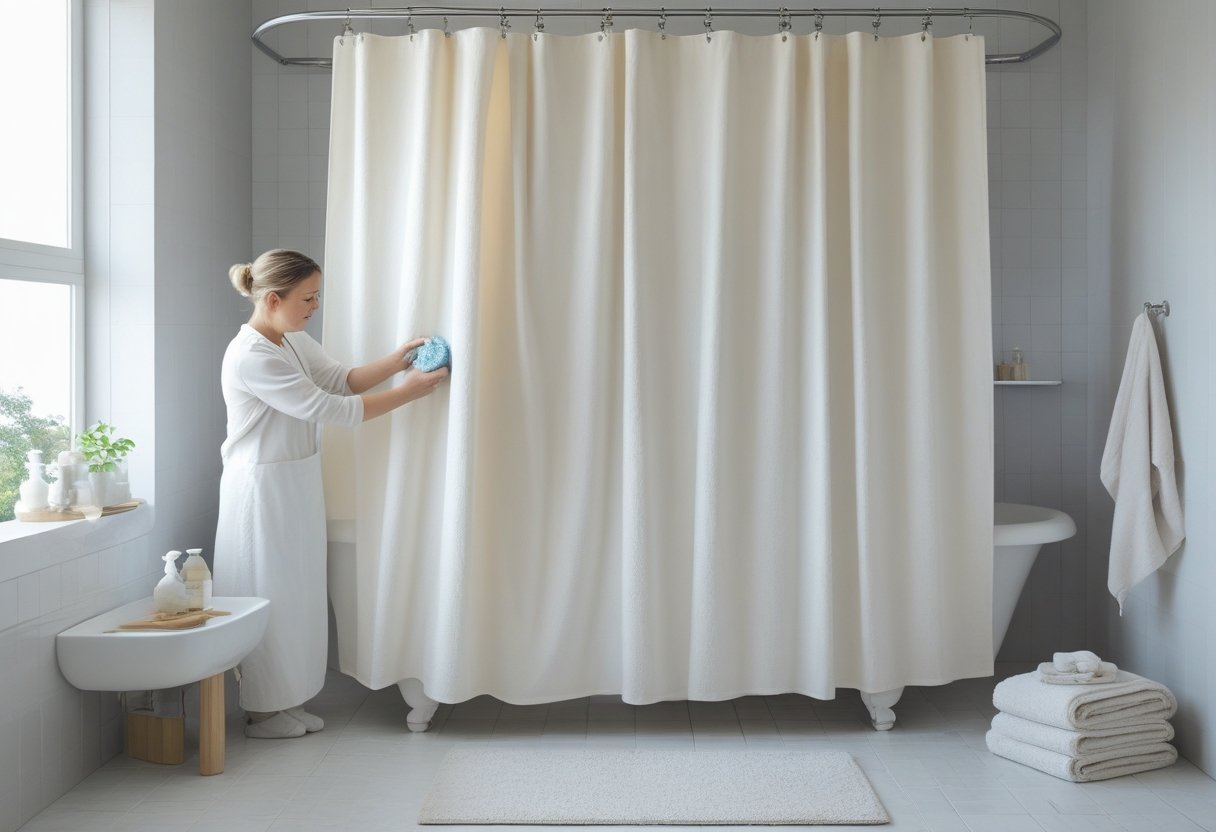
If you’ve ever pulled back your shower curtain and noticed a film of soap scum or a faint ring of mildew, you already know why so many people search for how to clean a shower curtain instead of just tossing it out. The good news is that most shower curtains — plastic, vinyl, or fabric — can be brought back to looking fresh with things you probably already have under your sink. It just takes the right method for the material you’re working with.
Why Shower Curtains Get Grimy So Fast
A shower curtain lives in one of the most humid spots in your home, which makes it a magnet for mildew, mold, and mineral buildup from hard water. Every time you shower, water droplets cling to the plastic or fabric and never fully dry between uses. Add soap and shampoo residue, and you get that slightly sticky, discolored look along the bottom edge. This is also why learning how to clean a shower curtain regularly matters more than scrubbing it once a year — a quick wipe-down every week or two prevents the buildup from ever taking hold in the first place.
How to Clean a Plastic or Vinyl Shower Curtain
Plastic and vinyl liners are the easiest to handle, and honestly, the washing machine does most of the work for you. Take the curtain down, including the rings if they’re plastic, and toss it in the washer on a gentle, warm cycle. Add a cup of white vinegar along with your regular detergent — the vinegar cuts through soap scum and helps break down mild mold spots without damaging the material. Throw in a couple of old towels too; they add friction that scrubs the curtain as it tumbles. Skip the dryer entirely. Instead, rehang the curtain while it’s still damp and let it air dry in the bathroom, stretched out fully so it doesn’t wrinkle or stick to itself.
If you’re dealing with stubborn mildew spots rather than general grime, a pre-soak helps. Fill the tub with warm water, add a cup of baking soda and a cup of vinegar, and let the curtain sit for 15 to 20 minutes before washing. The combination fizzes and loosens buildup that a regular wash cycle might miss. For anyone dealing with heavier mold growth, it’s worth checking the EPA’s guidance on mold cleanup for safety precautions, especially around ventilation and protective gloves, since mold spores can irritate your eyes and airways if you’re scrubbing in a small, enclosed bathroom.
How to Clean a Fabric Shower Curtain
Fabric curtains, usually cotton or polyester, need a slightly gentler touch than vinyl. Check the care tag first — some fabric curtains are machine washable, while others ask for hand washing or spot cleaning only. For machine-washable ones, use cold or warm water on a gentle cycle with a mild detergent, and again, add vinegar instead of bleach if you can; bleach tends to weaken fabric fibers over repeated washes and can leave faded patches. Hang the curtain to air dry rather than using heat, since high dryer temperatures can shrink fabric or warp any decorative trim.
If the curtain has visible mildew spots, treat them before washing rather than after. Mix equal parts water and white vinegar in a spray bottle, saturate the affected area, and let it sit for 10 minutes before laundering as usual. This pre-treatment step is often the difference between a curtain that looks clean and one that’s actually mildew-free once it dries.
Tackling Mold and Black Spots Specifically
Mold is usually what pushes people to search for how to clean a shower curtain in the first place, since it’s the one stain that doesn’t come out with a quick wipe. For small black spots, a paste of baking soda and water applied directly to the mold, left for a few minutes, then scrubbed with an old toothbrush, works well on both plastic and fabric. Rinse thoroughly afterward so no residue is left behind. If mold keeps returning despite regular cleaning, it may be a sign of poor bathroom ventilation rather than a cleaning problem — running a fan or cracking a window during and after showers makes a real difference. The CDC’s mold resources page has useful background on why mold keeps coming back in damp spaces and how to reduce exposure while you clean.
Preventing Buildup Between Deep Cleans
Once your curtain is clean, a little maintenance keeps it that way longer. After each shower, pull the curtain fully closed or spread it out so it dries flat instead of bunched up — trapped moisture in the folds is exactly where mildew starts. Wiping down the bottom few inches with a damp cloth once a week catches soap scum before it hardens. Some people also keep a spray bottle of diluted vinegar in the bathroom for a quick weekly mist, which cuts down on how often you need a full wash.
When It’s Time to Just Replace It
Cleaning works wonders, but there’s a point where a curtain has simply had its run. If the plastic has gone brittle and is cracking, or if mildew stains have soaked so deep into fabric that they won’t lift no matter what you try, replacing it is usually faster and cheaper than continuing to fight the stains. As a general rule, a well-maintained liner lasts six months to a year before it’s worth swapping out, while a good fabric curtain can last several years with regular care.