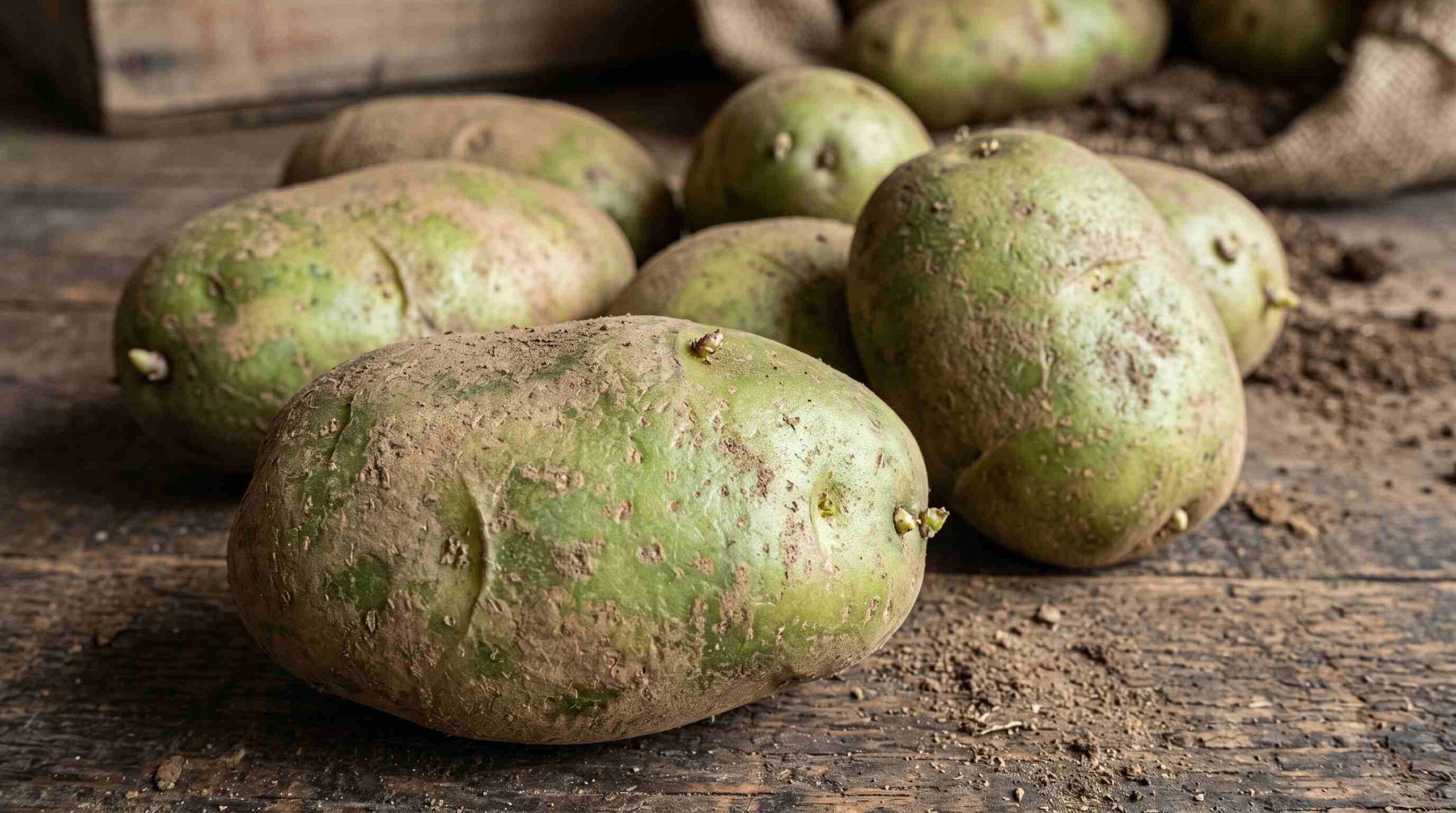
You open a bag of potatoes and notice a greenish tint under the skin. This happens to a lot of people. Most of us aren’t sure whether to eat green potatoes, peel them, or just throw them out. The green color isn’t mold or dirt. It’s chlorophyll, the same pigment that makes leaves green. Light exposure creates it. This usually happens during storage, whether at the grocery store, in transit, or on your counter instead of in a dark cupboard.
Chlorophyll on its own isn’t dangerous. It’s just a plant reacting normally to light. But green potatoes often carry a warning sign too. The same conditions that cause greening can also trigger a natural toxin.
What Causes Green Potatoes in the First Place?
Potatoes grow underground, away from sunlight. Light exposure changes that. When growers dig potatoes up and expose them to light, whether on a store shelf, in a delivery truck, or on your counter, the potatoes start producing chlorophyll as a natural defense response. This turns the skin, and sometimes the flesh, green.
Temperature and storage time matter too. Warm, bright conditions speed up greening. Cool, dark storage slows it down. This is why stores sometimes sell green potatoes without realizing it. Bright produce-section lighting, combined with how long potatoes sit before purchase, creates ideal conditions for greening.
Are Green Potatoes Actually Dangerous?
This is the real concern. Light exposure increases chlorophyll, but it also raises levels of a compound called solanine. Potatoes produce solanine naturally to protect themselves from pests and disease. Small amounts exist in all potatoes and cause no harm. But in green potatoes, solanine can rise significantly, especially near the skin and any sprouted eyes.
High solanine levels can cause nausea, stomach cramps, headaches, and diarrhea. Very high exposure can bring more serious effects in rare cases. The FDA’s guidance on solanine in potatoes explains that the compound concentrates most in the green parts, the skin, and the sprouts. That’s exactly why those areas need special attention before cooking.
Here’s the key thing to understand. The green color itself isn’t the toxin. Chlorophyll and solanine tend to develop together because light triggers both. But they’re separate compounds. A green potato isn’t automatically unsafe. A potato with no green color isn’t automatically safe either. Treat the color as a helpful clue, not a guarantee either way.
Can You Still Eat Green Potatoes?
In many cases, yes. This depends on how much discoloration you see. If only a thin layer under the skin looks green, cut it away generously. Peel the potato thoroughly, then cook the rest as usual. Removing the green parts cuts solanine content significantly, since that’s where it concentrates most.
But if the green color runs deep into the flesh, or covers a large portion of the potato, discard it. The same goes for any potato that tastes bitter after cooking. Bitterness is actually a warning sign. Your taste buds can pick it up, since solanine has a distinctly bitter flavor. Cooking doesn’t fully destroy solanine. Frying, boiling, or baking green potatoes won’t make them safe if the contamination runs deep.
Remove sprouted eyes completely too. They tend to carry higher solanine concentrations than the rest of the potato. If a potato is both heavily green and heavily sprouted, just toss it rather than try to salvage it.
How to Prevent Potatoes From Turning Green
Light exposure causes most of the problem, so proper storage prevents it. Keep potatoes in a cool, dark place like a pantry, cellar, or cupboard. Avoid the counter or a sunny window. Use a paper bag or opaque container instead of clear plastic, since plastic lets light through and speeds up greening.
Buy potatoes in smaller quantities you’ll use within a week or two. The longer potatoes sit around, the more chances they have to green. Check the bag for green patches before you buy, especially near the bottom where potatoes sit longest, if your store displays them under bright lights.
Temperature matters as well. A space that’s too warm speeds up sprouting and greening. A cooler, stable temperature slows both down. Avoid refrigeration though. Cold temperatures convert starch into sugar and change texture and flavor. Aim for a cool pantry instead, somewhere around 45 to 55 degrees Fahrenheit.
The Bottom Line on Green Potatoes
Don’t fear green potatoes automatically, but don’t ignore them either. The color signals light exposure, and that same exposure can raise solanine to a risky level. You can usually trim away a small green patch safely. But send a potato that’s deeply green, heavily sprouted, or bitter tasting to the compost bin instead of your plate.
Store potatoes properly from the start, and you’ll avoid dealing with green potatoes altogether. Pick somewhere cool and dark, and use them within a reasonable time. A little attention at the storage stage saves you from making a judgment call in the kitchen later.