Why Candy Apples Still Win Everyone Over
Candy apples instantly bring back memories of autumn fairs, carnival lights, and caramel smells drifting through the air. Candy apples aren’t just a seasonal snack. They’re a small piece of nostalgia you can hold in your hand. Maybe you grew up biting into one at a county fair. Or maybe you’re discovering candy apples for the first time. Either way, the appeal stays the same: a crisp apple wrapped in a glossy, sweet shell that cracks with every bite.
Many modern desserts rely on complicated techniques. Candy apples keep things refreshingly simple instead. You just need a few ingredients and a little patience, and you get something that feels like an event rather than just a snack.
What Makes a Candy Apple Different from a Caramel Apple
People often use “candy apple” and “caramel apple” interchangeably. But they’re not quite the same thing. A caramel apple wears a soft, chewy caramel coat. A true candy apple wears a hard, glassy sugar shell, usually tinted red. That hard shell gives candy apples their signature snap. You have to bite through a thin layer of crystallized sugar before you reach the apple underneath.
This texture contrast is part of the charm. The sugar coating on candy apples cools into something closer to a lollipop shell than a soft caramel coating. That’s why vendors often serve candy apples on a stick, meant for slow eating rather than a few quick bites.
The Ingredients Behind the Classic Red Shell
Making candy apples at home doesn’t require anything exotic. Most recipes call for granulated sugar, water, light corn syrup, and food coloring, cooked until the mixture reaches the hard crack stage. Some bakers add a few drops of cinnamon oil for a spiced flavor that pairs beautifully with the apple’s natural tartness.
The apples themselves matter more than people expect. Bakers favor tart, firm varieties like Granny Smith for candy apples because their acidity balances the sugar coating’s intense sweetness. A soft or overly sweet apple can make the whole treat feel one-note. A crisp, tangy apple keeps every bite interesting.
Want to understand the science behind sugar cooking stages? This guide from Serious Eats breaks down exactly what happens to sugar at each temperature. It’s incredibly useful if your candy apples have ever turned out cloudy or grainy instead of glossy and smooth.
How Candy Apples Are Traditionally Made
The process for making candy apples stays fairly simple, but timing matters a lot. You heat sugar, water, and corn syrup in a saucepan without stirring, since stirring can cause unwanted crystallization. Once the mixture hits roughly 300°F, the hard crack stage, you remove it from the heat and add coloring.
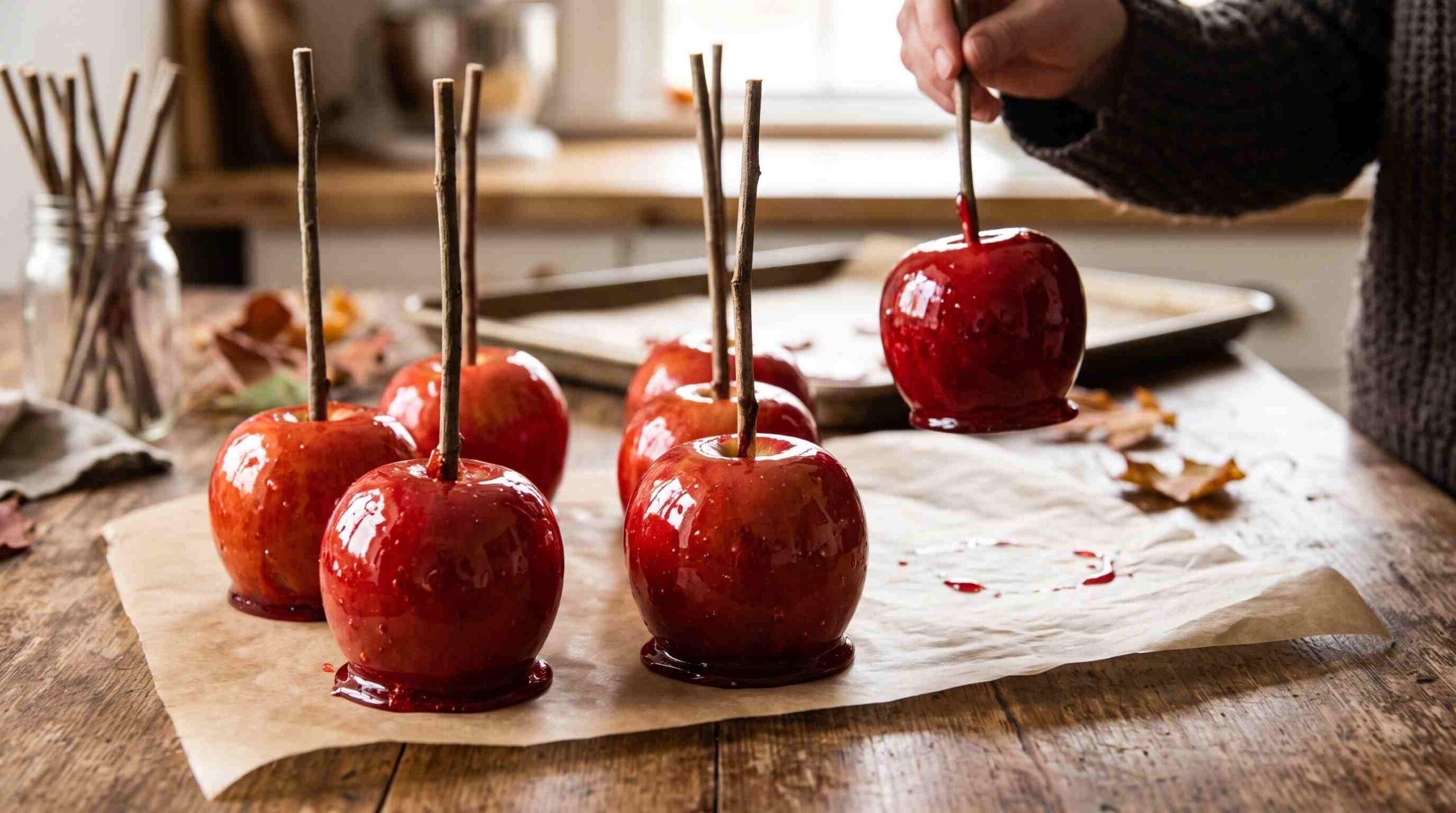
Next, you dip apples on sticks quickly into the hot syrup. You then set them on parchment paper or a silicone mat to cool. The sugar hardens fast, so you only get a short window to apply an even coat. This narrow window is one reason candy apples have a reputation for being trickier than they look. Leave the syrup on the heat too long, and it burns easily.
If you’re attempting this for the first time, grab a candy thermometer. It makes the difference between smooth candy apples and a sticky, uneven mess.
A Treat with Deep Roots in American Fall Traditions
Candy apples have tied themselves to autumn celebrations in the United States for over a century. People commonly associate them with Halloween, harvest festivals, and county fairs, where vendors line their stands with rows of glossy red apples glinting under string lights. Some food historians trace candy apples back to a New Jersey candy maker. In the early 1900s, he dipped apples in cinnamon-spiced red syrup originally meant for Christmas candy displays.
That early experiment became more popular as a standalone treat than as a window decoration. Candy apples quickly spread as a fairground staple after that. You can read more about this origin story on Smithsonian Magazine’s food history archive, which traces how a happy accident became an American classic.
Creative Twists on the Classic Candy Apple
The traditional red candy apple remains the most recognizable version. Still, bakers and candy makers have gotten creative over the years. Some swap red food coloring for other shades to match holidays or events. Others roll the warm sugar shell in crushed nuts, sprinkles, or toasted coconut before it fully hardens.
Flavor variations are popular too. A touch of cinnamon, a splash of vanilla extract, or even a pinch of chili powder gives candy apples a more complex flavor without sacrificing that essential crackly texture. Some people now make candy apple bites using apple slices instead of whole apples. This smaller version solves the age-old problem of candy apples being messy to eat.
Looking for tested recipes and ratio guides? Check out our homemade dessert recipes section for several approachable options if you want to try making candy apples without specialty equipment.
Tips for Making Candy Apples That Actually Turn Out Right
A few small details separate great candy apples from frustrating kitchen failures. First, wash and thoroughly dry your apples before dipping. Any surface moisture will stop the sugar coating from sticking properly. Many recipes also recommend removing the natural wax coating on store-bought apples. Just dip them briefly in boiling water first, and the candy shell will adhere more evenly.
Temperature control matters just as much. Cook the sugar syrup even slightly past the hard crack stage, and your candy apples will taste burnt. Undercook it, and the shell stays sticky instead of crisp. Use a reliable candy thermometer, and resist the urge to stir the syrup while it cooks. These two habits will improve your results more than anything else.
Finally, stay patient. Don’t rush the cooling process by refrigerating candy apples. Condensation can form and turn the sugar shell cloudy or sticky. Let them cool naturally at room temperature instead, and you’ll get that glassy, glossy finish candy apples are known for.
Why Candy Apples Remain a Fall Favorite
Candy apples succeed because they combine two things people love: a familiar, healthy-feeling fruit and an indulgent, old-fashioned candy coating. This contrast between tart apple and sweet shell has kept candy apples relevant for generations, long after flashier desserts have come and gone.
Maybe you’re buying one from a fair stand. Maybe you’re making a batch at home. Either way, candy apples offer something a lot of modern treats don’t: a bit of ritual. You feel the anticipation of the first bite, hear the crack of the shell, and taste the burst of apple underneath. It’s a simple formula, but it’s one that continues to define fall for a lot of people, one sticky, delicious bite at a time.