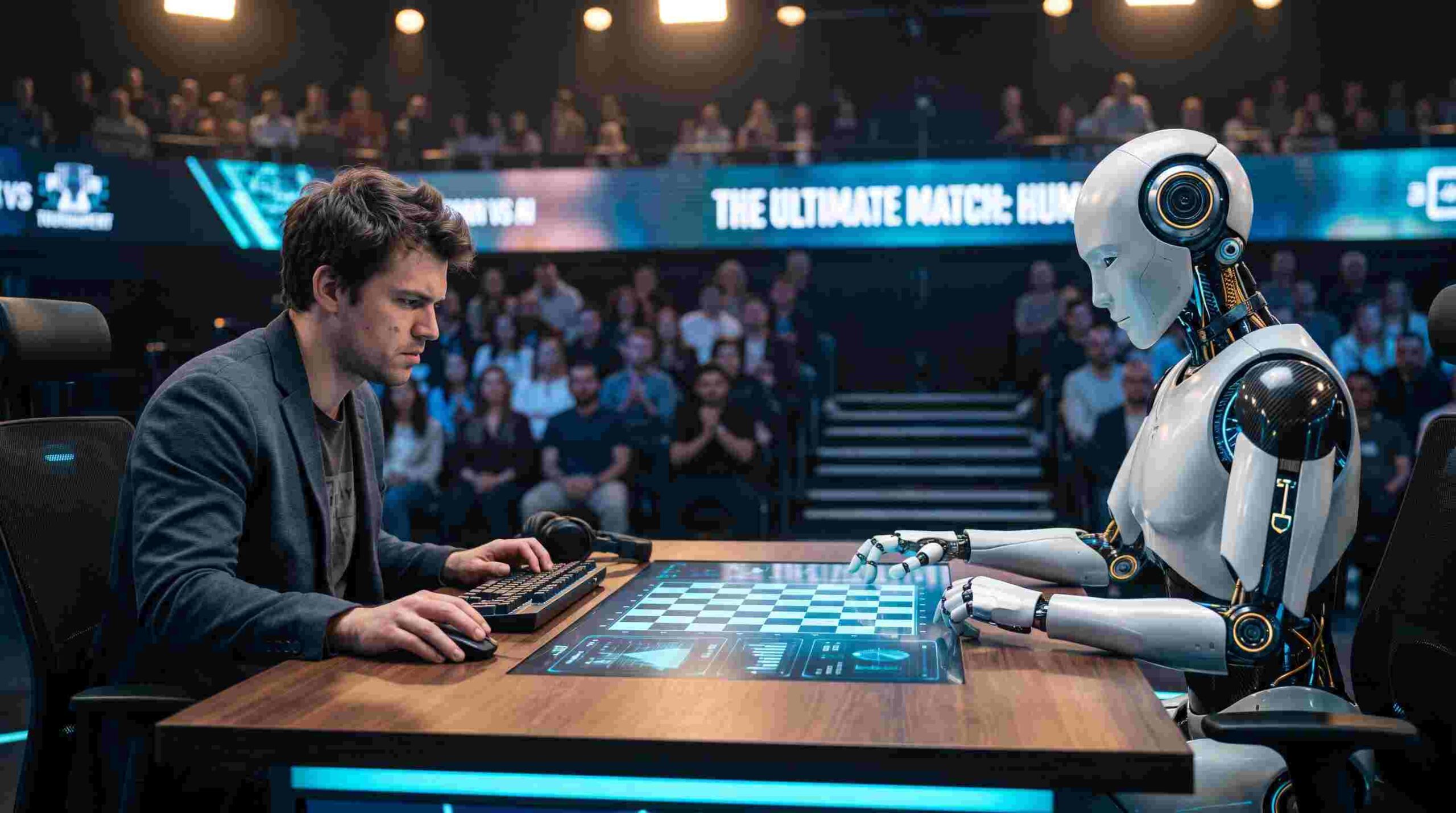
The debate over ai vs human has moved out of science fiction and into everyday conversation. You see it at work, in the news, and even in casual chats with friends — is artificial intelligence about to replace us, or is it just another tool we’re learning to use? The truth sits somewhere between fear and hype, and understanding it starts with looking at what each side actually does well.
AI systems can process information at a scale no person can match. Feed a model a million documents, and it will summarize them in seconds. But speed isn’t the same as understanding, and that gap is where the ai vs human conversation gets interesting.
Where AI Wins the Race
When it comes to repetitive, data-heavy tasks, AI has a clear edge. It doesn’t get tired, doesn’t need coffee breaks, and doesn’t lose focus after the hundredth spreadsheet row. In fields like fraud detection, medical imaging, and logistics, AI systems now outperform humans on raw accuracy for narrow, well-defined tasks. A study published by Stanford’s Human-Centered AI Institute tracks exactly how quickly these capabilities have grown year over year.
In the ai vs human comparison, this is the category AI almost always wins: pattern recognition across massive datasets, consistency under repetition, and tireless execution. If your job involves sorting, scanning, or calculating, AI tools are already doing a chunk of that work quietly in the background.
Where Humans Still Hold the Edge
But raw processing power isn’t everything. Humans bring context, lived experience, and judgment that machines still struggle to replicate. A doctor doesn’t just read a scan — she reads the patient’s fear, their history, and the thousand small details a chart doesn’t capture. A writer doesn’t just string words together — he draws on memory, emotion, and a sense of what will actually land with a reader.
This is the heart of the ai vs human debate: creativity born from genuine experience, ethical reasoning in messy real-world situations, and the ability to read a room are still distinctly human strengths. AI can mimic style, but it doesn’t feel the stakes of a decision the way a person does. That difference matters more in high-trust situations — therapy, leadership, negotiation — than any speed advantage ever will.
The Workplace Is Where This Plays Out Most
Nowhere is the ai vs human question more practical than at work. Companies are rushing to adopt AI for customer support, content drafts, scheduling, and analysis. Employees, meanwhile, are asking a fair question: does this replace me, or does it free me up?
The honest answer, for most roles, is the second one. AI handles the first draft, the data pull, the repetitive email — and the human steps in to refine, judge, and decide. Teams that treat it as a collaboration rather than a competition tend to get the best results. If you’re curious how this plays out for everyday online tasks, our free toolkit for quick digital tasks shows how AI-assisted tools can handle the busywork while you focus on the decisions that actually need a human touch.
Creativity: A Closer Look
Creativity is often the first battleground people bring up in the ai vs human argument, and for good reason. AI-generated art, music, and writing have gotten remarkably good at mimicking existing styles. But mimicry isn’t the same as originality. Great creative work usually comes from a messy, personal place — a memory, a frustration, a joke only you would make. AI remixes what it’s seen; it doesn’t live a life it can draw from.
That doesn’t mean AI has no creative value. It’s a fantastic brainstorming partner, a way to break through a blank page, or a tool to explore variations quickly. Used well, it’s less a competitor and more a sketchpad. The ai vs human dynamic here isn’t a fight — it’s a collaboration where the human still makes the final call on what feels true.
Trust, Ethics, and the Limits of Automation
Every ai vs human discussion eventually lands on trust. People are more comfortable letting AI recommend a playlist than letting it make a medical or legal judgment call alone — and for good reason. AI systems reflect the data they were trained on, biases included, and they can’t be held accountable the way a person can. Human oversight isn’t a nice-to-have; it’s the safety net that keeps automation from running unchecked.
This is why most serious organizations aren’t choosing either AI or humans — they’re building systems where both check each other. The machine flags patterns a person might miss; the person catches context a machine can’t see.
So, Who Actually Wins?
If you came looking for a clean winner in the ai vs human matchup, there isn’t one — and that’s actually good news. AI is extraordinary at scale, speed, and pattern recognition. Humans remain irreplaceable at judgment, empathy, and genuine creativity. The real shift happening right now isn’t replacement; it’s redistribution of effort, with machines absorbing the repetitive load so people can spend more time on the parts of work that actually require a human mind.
The smartest move isn’t picking a side in ai vs human — it’s learning where each one belongs, and letting them do what they’re actually good at.