If you’ve ever bought a bag of garlic from the store and wondered why it never tastes as good as the stuff from a farmer’s market, timing is probably the answer. Garlic isn’t a spring crop. It’s a fall one. And knowing when to plant garlic in fall is the single biggest factor in whether you end up with fat, flavorful bulbs next summer or a handful of disappointing little nubs.
The good news is that fall garlic planting isn’t complicated. It just runs on a different clock than most vegetables, and once you understand that clock, the rest falls into place.
Why Timing Matters So Much for Garlic
Garlic needs a cold period to form proper bulbs. This process is called vernalization, and it’s why garlic planted in spring almost never performs as well as garlic planted in fall. The cloves need several weeks of cold soil to trigger root growth before winter really sets in, followed by a dormant stretch, then a strong push of growth in spring.
Plant too early, and the greens can grow tall and get damaged by hard freezes. Plant too late, and the roots won’t establish before the ground freezes solid. So when to plant garlic in fall really comes down to hitting a narrow window where the soil is cool but not yet frozen.
When to Plant Garlic in Fall, Based on Your Zone
There’s no single calendar date that works everywhere, because climate varies so much. A good rule of thumb: plant garlic about 2 to 4 weeks before your ground typically freezes solid for the winter.
Cold Climates (Zones 3–5)
In the northern US, Canada, and similar climates, mid-September through mid-October is usually ideal. The soil is still workable, and cloves have enough time to grow roots before the ground locks up.
Moderate Climates (Zones 6–7)
Gardeners in zones like Virginia, Missouri, or similar regions usually have the most flexibility, often planting anywhere from mid-October through early November.
Mild Climates (Zones 8–10)
In warmer areas like the Gulf Coast or parts of California, gardeners can wait until late October or even into December, since the ground rarely freezes hard.
If you’re unsure which zone you’re in, a quick search for your region’s USDA hardiness zone will tell you, and most seed catalogs list recommended fall planting windows by zone as well.
Signs the Soil Is Ready
Beyond the calendar, your soil itself gives clues about when to plant garlic in fall. Soil temperature around 50°F (10°C) at a 4-inch depth is a solid benchmark. A simple soil thermometer, the kind used for compost or baking, works fine for this.
Another practical sign: once nighttime temperatures consistently dip into the 40s°F, that’s usually your cue that fall has arrived enough to get cloves in the ground.
How to Prepare Your Garlic Bed
Good soil prep matters as much as timing. Garlic prefers loose, well-draining soil rich in organic matter. Work in compost or aged manure a few weeks before planting if you can, since garlic is a long-season crop that sits in the same spot for eight or nine months.
Raised beds work especially well for garlic because they warm up and drain faster than flat ground. If your soil tends to stay wet through winter, raised beds can be the difference between a healthy harvest and rotted cloves. For more on building and amending garden beds for the colder months, our gardening section covers several seasonal prep guides.
Step-by-Step Planting Guide
- Break apart the bulb carefully. Separate individual cloves right before planting, keeping the papery skin on each one.
- Choose the biggest, healthiest cloves. Bigger cloves generally produce bigger bulbs. Save the smaller ones for cooking.
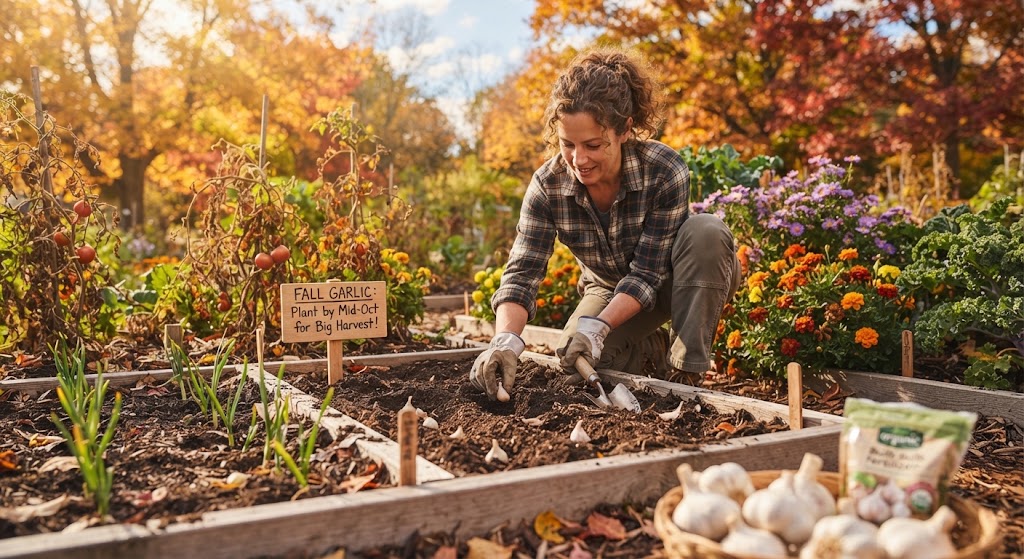
- Plant pointy-side up. Push each clove about 2 inches deep, spaced 4 to 6 inches apart.
- Cover with soil, then mulch. A 3 to 4-inch layer of straw or shredded leaves insulates the cloves and helps regulate soil temperature over winter.
- Water once after planting. This settles the soil around the cloves, but avoid soaking the bed afterward.
Common Mistakes When Planting Garlic in Fall
A few mistakes come up again and again, so it’s worth watching for them:
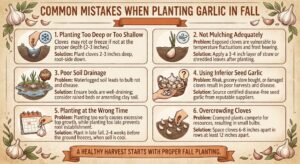
- Planting store-bought garlic. Grocery store garlic is often treated to prevent sprouting, and it may carry diseases not suited to your climate. Seed garlic from a nursery or garlic farm performs far better.
- Skipping mulch. Unmulched garlic is more vulnerable to frost heave, where freeze-thaw cycles push cloves up out of the ground.
- Planting too shallow. Shallow cloves are more exposed to temperature swings and more likely to get pushed up by frost.
- Ignoring spacing. Crowded garlic competes for nutrients and tends to produce smaller bulbs.
Caring for Garlic Through Winter
Once planted, garlic mostly takes care of itself. You might see a little green growth before the ground freezes, which is normal and won’t harm the plant. Through winter, the mulch layer does most of the work, insulating roots and moderating soil temperature.
Come early spring, you’ll usually see green shoots pushing through the mulch. That’s your signal to pull back some of the covering, apply a light nitrogen feeding, and let the plant put its energy into bulb development through late spring and early summer.
Final Thoughts
Figuring out when to plant garlic in fall isn’t about finding one perfect day on a calendar. It’s about reading your climate, watching your soil temperature, and giving the cloves enough time to root before winter. Get that window right, prep the bed well, and mulch properly, and you’ll be rewarded with a harvest that actually tastes like something worth growing yourself.
If you’re planning a fall garden overall, it’s worth pairing garlic with other cold-hardy crops that go in around the same time. You can find more seasonal growing advice in our home and living section, and once harvest time comes around, our food and recipes section has plenty of ideas for putting fresh garlic to good use in the kitchen.