That Fence Bothering You Might Not Be Where You Think It Is
You’ve probably stood in your backyard staring at that fence. You wonder if it sits a foot or two onto your land. It’s a fair question. Before you grab a crowbar, though, understand what you’re dealing with. Whether you can remove a neighbor’s fence on your property depends on one thing: who built it, and where the real boundary line sits. A fence that looks like it’s on your side doesn’t make it yours to tear down.
Property lines are rarely obvious just by looking at a yard. Grass doesn’t stop at a boundary, and neither does common sense. If you want to know whether you can remove a neighbor’s fence on your property, start with a survey, not a tool shed.
Get a Survey Before You Touch Anything
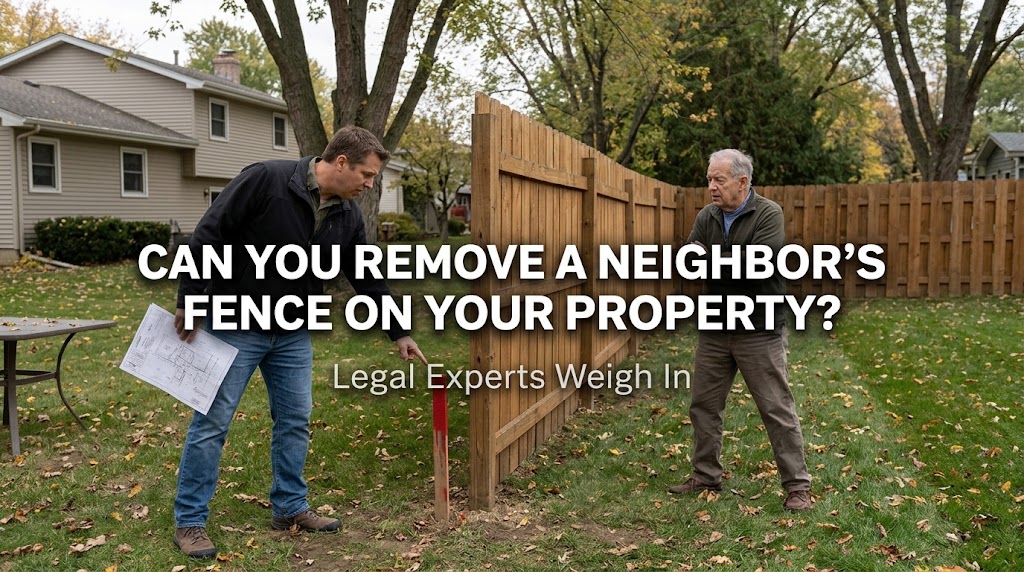
A professional land survey is the only reliable way to confirm your property’s actual edge. Many homeowners assume their lot lines match an old fence, a hedge row, or something the previous owner once said. That assumption causes most neighbor disputes. A licensed surveyor marks your legal boundary with pins or stakes. That documentation becomes your evidence if things escalate.
Once you have a survey in hand, you’ll know whether you can remove a neighbor’s fence on your property, or whether it sits exactly where it should. A survey showing the fence entirely on your land puts you in a strong position. A fence that straddles the line gets more complicated, and that’s where encroachment law comes in.
What Encroachment Actually Means for Your Fence
Encroachment happens when a structure crosses from one property onto another without permission. A fence, a shed, even an overhanging tree branch can encroach. If your neighbor’s fence sits on your land, you can generally ask for its removal or relocation. But “generally” is the key word. Several factors can complicate even a clear-cut encroachment.
How long the fence has stood matters a lot. Many states recognize adverse possession or a prescriptive easement. An undisturbed fence can trigger these rules after five to twenty years, depending on local law. Your neighbor may gain a legal right to that strip of land simply through years of use. This is exactly why you can’t just decide to remove a neighbor’s fence on your property the moment you suspect it’s misplaced. Time, documentation, and local statutes all shape the answer.
Talk to Your Neighbor First
It sounds obvious, but a calm conversation resolves a huge number of fence disputes. Share your survey results. Explain what you found. Ask how they’d like to proceed. Many neighbors genuinely don’t know a fence sits in the wrong spot. Plenty will move it, split the cost of a new one, or formally agree on the boundary once they see your documentation.
This step matters because self-help remedies can land you in legal trouble. Removing the fence yourself, without any agreement, counts as a self-help remedy even when you’re technically right about the line. Courts tend to look unfavorably on people who skip proper channels. Give the conversation a real chance before you decide you can remove a neighbor’s fence on your property unilaterally.
When the Fence Is a Shared Responsibility
State law often treats a boundary fence — one built directly on the line — as jointly owned. This applies even if only one neighbor paid for it or did the work. In that case, you may not have unrestricted authority to remove a neighbor’s fence on your property just because part of it sits on your side. Joint ownership usually means joint decision-making, including decisions about repair, replacement, or removal.
Check your local code and HOA covenants, too. Many municipalities and HOAs set specific rules for fence height, materials, and setbacks from the property line. They often require a notice period before any changes. Checking first can save you from a fine or a forced rebuild, on top of the neighbor dispute you’re already navigating.
What Happens If You Remove It Without Permission
Removing a neighbor’s fence without a legal basis or their consent carries real risk. Your neighbor could file a civil claim for property damage, trespass, or conversion — essentially, interfering with someone else’s property. They could seek compensation for the fence’s value and their legal fees. A court could award additional damages if it finds your actions willful. A survey and a documented request remain your best protection if this ever reaches a courtroom.
Mediation Can Save the Relationship and the Money
Many local courts and community organizations offer mediation for neighbor disputes. Boundary disagreements rank among the most common issues they handle. A neutral mediator can help both sides reach an agreement about the fence’s fate. You skip the cost, stress, and permanence of a lawsuit this way. Mediation also tends to preserve the neighbor relationship far better than a legal battle, and it usually costs far less.
When It’s Time to Bring in a Real Estate Attorney
Sometimes your neighbor refuses to accept the survey or disputes the boundary outright. Sometimes the fence has stood long enough to raise adverse possession concerns. In these cases, talk to a real estate attorney who handles boundary disputes. They can review your survey, send a formal demand letter, or file a quiet title action if the land’s ownership genuinely needs a court’s decision. An hour of legal advice almost always costs less than a lawsuit you didn’t need to have.
If you’re cleaning up the rest of your outdoor space while this gets sorted out, check our guide on clearing weeds from driveways and sidewalk cracks. Our gardening section has plenty of ideas for what to plant once the fence line settles. For more home guides while you wait on a resolution, browse our full home category.
For deeper reading on the legal side, see Nolo’s guide to neighbor property line disputes and the American Bar Association’s overview of real property law.
The short answer: whether you can remove a neighbor’s fence on your property depends on your specific situation, and it’s worth getting right before you act. A survey, a conversation, and a little patience will save you far more trouble than a few swings of a sledgehammer ever could.