How to Use Paper Bags as Mulch for a Healthier, Weed-Free Garden
If you have ever stood in your garden pulling weeds for the third weekend in a row, you already know how exhausting it gets. Learning how to use paper bags as mulch for a healthier, weed-free garden gives you a cheap, effective way to skip most of that work. Instead of buying rolls of landscape fabric or bags of commercial mulch, you can reuse something that is probably already piling up in your recycling bin. It sounds almost too simple, but paper bags break down slowly, smother weeds, and feed your soil as they decompose.
Why Paper Bags Work So Well in the Garden
Paper bags are thick enough to block sunlight from reaching weed seeds, yet porous enough to let water and air pass through to the roots below. That balance is exactly why so many gardeners turn to this method when they want a garden that stays tidy without constant upkeep. Unlike plastic sheeting, paper breaks down naturally over a season or two, adding organic matter to the soil instead of leaving behind waste. For anyone exploring sustainable gardening on a budget, learning how to use paper bags as mulch for a healthier, weed-free garden is one of the easiest upgrades you can make this year.
Gathering and Preparing Your Paper Bags
Start by collecting plain brown paper grocery bags or paper packaging bags, avoiding anything glossy, printed with heavy ink, or lined with plastic or wax. Those coatings slow decomposition and can introduce chemicals you do not want near edible plants. Remove any handles, tape, or stickers first, then flatten each bag so it lies smoothly. If you have a lot of empty space to cover, cut the bags open along their seams to create larger single sheets. Soaking the bags briefly in water before laying them down also helps, since damp paper molds around plants more easily and resists blowing away in the wind.
Laying Down the Mulch Step by Step
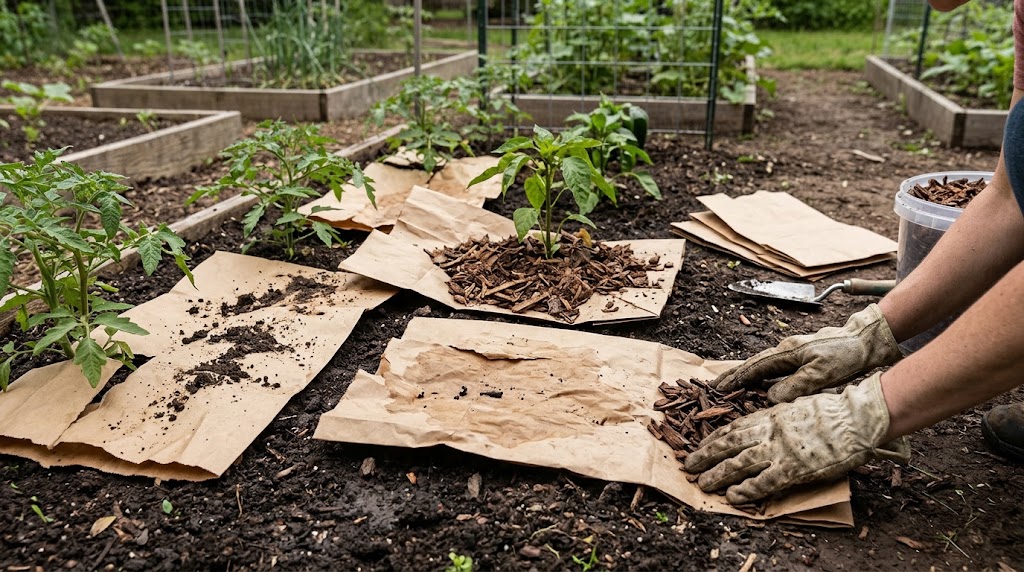
Once your garden bed is weeded and watered, lay the flattened paper bags directly over the soil, overlapping the edges by several inches so no gaps remain. Tuck the paper gently around the base of existing plants rather than covering their stems, since trapped moisture against a stem can encourage rot. This is the core technique behind how to use paper bags as mulch for a healthier, weed-free garden, and it takes most people only a few minutes per bed. After the paper is in place, weigh it down immediately so a gust of wind does not undo your work before the next step.
Topping It Off for a Finished Look
Paper alone looks a little out of place in a garden, so finish by spreading two to three inches of a natural topper over it, such as wood chips, straw, or shredded leaves. This layer holds the paper down, blocks light completely, and gives the bed a neater, more finished appearance. It also slows evaporation, which means you may find yourself watering less often during hot stretches. Many gardeners who ask how to use paper bags as mulch for a healthier, weed-free garden are pleasantly surprised at how much less frequently they need to water once this combination is in place.
Where This Method Shines Most
This approach works particularly well around vegetable beds, pathways between rows, and new flower borders where weeds tend to take over before plants establish themselves. It is also a smart choice if you are converting a patch of lawn into a garden bed, since the paper smothers grass just as effectively as it smothers weeds. If you are curious about other backyard projects that cut down on both cost and chores, our guide to easy raised garden beds for beginners walks through a similar low-effort setup, and this piece on reducing household waste at home pairs nicely with this kind of reuse-first thinking.
A Few Things to Watch For
Avoid this method around plants that need consistently dry soil at the crown, since paper and mulch combined can hold more moisture than some species prefer. Skip bags with plastic windows, heavy printing, or any sign of grease or food residue, since those materials will not break down cleanly. If you are gardening organically, the Rodale Institute’s research on mulching for soil health is a useful reference for understanding how different mulch materials affect soil biology over time. Checking a source like that can help you decide how often to refresh your paper layer each season.
Letting the Paper Do the Work for You
Within a few months, the paper will have broken down and blended into the soil, adding a small amount of organic matter along the way. At that point, you can simply add a fresh layer of bags and topper material, which is part of what makes this such a sustainable habit rather than a one-time fix. Once you get into the rhythm, how to use paper bags as mulch for a healthier, weed-free garden stops feeling like a project and starts feeling like a normal part of tending your beds. It costs nothing beyond bags you already have, and the payoff is a garden that needs far less weeding from one season to the next.
If your garden has become a chore instead of a pleasure, this is one of the simplest changes you can make. How to use paper bags as mulch for a healthier, weed-free garden is not a trendy hack so much as a return to a practical, low-waste habit that gardeners relied on long before plastic mulch existed, and it still holds up today.