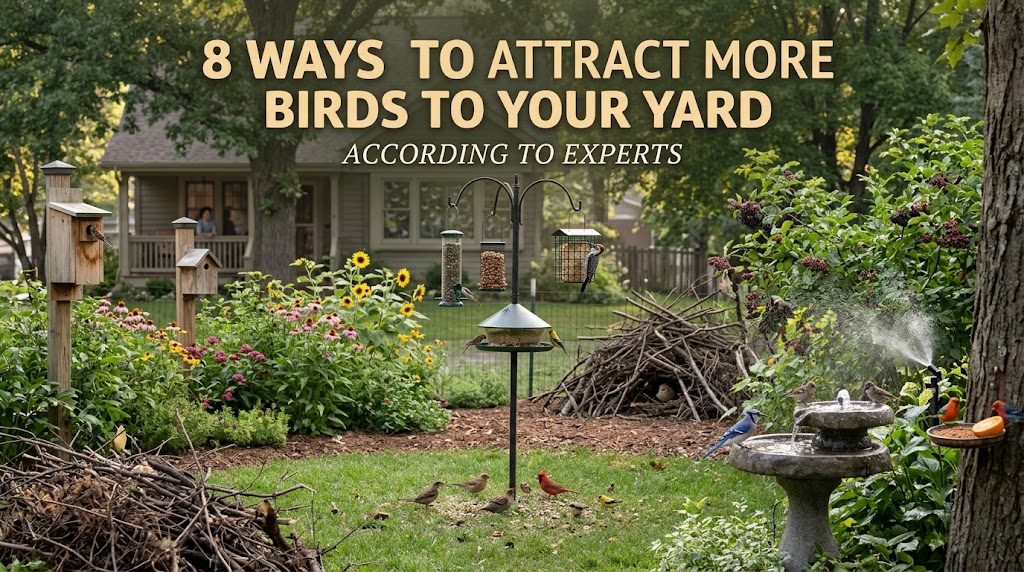
Why your yard isn’t seeing many birds yet
If you’ve ever wondered why your neighbor’s yard is full of chirping and yours is quiet, you’re not alone. Birds are picky guests. They’re looking for food, water, shelter, and safety, and most yards only offer one or two of those at a time. Before you buy anything, it helps to think like a bird for a minute: where would you land if you were small, hungry, and being watched by a hawk? That mindset is the real secret behind these 8 ways to attract more birds to your yard, according to experts who study backyard habitats for a living. None of this requires a big budget or a total yard overhaul — just a few deliberate changes that make your space feel safe and worth visiting.
Start with the right feeder, not just any feeder
A single feeder filled with cheap mixed seed is often the reason people give up too soon. Different birds want different food: finches go for nyjer seed, woodpeckers love suet, and cardinals prefer sunflower seeds. If you want more variety in your yard, offer more than one feeder style — a tube feeder, a platform feeder, and a suet cage cover most common backyard species. For a deeper breakdown of what to put in them, this guide to winter bird feeding walks through which nuts and seeds actually keep birds coming back instead of flying past. Keep feeders clean, too — moldy seed is one of the fastest ways to lose visitors for good.
Give them water, and make it move
Birds need water for drinking and bathing, and a still, stagnant bowl won’t cut it for long. According to the National Audubon Society, moving water is far more attractive to birds than a static birdbath, because the sound and motion signal a clean, safe source. A simple solar fountain or a dripper attachment on an existing birdbath can make a huge difference. If you live somewhere water freezes in winter, a heated birdbath keeps the appeal going year-round, which matters if you’re trying out several of these 8 ways to attract more birds to your yard at once.
Plant native species instead of ornamental ones
This is the step most people skip, and it’s arguably the most important one. Native plants host the insects that birds — especially during breeding season — depend on to feed their young. A yard full of imported ornamentals might look nice, but it often can’t support a bird family the way a native coneflower, serviceberry, or oak can. The Cornell Lab of Ornithology has shown that native trees and shrubs attract measurably more bird species than non-native alternatives. If you’re reworking your beds anyway, pairing natives with low-maintenance ground cover like clover can also cut down on yard work while keeping the habitat intact.
Let part of your yard get a little messy
A perfectly manicured lawn is beautiful to us and nearly useless to birds. Leaf litter, fallen branches, and seed heads left standing through winter all provide food and shelter that a tidy yard strips away. Experts increasingly recommend leaving a corner of the yard “wild” — skip the fall cleanup there, let perennials go to seed, and resist pulling every weed. It sounds counterintuitive, but a slightly unkempt patch is often the busiest part of a bird-friendly yard. If weeds elsewhere are a real problem, a natural approach like using vinegar on driveway and sidewalk cracks keeps the hardscape tidy without reaching for harsh chemicals near the areas birds use.
Add shelter they can actually hide in
Open lawns leave birds exposed to predators, which is why dense shrubs, brush piles, and evergreen trees matter so much. Birds want a quick escape route when a hawk or a neighborhood cat shows up, and a yard without cover simply won’t hold their attention, no matter how good the food is. Clustering shrubs near feeders — close enough to dash to, but not so close that a cat can ambush from them — strikes the right balance. Birdhouses help too, but only if they’re placed away from heavy foot traffic and cleaned out between nesting seasons.
Cut back on pesticides
Pesticides don’t just kill the bugs you’re targeting; they remove a major food source and can poison birds directly or through the insects they eat. The U.S. Fish and Wildlife Service points out that reducing pesticide use is one of the simplest, most overlooked ways to make a yard safer and more appealing for birds. If you’re dealing with a specific problem — weeds, aphids, grubs — look for the most targeted, least toxic option, or a manual fix, before spraying broadly.
Think about timing, not just setup
Birds don’t show up the moment a feeder goes up; it can take days or weeks for them to find a new food source, especially if your yard hasn’t offered anything before. Seasonal timing matters too — more feeders and water in late winter and early spring, when natural food is scarce, tend to draw in birds faster than summer setups. Patience is part of the process with nearly all of these 8 ways to attract more birds to your yard, and consistency beats novelty every time.
Keep at it, and the birds will notice
None of these changes need to happen all at once. Add a feeder this month, a native shrub next season, and skip raking one corner of the yard this fall — small, steady changes add up to a space birds actually want to return to. Once a few regulars discover your yard, word tends to spread fast in the bird world, and what started as an empty yard can turn into a daily show right outside your window.