
Why Cleaning Washing Machine Regularly Matters
If your clothes come out of the wash smelling less than fresh, the problem usually isn’t your detergent — it’s your machine. Cleaning washing machine (1) interiors on a regular basis removes the soap scum, mineral buildup, and trapped moisture that turn into a breeding ground for mold and bacteria. Most people assume a washing machine cleans itself simply because it’s full of water and soap every cycle, but that’s a myth. Without proper care, the very appliance meant to clean your clothes becomes the thing making them smell worse. According to the EPA’s guidance on mold prevention, damp, enclosed spaces like washer drums and gaskets are exactly the environment mold thrives in — which is a solid reason to make cleaning washing machine a habit rather than an afterthought.
Signs You Need to Start Cleaning Washing Machine Today
There are a few telltale signs that it’s time for cleaning washing machine interiors instead of putting it off another week. A musty smell lingering in the drum even right after a wash cycle is the most obvious one. You might also notice a thin film of grime around the rubber gasket on front-loaders, or black specks appearing on clothes after they come out of the wash. If your detergent dispenser has a crusty residue building up, that’s another clear signal. None of these issues fix themselves — they only get worse the longer you wait, which is exactly why cleaning washing machine parts regularly matters more than most people realize.
Step-by-Step Guide to Cleaning Washing Machine at Home
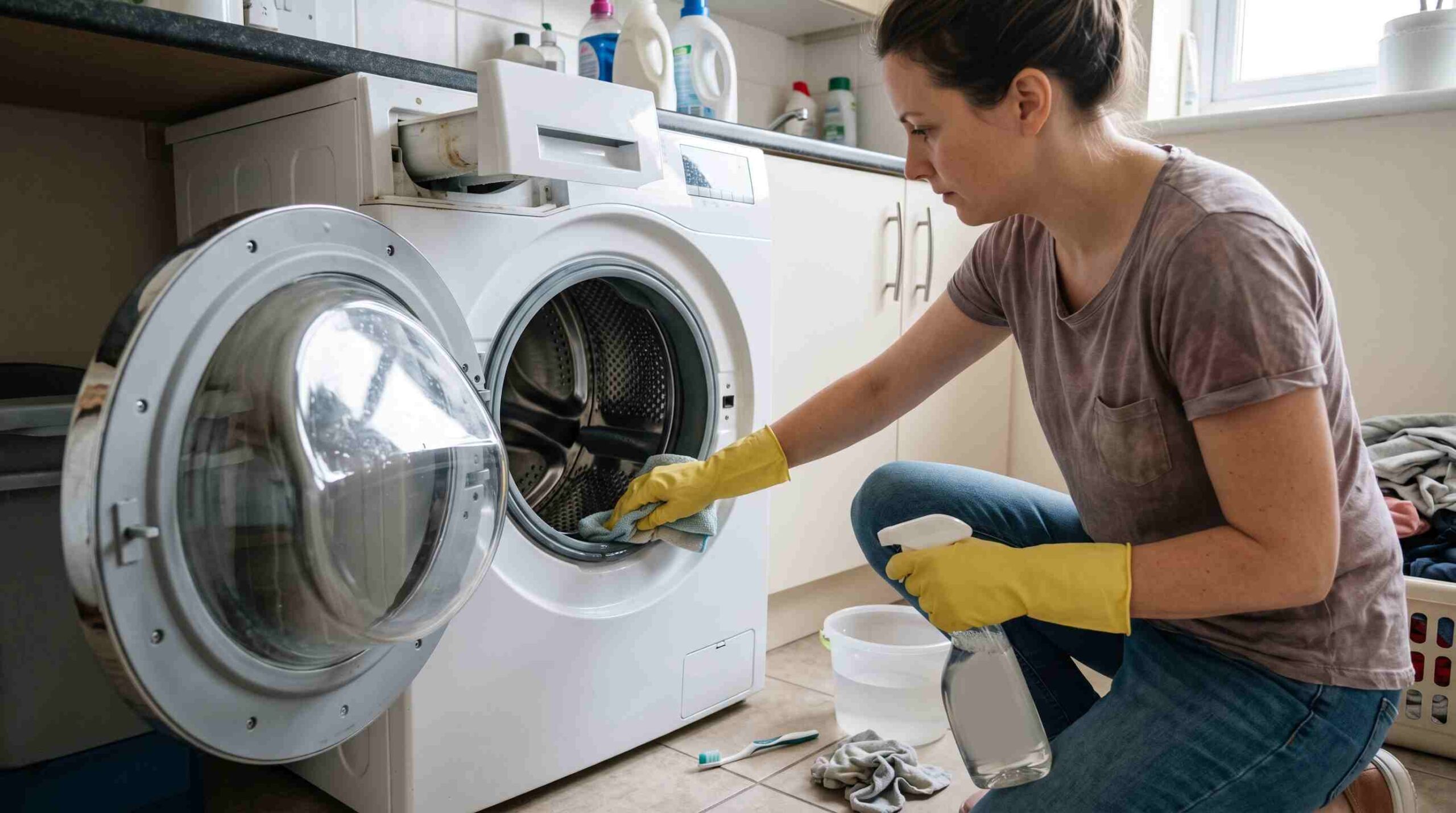
You don’t need special tools or expensive products for cleaning washing machine units properly. Start by running an empty hot-water cycle with two cups of white vinegar poured directly into the drum. This helps break down soap residue and mineral deposits built up from hard water. Once that cycle finishes, run a second empty cycle with half a cup of baking soda to deodorize and scrub away any remaining film. While the second cycle runs, take a microfiber cloth and wipe down the door seal, control panel, and detergent drawer by hand — these areas trap moisture and grime that the cycles alone won’t fully reach. Finish by leaving the door open for a few hours so the drum dries completely, which prevents mold from settling back in before your next load.
Cleaning Washing Machine: Vinegar vs Store-Bought Cleaners
A common question people ask is whether cleaning washing machine units with household vinegar is really as effective as a commercial washing machine cleaner. Vinegar is acidic enough to dissolve mineral buildup and mild soap scum, and it’s cheap, which makes it a great option for monthly maintenance. However, if your machine has gone a long time without attention, a dedicated descaling tablet — like those reviewed by Consumer Reports — may cut through heavier buildup more effectively in a single pass. For most households, alternating between vinegar for routine upkeep and a store-bought tablet every few months strikes the right balance without overspending on cleaning washing machine products you don’t really need.
Cleaning Washing Machine Drum, Gasket, and Dispenser
Cleaning washing machine drums gets most of the attention, but the gasket and dispenser deserve just as much care. The rubber gasket on front-loading machines folds in a way that traps water, hair, and lint, so pull it back gently and wipe the hidden crevice with a cloth dipped in warm, soapy water. The detergent dispenser tray usually slides out completely — most manufacturers design them this way specifically so they can be rinsed under a tap, as explained in this appliance maintenance overview from Good Housekeeping. Skipping these two areas is the most common mistake people make, since a shiny drum can still sit beside a moldy gasket and a clogged dispenser.
How Often Should You Be Cleaning Washing Machine
A reasonable rhythm for cleaning washing machine interiors is once a month for most households, though homes with hard water or heavy laundry loads may want to do it every two to three weeks. Pay attention to how your machine is actually used — a family running several loads a day will build up residue faster than someone doing one or two washes a week. Many newer washers even include a dedicated “clean” or “tub clean” cycle; if yours has one, use it as your reminder to stay consistent instead of guessing. For more laundry-care guides like this one, check out the cleaning tips section on our site for related articles.
Mistakes to Avoid When Cleaning Washing Machine
A few habits quietly undo the benefits of cleaning washing machine units properly. Using too much detergent is one of the biggest culprits — excess suds don’t rinse away fully and leave residue behind every single cycle. Closing the door immediately after a wash traps moisture and encourages mold, so always leave it ajar between loads. Mixing bleach and vinegar in the same cycle is also a mistake worth avoiding entirely, since the combination can create harmful fumes. Treat cleaning washing machine maintenance as a simple routine rather than a deep-clean emergency, and you’ll avoid most of these pitfalls automatically.
Final Thoughts on Cleaning Washing Machine
At the end of the day, cleaning washing machine interiors isn’t a complicated chore — it just needs to become a habit. A monthly vinegar-and-baking-soda cycle, a quick wipe of the gasket and dispenser, and leaving the door open between washes will keep your machine running fresh for years. Your clothes, and your nose, will thank you.