
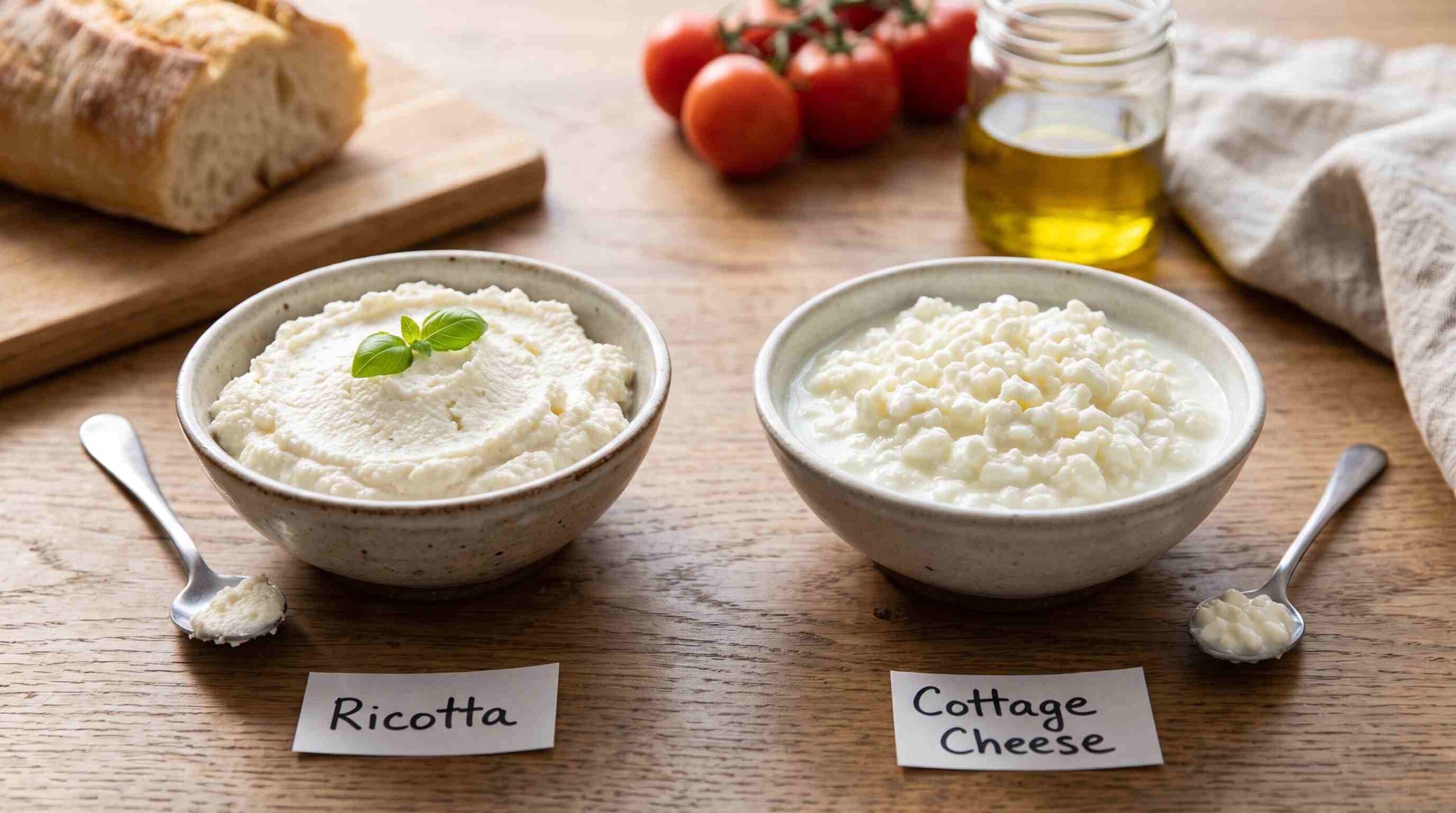
Ricotta vs Cottage Cheese: What’s the Real Difference?
You’ve probably stood in the dairy aisle squinting at two tubs that look almost identical. That’s the confusion behind ricotta vs cottage cheese. Both are soft, white, and mild-tasting. Both show up in lasagna, breakfast bowls, and protein-packed snacks. But they’re made differently. They taste different once you pay attention. And they behave differently in recipes. Understanding the real difference between ricotta vs cottage cheese can save you from a disappointing dinner, or help you pick the better option for your health goals.
How Ricotta and Cottage Cheese Are Made
The production process shows where ricotta vs cottage cheese really diverge. Makers traditionally produce ricotta from the whey left over after making other cheeses. The word “ricotta” literally means “recooked.” They heat that leftover whey again, and the proteins form soft, delicate curds. Cottage cheese, by contrast, comes directly from milk. Producers curdle the milk, cut and drain the curds, then often add back a bit of cream or milk. That extra step creates the familiar lumpy, moist texture. This difference in sourcing explains why, according to the USDA’s dairy composition data, the two cheeses end up with different nutritional profiles despite looking similar on a plate.
Taste and Texture: Ricotta vs Cottage Cheese Compared
Texture is usually the first thing people notice when they compare ricotta vs cottage cheese side by side. Ricotta is smooth, creamy, and almost spreadable. It carries a mild, slightly sweet flavor. It blends easily and melts beautifully, which is why it disappears so well into sauces and fillings. Cottage cheese feels completely different. It’s lumpy and curdy, with individual pieces of curd sitting in liquid. Its flavor leans tangier and saltier than ricotta’s. Some people love that curdy bite. Others find it off-putting straight out of the tub. Pick ricotta when smoothness matters, like in a dessert filling. Pick cottage cheese when you want texture and a savory edge.
Nutrition Facts: Ricotta vs Cottage Cheese
Nutritionally, the ricotta vs cottage cheese debate usually comes down to protein and calories. Cottage cheese tends to run lower in calories and fat. It also packs a lot of protein per serving, which explains why it’s become a gym-bag staple. Ricotta, especially the whole-milk version, tastes richer and carries more calories per spoonful. Both cheeses deliver solid calcium and casein protein, which digests slowly and helps keep you full. For an exact macro breakdown by brand, check Healthline’s cheese comparison guide.
Which One Is Better for Weight Loss?
For weight loss, cottage cheese usually wins the ricotta vs cottage cheese matchup. It delivers more protein for fewer calories, which supports fullness without a big calorie cost. That said, low-fat ricotta exists too. Portion size often matters more than people assume — even a small amount of full-fat ricotta can fit into a balanced diet. If you track macros closely, calculate your actual serving instead of guessing. Our free calorie and macro calculator on TheBDPage lets you plug in exact brands and portions for accurate numbers.
Best Ways to Use Ricotta and Cottage Cheese in Cooking
Cooking is really where you should make the ricotta vs cottage cheese choice, not just the nutrition label. Ricotta’s smooth texture makes it the natural pick for lasagna, stuffed shells, cannoli filling, and baked pasta dishes. You get creaminess without heaviness. Cottage cheese works surprisingly well blended into smoothies or mixed into pancake batter for extra protein. You can also eat it straight with fruit and a drizzle of honey. It can even replace ricotta in savory baked dishes — just blend it first to smooth out the curds. Many home cooks don’t realize this trick until they try it.
Can You Substitute One for the Other?
Yes, but you’ll need to adjust. If a recipe calls for ricotta and you only have cottage cheese, blend the cottage cheese in a food processor until smooth. You’ll get close to ricotta’s texture, though the flavor stays slightly tangier. The reverse swap works less well. Ricotta lacks the signature curdy bite people often want in a cottage cheese dish. So while ricotta vs cottage cheese substitutions work in a pinch, they don’t always match perfectly, and the final dish will taste a little different either way.
Final Verdict: Ricotta vs Cottage Cheese
There’s no single winner in the ricotta vs cottage cheese comparison. It depends on what you’re making and what you want to prioritize. Choose cottage cheese for higher protein, lower calories, and a savory, textured bite. Choose ricotta for smoothness, mild sweetness, and a cheese that melts seamlessly into cooked dishes. Keep both in your fridge if you can — they serve different purposes instead of competing for the same job.