Why Fruit Stains Are So Stubborn
If you’ve ever bitten into a ripe mango or handed a toddler a handful of berries, you already know how fast things can go wrong. Learning how to remove fruit stains isn’t just a nice skill to have — it’s practically a survival tool for anyone who eats fruit around fabric. The reason these marks are so hard to shift is that fruit contains natural pigments and sugars that bond with fibers almost on contact. The longer you wait, the deeper that color sets in, which is why figuring out how to remove fruit stains quickly makes such a big difference to the final result.
Act Before the Stain Sets
The single most important rule in how to remove fruit stains is speed. As soon as you notice a splash of juice or a smear of pulp, resist the urge to rub it — rubbing just pushes the pigment further into the weave. Instead, gently scrape off any solid fruit with a spoon or dull knife, then rinse the fabric from the back side under cold running water. Cold water is key here; hot water can actually cook the proteins and sugars in the fruit, locking the stain in permanently. This first step alone solves a surprising number of cases, so don’t skip it even if you plan to treat the area further afterward.
The Dish Soap and Vinegar Method
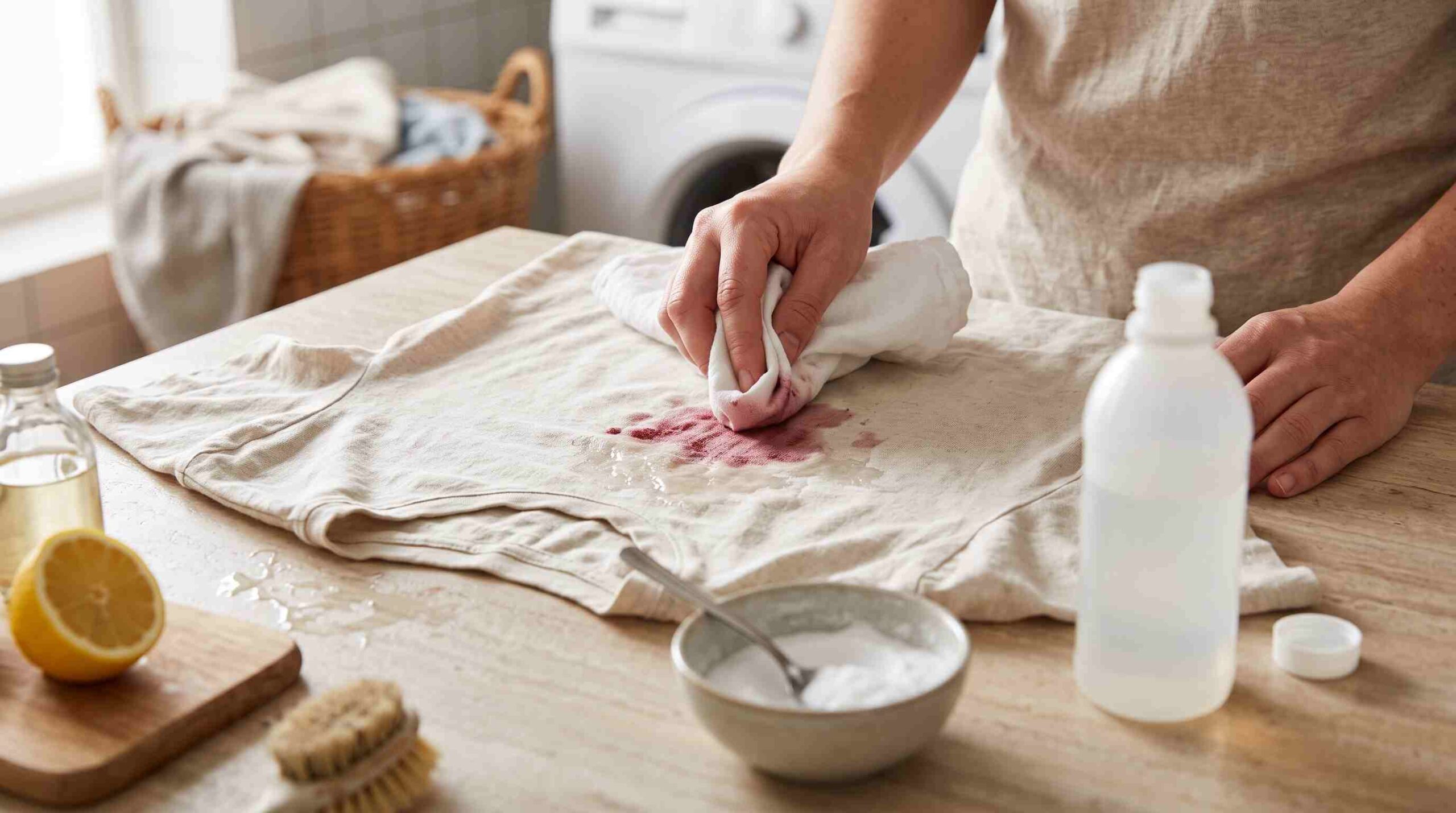
One of the most reliable ways to approach how to remove fruit stains at home uses two things almost everyone already has: dish soap and white vinegar. Mix a few drops of dish soap with a tablespoon of white vinegar in a cup of cool water, then dab the solution directly onto the stain with a clean cloth. Let it sit for about ten minutes before rinsing. The vinegar’s mild acidity helps break down the fruit pigment, while the soap lifts any remaining residue. This combination is gentle enough for most everyday fabrics, which is why it’s often the first thing people try when searching for how to remove fruit stains without reaching for harsh chemicals.
Using Lemon Juice and Sunlight
Interestingly, fruit can also help undo fruit’s own damage. Lemon juice is a classic trick in how to remove fruit stains because its citric acid acts as a natural bleaching agent. Squeeze fresh lemon juice onto the stained area, then lay the garment in direct sunlight for an hour or two. The combination of acid and UV light gently fades the pigment without the harshness of commercial bleach. This method works especially well on white or light-colored cotton fabrics, though it’s worth testing on a hidden seam first since sunlight can occasionally lighten surrounding fabric too.
What to Do With Dried or Set-In Stains
Not every stain gets caught in time, and that’s where many people get discouraged about how to remove fruit stains that have already dried. The good news is that even old stains aren’t always a lost cause. Start by soaking the garment in cool water mixed with an enzyme-based laundry detergent for at least thirty minutes — enzymes are specifically designed to break down organic matter like fruit sugars and pigments. After soaking, gently work a small amount of detergent directly into the stain with your fingers or a soft brush before washing as usual. According to the American Cleaning Institute, pretreating a stain and laundering as usual is a recommended approach for fruit juice stains, which lines up with this soak-and-wash method.
Special Care for Delicate Fabrics
Silk, wool, and other delicate materials need a gentler touch when you’re working out how to remove fruit stains without damaging the fabric itself. Avoid vinegar or lemon juice on these materials, since the acidity can weaken delicate fibers over time. Instead, mix a small amount of mild, color-safe detergent with lukewarm water and blot — never rub — the stained area with a soft cloth. For anything you’re unsure about, especially dry-clean-only items, it’s worth checking a guide like The Spruce’s fabric care tips before attempting any home treatment, since some fabrics react unpredictably to even gentle home remedies.
Treating Fruit Stains on Carpets and Upholstery
Spilled fruit isn’t just a clothing problem — carpets and couches are just as vulnerable, and the approach to how to remove fruit stains here is slightly different because you can’t throw a sofa in the washing machine. Blot up as much liquid as possible first, then mix a solution of cool water and a small amount of dish soap. Apply it with a clean cloth, working from the outside of the stain inward so you don’t spread it further. Rinse by blotting with plain water, then dry the area with a towel and let it air dry completely. For particularly valuable or antique textiles, it’s worth consulting a professional cleaning resource such as the Institute of Inspection, Cleaning and Restoration Certification rather than experimenting on your own.
Preventing Fruit Stains in the First Place
While knowing how to remove fruit stains is useful, a little prevention goes a long way too. Keeping napkins or a damp cloth nearby during snack time, using plates or bowls for juicy fruits instead of eating over open fabric, and dressing young children in stain-resistant bibs can all cut down on the number of spills you have to deal with in the first place. None of this means you should stop enjoying fresh fruit — it just means a quick response plan is always worth having, since even the most careful households end up with the occasional spill.
Final Thoughts
At the end of the day, how to remove fruit stains comes down to three things: acting fast, using the right gentle treatment for your fabric type, and being patient with stains that have already set. Cold water, dish soap, vinegar, and lemon juice will handle the vast majority of everyday spills, while enzyme detergents and professional help can take care of the tougher cases. With these tools in your back pocket, a juice splash or berry smear doesn’t have to mean the end of your favorite shirt.