
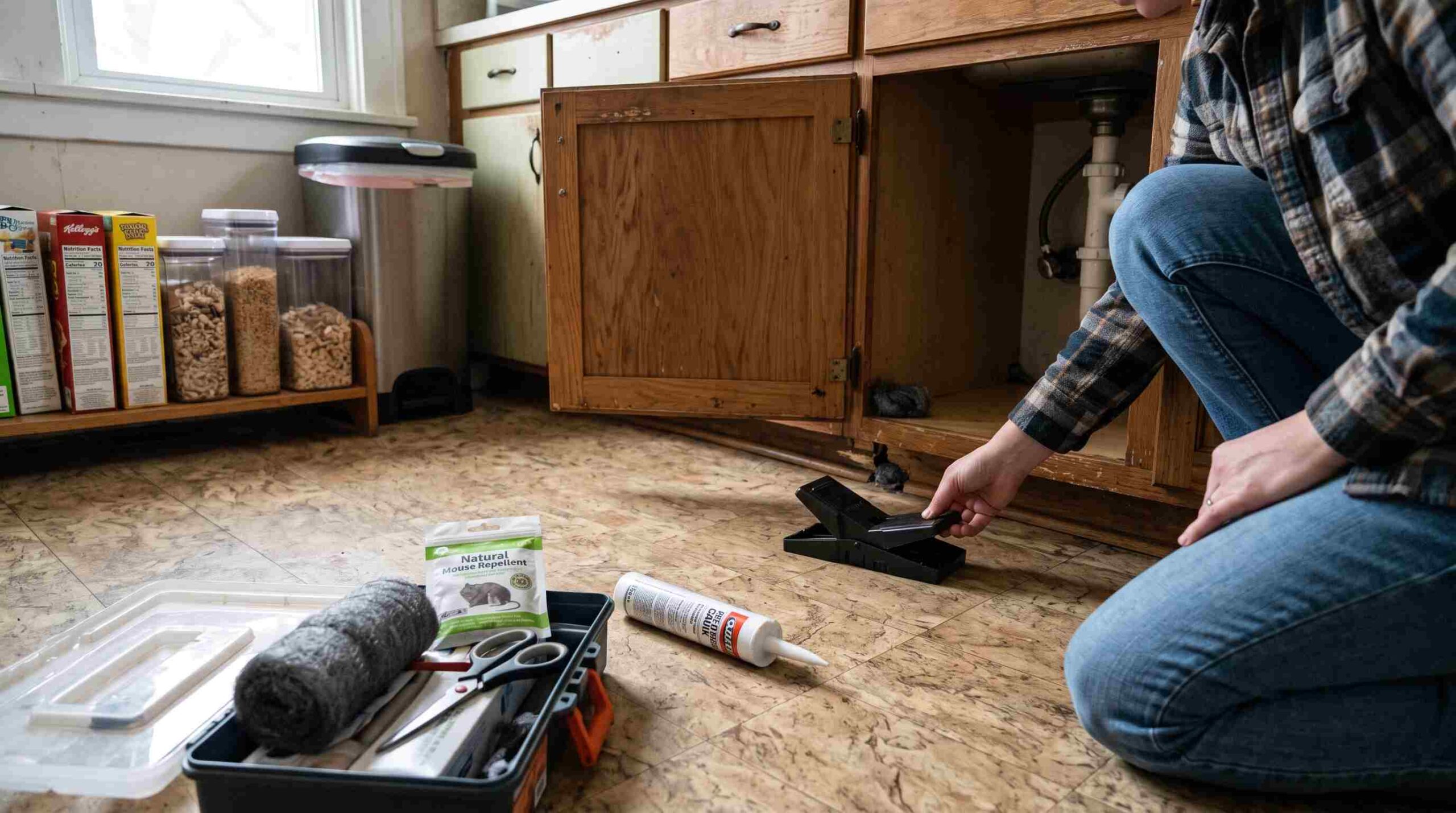
If you’ve heard scratching in the walls at night, you’re probably searching for how to get rid of mice. Maybe you found tiny droppings in your pantry too. In fact, mice are resourceful and they breed fast. They can also squeeze through gaps you’d swear were too small. Fortunately, once you understand their habits, getting rid of mice becomes manageable. This guide walks you through every step, from spotting the signs to sealing your home for good.
Signs You Actually Have a Mouse Problem
Before setting traps, you should first confirm what you’re dealing with. For example, mice leave small, dark droppings near food sources. You’ll often spot them along walls too. Additionally, a musky odor in cabinets or closets is another clue. Chewed cardboard and gnawed wires are red flags as well. Finally, shredded paper used for nesting is a sure sign.
Why Early Detection Matters
Mice aren’t just a nuisance. According to the <a href=”https://www.cdc.gov/rodents/index.html” target=”_blank” rel=”noopener”>CDC’s guidance on rodents</a>, they can carry allergens and pathogens. Therefore, catching an infestation early protects your health. As a result, it also saves you from a bigger cleanup later.
First Steps for How to Get Rid of Mice Fast
Once you’ve confirmed mice are present, you should act quickly. To begin with, remove their food and water sources. Store all food, including pet food, in sealed containers. Then wipe down counters every night, and fix any dripping faucets too. After all, mice survive on very little. In fact, even a few crumbs left overnight can sustain them.
Cutting Off Their Resources
This is where learning how to get rid of mice truly begins. First, cut off their resources. Once you do, they’ll either leave or take the bait you set. Meanwhile, keep monitoring the areas where you first spotted droppings.
Natural Methods for How to Get Rid of Mice
If you’d rather skip chemicals, try natural approaches first. For instance, peppermint oil on cotton balls works as a mild deterrent near entry points, since mice dislike the strong scent. Similarly, steel wool stuffed into gaps also helps a lot, because mice can’t chew through it like they can plastic or foam. Furthermore, a clean, clutter-free home removes hiding spots too.
However, these natural tactics won’t fix a large infestation alone. That said, combined with sealing and sanitation, they’re a strong starting point.
Using Traps for How to Get Rid of Mice
For an active infestation, traps remain the most reliable tool. Generally, snap traps are cheap and effective. Bait them with peanut butter, chocolate, or oats, but skip the cheese, since mice often ignore it. Also, place traps perpendicular to walls, because mice travel along edges rather than open floor space.
Alternatively, live-catch traps work well if you prefer a humane option. Just be sure to release mice far from your property, otherwise they may simply return. Overall, checking and resetting traps daily gives the best results, and a few consistent days of trapping usually clears a small population.
When Poison Bait Makes Sense
Rodenticides can work, but they carry real risks. Specifically, children, pets, and wildlife are all vulnerable. So, if you use bait stations, place them out of reach and always follow the label instructions closely.
The <a href=”https://www.epa.gov/safepestcontrol/controlling-rodents” target=”_blank” rel=”noopener”>EPA’s guidance on controlling rodents</a> recommends tamper-resistant stations. Loose bait placement, on the other hand, is discouraged, since secondary poisoning can affect pets or birds that eat an affected rodent. For most homes, therefore, traps paired with sealing work just as well, with far less risk involved.
Sealing Entry Points for Good
Trapping existing mice solves only half the problem, because new mice will keep finding their way in unless you close off access points. Keep in mind that mice can squeeze through gaps as small as a quarter-inch.
To start, inspect your foundation carefully, then check utility entry points and door sweeps too. Ideally, use steel wool, caulk, and metal flashing, since foam and plastic fillers get chewed through within hours. Although this sealing step is often skipped, it’s ultimately the difference between a one-time fix and a repeat problem.
Keeping Your Yard Less Attractive to Mice
Your home’s exterior matters more than most people think. For example, trim back shrubs and branches touching the house, since they act as bridges onto your roofline. Likewise, store firewood away from exterior walls, and keep trash cans sealed with tight-fitting lids.
Overall, a tidy yard means fewer hiding spots, which makes your home a less appealing target from the start.
When to Call a Pest Control Expert
Sometimes, despite your best efforts, DIY methods aren’t enough. If you’ve sealed entry points, set traps, and cleaned up food sources, but mice keep appearing, it’s time to call a professional.
For instance, large infestations are one warning sign, while mice in hard-to-reach wall cavities are another. Similarly, recurring problems count too. In that case, the <a href=”https://npmapestworld.org/” target=”_blank” rel=”noopener”>National Pest Management Association</a> can help you find a certified technician nearby who can assess the problem and treat it safely. Also, if other pests are an issue, check our [related guide on seasonal pest prevention] (swap in your own post URL) for more tips.
Final Thoughts on How to Get Rid of Mice
Dealing with mice doesn’t have to mean constant frustration. Simply combine sanitation, natural deterrents, trapping, and sealing, and most homeowners solve the problem within a couple of weeks.
Ultimately, knowing how to get rid of mice isn’t about one trick — it’s about layering simple habits together. So stay consistent, check your traps and entry points often, and don’t hesitate to call in help if the problem is bigger than expected.