
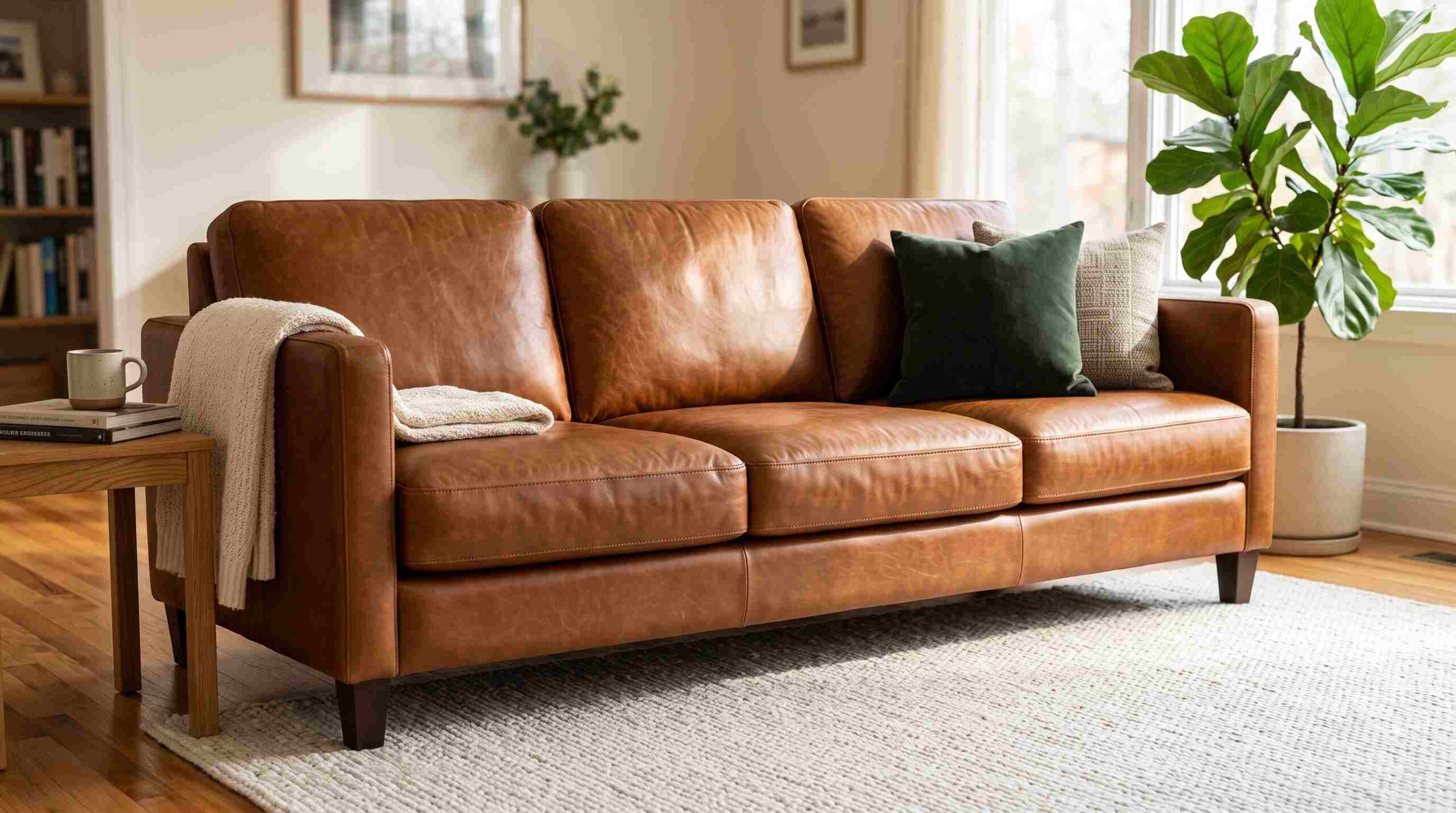
A clean leather couch can transform the feel of an entire living room. It’s the piece everyone gravitates toward, and when it’s cared for properly, it only gets better with age. The problem is that most people either over-clean their leather or reach for the wrong products, which leads to cracking, fading, or that dull, tired look nobody wants. This guide walks through exactly how to clean a leather couch the right way, so you can enjoy it for years instead of replacing it every few seasons.
Why a Clean Leather Couch Matters More Than You Think
Leather isn’t like fabric upholstery. It’s a living material that absorbs oils, dust, and skin residue over time, and if you ignore it, that buildup slowly breaks down the surface. A clean leather couch isn’t just about appearances — it’s about protecting an investment that can last decades if treated well. Dust and grit act like sandpaper every time someone sits down, and body oils can seep into the pores and cause discoloration. Staying on top of cleaning prevents all of that from becoming permanent damage.
What You Need Before You Clean a Leather Couch
You don’t need a cabinet full of products to keep a leather couch clean. A soft microfiber cloth, distilled water, a mild pH-neutral soap, and a dedicated leather conditioner will handle almost everything. Avoid baby wipes, household all-purpose cleaners, and anything with alcohol or ammonia — these strip the natural oils out of leather and accelerate cracking. If you’re unsure what type of leather your couch is made from, check the manufacturer’s tag first, since aniline and suede finishes need gentler, mostly dry-cleaning methods rather than water-based ones.
How to Clean a Leather Couch Step by Step
Start by vacuuming the entire surface with a soft brush attachment to lift dust and crumbs out of the seams and creases — this step alone prevents a lot of the scratching that happens during wiping. Next, dampen a microfiber cloth with distilled water and a small amount of mild soap, wring it out well, and wipe the couch in gentle circular motions. The cloth should feel barely damp, not wet. Follow immediately with a dry cloth to remove excess moisture. This simple process is really all it takes to clean a leather couch during a routine maintenance session, and doing it every week or two keeps dirt from ever building up in the first place.
How to Deep Clean a Leather Couch When It Needs More
Sometimes a quick wipe-down isn’t enough, especially if the couch has gone a while without attention or has visible grime in high-contact areas like armrests and headrests. For a deeper clean, a specialist leather cleaner designed specifically for upholstery works best. Leather cleaning experts recommend starting with a light vacuum before applying any product, then testing it on a hidden patch first to make sure it doesn’t affect the color. Apply the product in small sections, wipe away residue promptly, and let the couch air dry naturally rather than using heat, which can cause the leather to stiffen.
Removing Stains Without Ruining the Leather
Stains are inevitable, and how quickly you respond to them often determines whether they come out at all. Blot — never rub — spills immediately with a dry cloth to absorb as much liquid as possible before it sets in. For grease or oily marks, a light dusting of cornstarch left overnight can draw the oil out before you wipe it away. Ink stains are trickier, and some guides suggest a cautious dab of rubbing alcohol on a cotton swab, though this should only be used as a last resort since it can dry out the surrounding leather. When you’re trying to clean a leather couch with a stubborn stain, patience matters more than scrubbing power — aggressive rubbing almost always does more harm than the stain itself.
Conditioning: The Step Most People Skip
Cleaning only handles half the job. Leather needs conditioning to replace the natural oils lost through everyday use and exposure to air. After you clean a leather couch, let it dry completely, then apply a leather conditioner with a soft cloth, working it in using light, even strokes. This keeps the material supple and helps prevent the cracking that happens when leather dries out over time. Most households only need to condition twice a year, though couches in sunnier rooms or drier climates may benefit from a little more frequent attention.
How Often You Should Clean a Leather Couch
There’s no single answer, since it depends on usage, but a reasonable routine looks like this: a light dusting or vacuum weekly, a proper wipe-down every two to four weeks, and a full deep clean with conditioning every three to six months. Households with pets, kids, or heavy daily use should lean toward the more frequent end of that range. One household cleaning guide notes that light-colored leather tends to show dirt faster and may need attention roughly twice as often as darker leather, which is worth keeping in mind if you’re choosing a couch color for a busy household.
Common Mistakes That Damage a Leather Couch
A few habits are responsible for most of the leather damage people deal with. Using too much water, skipping the conditioning step, placing the couch in direct sunlight, and reaching for generic cleaning sprays all shorten a leather couch’s lifespan. Heat sources like radiators or sunny windows dry leather out far faster than normal wear does, so even a well-positioned couch that’s never properly cleaned will often outlast one that’s cleaned often but sits in a sunbeam all day. If you want your couch to stay soft and crack-free, consistency and gentleness matter far more than how often you deep clean it.
Keeping Your Clean Leather Couch Looking Its Best Long-Term
Maintaining a clean leather couch really comes down to a simple rhythm: dust regularly, wipe gently, condition consistently, and deal with spills the moment they happen. None of this requires special skills or expensive products — just the right technique and a little regularity. Treat it well, and a good leather couch will age beautifully, developing the kind of soft patina that makes it look even better after years of use than it did the day it arrived.