
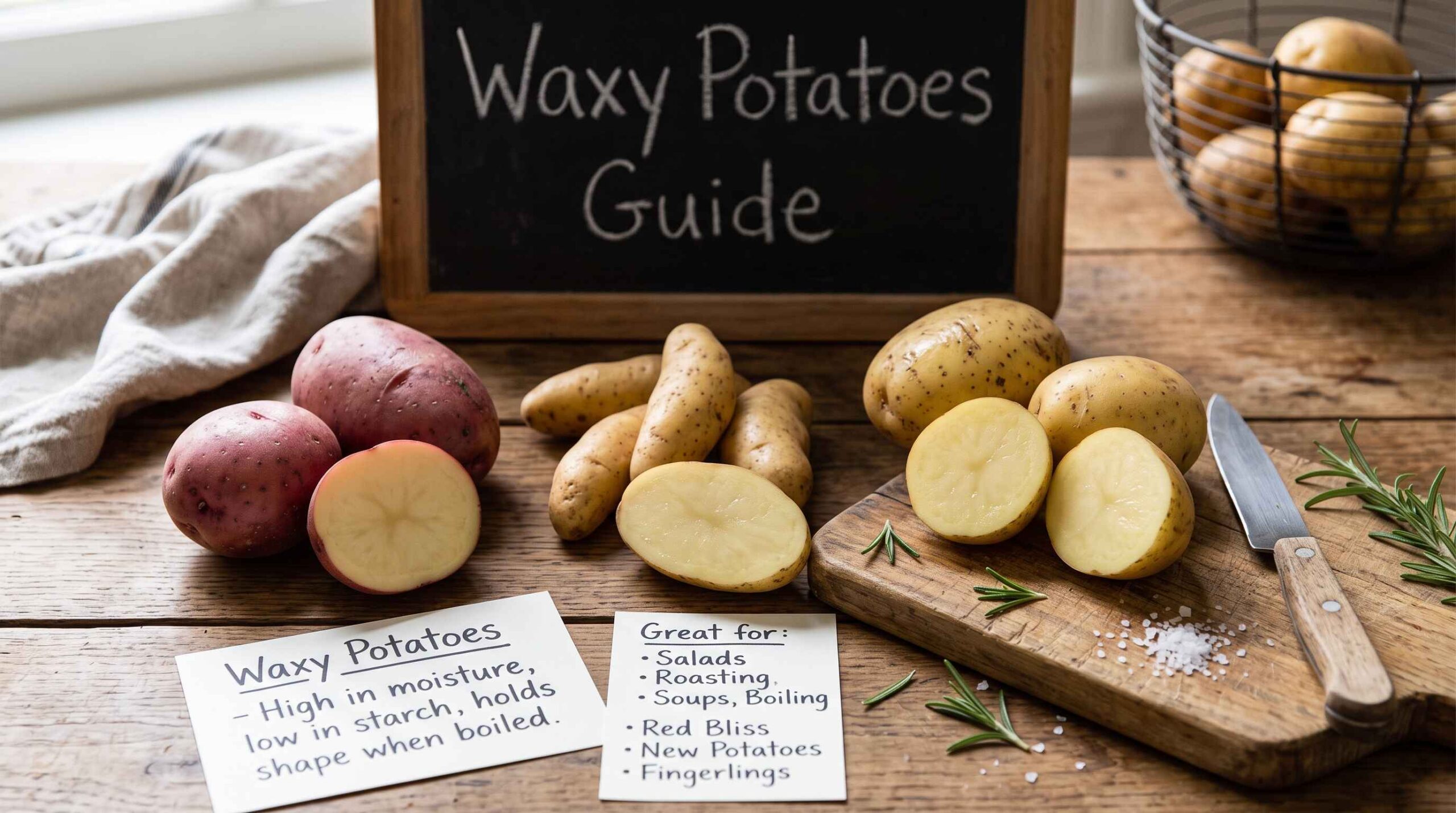
If you’ve ever made a potato salad that turned to mush, the problem probably wasn’t your recipe — it was your potatoes. Waxy potatoes are a category of potato known for their thin skin, smooth texture, and low starch content. Unlike their starchy cousins, waxy potatoes hold their shape when cooked, which makes them a favorite for dishes where you want distinct, intact pieces rather than a soft, crumbly result. Popular examples include red potatoes, new potatoes, and fingerlings. Because of their firm texture, waxy potatoes are often the first choice recommended by chefs for recipes that need structure rather than fluffiness.
How Waxy Potatoes Differ From Starchy Potatoes
The easiest way to understand waxy potatoes is to compare them with starchy varieties like russets. Starchy potatoes break down easily when boiled, which is great for mashing or baking, but terrible if you want clean, defined pieces. Waxy potatoes, on the other hand, contain more moisture and less starch, so their cell walls stay intact during cooking. This is why waxy potatoes are the go-to choice for potato salads, gratins, and soups where texture matters. According to this detailed explanation from The Spruce Eats, the starch-to-moisture ratio is really what determines whether a potato is “waxy” or “starchy,” rather than the color or size of the potato itself.
Why Waxy Potatoes Hold Their Shape So Well
The science behind why waxy potatoes stay firm comes down to their cell structure. Starchy potatoes have loosely packed starch granules that swell and burst with heat, causing the potato to fall apart. Waxy potatoes have more tightly packed cells and a gel-like pectin structure that resists breaking down, even after extended boiling. This is exactly why waxy potatoes are so reliable in dishes that go through multiple stages of cooking, such as a stew that simmers for an hour or a salad that’s boiled and then tossed while still warm. If you want a potato that behaves predictably no matter how long it’s on the stove, waxy potatoes are usually the safer bet.
Best Ways to Cook Waxy Potatoes
Because waxy potatoes don’t absorb much liquid, they’re ideal for boiling, steaming, roasting, and pan-frying. When boiling, you can skip the usual starchy-potato trick of starting in cold water and gentle simmering — waxy potatoes are far more forgiving. For roasting, their lower starch content means they develop a slightly different texture than a russet would: less fluffy on the inside, but with a pleasant, slightly chewy bite. Many home cooks find that waxy potatoes are perfect for sheet-pan dinners because they hold their shape next to other vegetables without turning to paste. If you’re short on prep time, a quick rinse and a halve-or-quarter cut is usually all waxy potatoes need before they go into the oven or pot.
Waxy Potatoes in Potato Salad
Potato salad is probably the single dish most associated with waxy potatoes, and for good reason. A good potato salad depends on potato pieces that stay distinct after boiling and tossing with dressing. Starchy potatoes tend to absorb dressing unevenly and can turn gummy, while waxy potatoes soak up just enough flavor while keeping their structure. For the best results, boil waxy potatoes whole with the skin on, then cut them once they’ve cooled slightly — this helps prevent the pieces from falling apart during slicing. A touch of vinegar or lemon juice added while the potatoes are still warm also helps the flavor penetrate without compromising the texture that makes waxy potatoes so useful for this dish.
Waxy Potatoes vs. All-Purpose Potatoes
Some potatoes, like Yukon Golds, fall into a middle category often called “all-purpose,” and people sometimes confuse them with true waxy potatoes. While Yukon Golds have a creamier texture than a classic waxy variety, they still hold up reasonably well in boiling and roasting, though not as reliably as a red potato or fingerling. If a recipe specifically calls for waxy potatoes, it’s generally best to stick with the real thing rather than substitute an all-purpose variety, especially for salads or dishes with a long cook time. Getting this right is a small detail, but it’s often the difference between a dish that looks restaurant-quality and one that ends up looking more like mashed potatoes by accident.
Storing Waxy Potatoes for Freshness
Waxy potatoes generally have a shorter shelf life than starchy potatoes because of their higher moisture content. To keep waxy potatoes fresh, store them in a cool, dark, well-ventilated place — never in the refrigerator, since cold temperatures can convert their starches to sugar and affect both flavor and texture. A paper bag or a basket works far better than a sealed plastic bag, which traps moisture and encourages sprouting. Properly stored, waxy potatoes should last two to three weeks on the counter in good conditions, though it’s best to check them periodically for soft spots.
Final Thoughts on Cooking With Waxy Potatoes
Understanding the difference between waxy potatoes and starchy varieties can genuinely change how your meals turn out. Whether you’re making a simple roasted side dish, a hearty soup, or a classic potato salad, choosing waxy potatoes gives you more control over texture and consistency. Once you get comfortable identifying and cooking with waxy potatoes, you’ll likely find yourself reaching for them more often than not — they’re forgiving, versatile, and dependable in a way that starchy potatoes simply aren’t. For more kitchen basics and ingredient breakdowns like this one, check out the recipes and food guides section on our site.