There’s nothing quite like walking into a room and seeing a vase of fresh flowers on the table. But within a few days, that same bouquet can start drooping, browning, and losing its charm. If you’ve ever wondered how to keep cut flowers fresh for longer than a week, the good news is that it doesn’t take much — just a few small habits that make a big difference. This guide walks you through everything you need to know, from the moment you bring flowers home to the day you finally let them go.
Why Flowers Wilt So Quickly
Once a flower is cut from its plant, it loses its connection to the roots that once fed it water and nutrients. From that point on, the flower is relying entirely on whatever it can draw up through its stem. According to the University of Illinois Extension, the basic needs of fresh-cut flowers are water, food, sanitation, and cool temperatures, and flowers themselves are made up of about 90 percent water. That’s why even a short time out of water, or water that’s gone cloudy with bacteria, can cause a bouquet to go downhill fast. Understanding this is the first step toward learning how to keep cut flowers fresh, because every tip that follows exists to solve one of those four basic needs. illinois
Start With a Clean Vase and Fresh Water
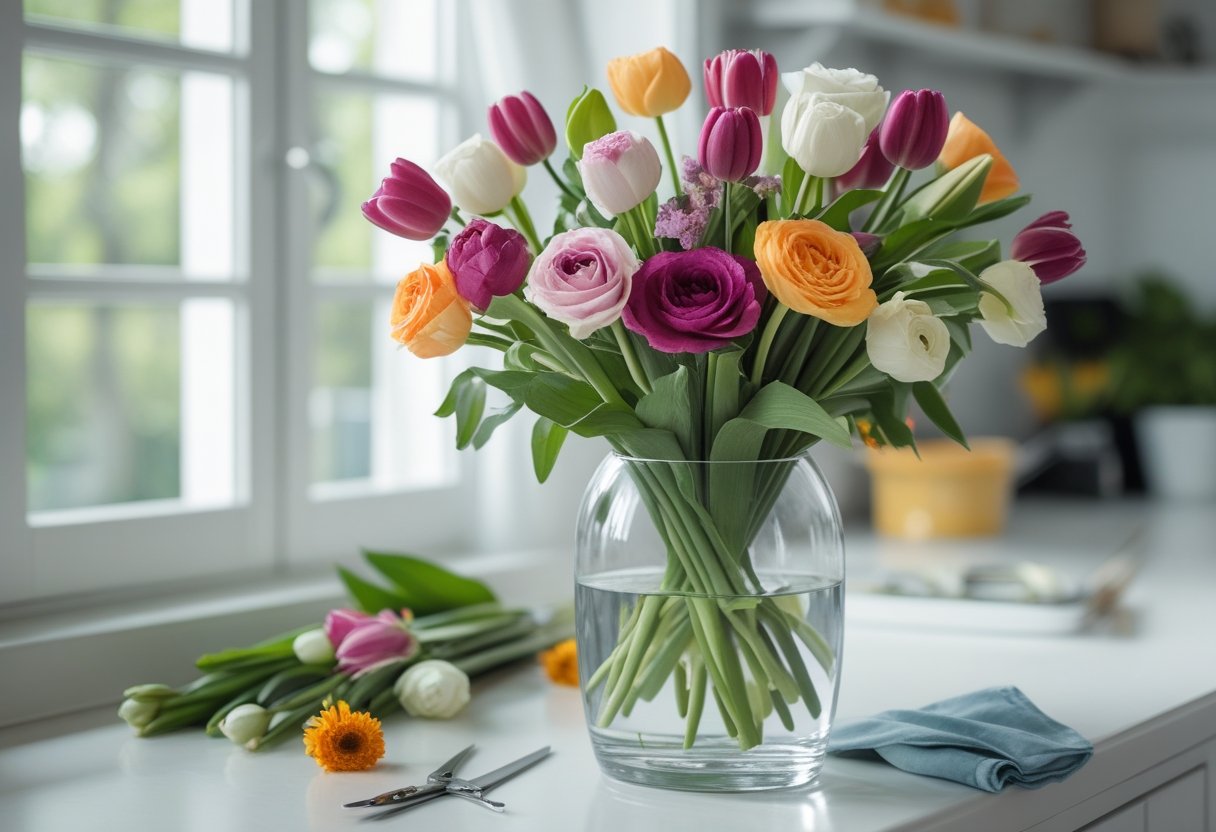
Before you even touch the flowers, wash your vase with warm, soapy water. A vase that still has residue from a previous bouquet is full of bacteria, and that bacteria will clog the stems and shorten the life of your new flowers almost immediately. Fill the clean vase with room-temperature water, and if your flowers came with a small packet of floral preservative, stir it in. That packet contains sugar to feed the flowers and ingredients that slow down bacterial growth, and it’s genuinely one of the easiest ways to learn how to keep cut flowers fresh without doing anything complicated.
Give the Stems a Fresh Cut
This step is easy to skip, but it matters more than almost anything else. Using sharp scissors, shears, or a clean knife, trim about an inch off the bottom of each stem at a slight angle. A fresh cut opens up the stem so it can actually absorb water, since the original cut end often seals itself off or gets clogged during transport. For roses in particular, it helps to cut the stem while it’s held under running water, so no air bubble gets trapped inside and blocks water from moving up. If you only remember one piece of advice on how to keep cut flowers fresh, let it be this: never skip the fresh cut.
Remove Leaves Below the Waterline
Any leaves or foliage that end up sitting under the water will start to decay within a day or two, and that decay feeds the exact bacteria you’re trying to avoid. Take a moment to strip away any leaves that would sit below the waterline before placing the stems in the vase. It’s a small step, but it keeps your water cleaner for much longer and is one of the simplest habits for anyone trying to figure out how to keep cut flowers fresh without constantly refilling the vase.
Choose the Right Spot in Your Home
Where you place your flowers matters almost as much as how you prepare them. The experts at NC State Extension note that cutting stems straight versus at an angle makes little real difference, but keeping flowers away from heat sources and direct conditions that stress them does help them last. In practice, that means avoiding direct sunlight, radiators, heating vents, and the top of the television or any other warm appliance. A cool, bright spot out of direct sun is ideal. Drafts from open windows or air conditioning vents can also dry flowers out faster than you’d expect, so a stable, moderate environment is key to keeping your arrangement looking good. ncsu
Change the Water Regularly
Even with a floral preservative, water doesn’t stay clean forever. Every two to three days, empty the vase completely, rinse it out, and refill it with fresh water and a little more preservative if you have it. While you’re at it, give the stems another small trim, since the bottom of the stem can seal over again after a few days in water. The team at Iowa State University Extension points out that regular water changes are one of the most effective ways to extend the vase life of cut flowers, and this one habit alone can add several extra days to your bouquet’s life. iastate
Remove Wilting Flowers as You Go
Not every stem in a bouquet fades at the same rate. As soon as you notice one flower wilting, browning, or dropping petals, pull it out of the arrangement. A dying flower releases ethylene gas, which can speed up the aging process for the healthy flowers around it. Removing the weak ones as you spot them is a quiet but effective part of learning how to keep cut flowers fresh for as long as possible, since it protects the blooms that still have life left in them.
Skip the Myths
You may have heard that adding an aspirin, a penny, vodka, or a splash of soda to the water will help your flowers last longer. These are common kitchen myths, and while they’re mostly harmless, they don’t actually replace the real factors that matter: clean water, a fresh cut, the right temperature, and regular maintenance. If you’re serious about how to keep cut flowers fresh, it’s better to stick with a proper floral preservative than to rely on folk remedies.
Bringing It All Together
Keeping a bouquet looking vibrant isn’t about one single trick — it’s a handful of small, consistent habits working together. Start with a clean vase, give the stems a fresh cut, keep the leaves out of the water, place the arrangement somewhere cool and bright, and refresh the water every few days. Do these things consistently, and you’ll notice your flowers lasting noticeably longer than if you just dropped them in a vase and forgot about them. That, in short, is how to keep cut flowers fresh — simple care, repeated often, for blooms that stay beautiful as long as possible.