
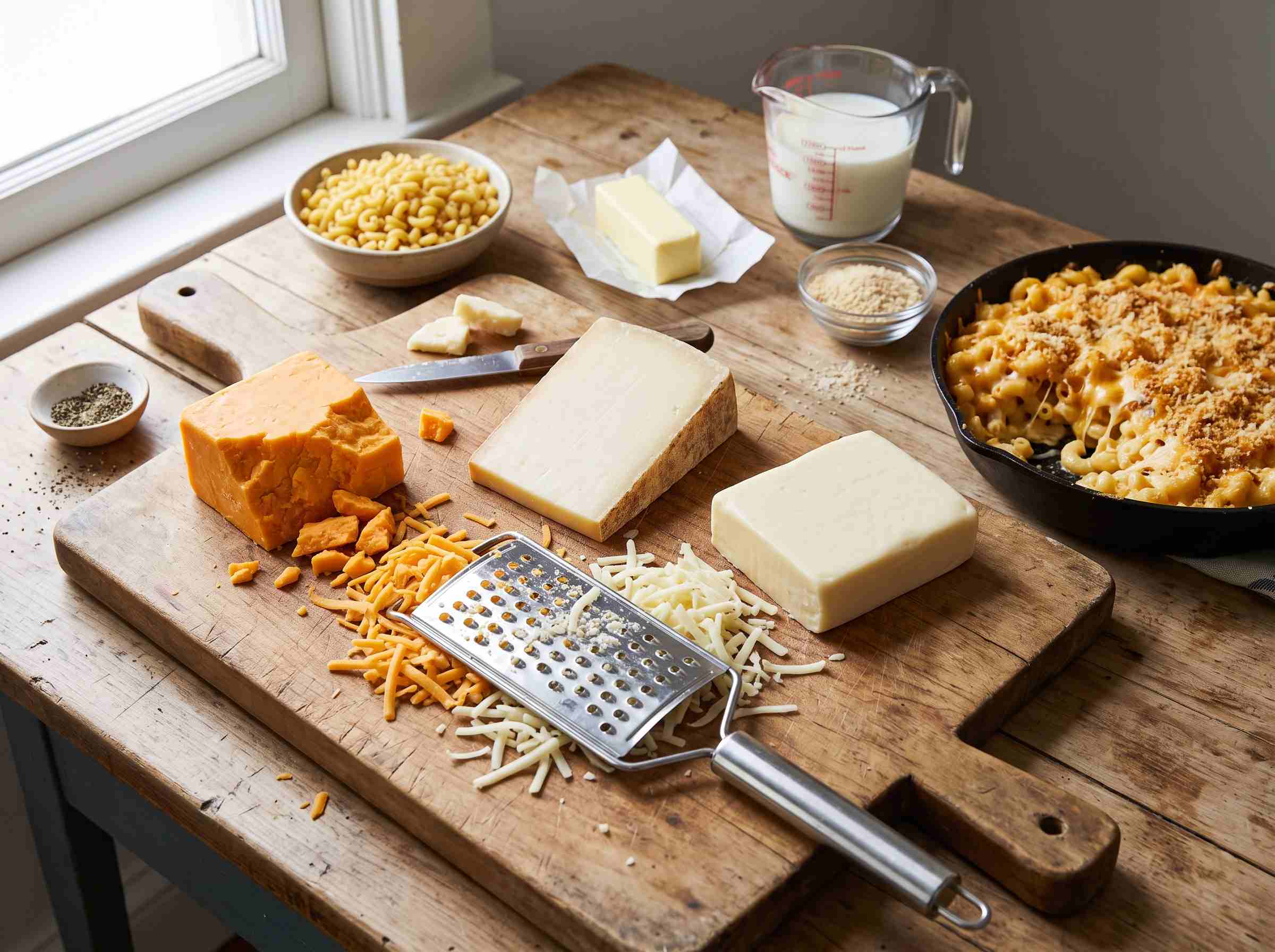
Have you ever pulled a pan of mac and cheese from the oven only to find it grainy or oily? Usually, the problem isn’t your technique. Instead, it’s your cheese. Choosing the best cheese for mac and cheese recipe success is half the battle. The right blend melts smoothly, and it coats every noodle in silky sauce. Let’s break down exactly which cheeses work best.
Why the Best Cheese for Mac and Cheese Recipe Really Matters
Not every cheese melts well. For instance, some turn stringy, while others separate into greasy puddles. Still others lack the flavor to carry a simple dish like this one. Because of these problems, people search for the best cheese for mac and cheese recipe to find a reliable fix. Look for cheeses with good moisture and a balanced fat ratio. They should also bring enough sharpness to stand out against pasta, milk, and butter.
Sharp Cheddar: The Classic Best Cheese for Mac and Cheese Recipe
Most home cooks agree that sharp cheddar is the best cheese for mac and cheese recipe choice. First, it melts beautifully. Second, it brings a bold, tangy flavor. Finally, it gives that golden-orange color everyone associates with the dish. Medium cheddar tastes milder and creamier, whereas extra-sharp brings a stronger bite. Because of this contrast, many recipe developers blend the two. As a result, you get smooth melting and a punch of flavor at the same time. According to Serious Eats’ guide to cheese science, moisture content drives how smoothly a cheese melts, which explains why cheddar performs so well here.
Gruyère and Fontina for a Creamier Mac and Cheese
While cheddar brings the flavor, gruyère and fontina bring the texture. Both cheeses melt exceptionally well, so they’re a favorite when people search for the best cheese for mac and cheese recipe with a restaurant-quality feel. On one hand, gruyère has a nutty, slightly sweet flavor that pairs beautifully with cheddar’s sharpness. On the other hand, fontina adds a stretchy, gooey pull, similar to the cheese-pull photos you see online. However, neither cheese stands out much on its own. Therefore, they work best as supporting players rather than the star.
Combining Cheeses for the Best Mac and Cheese Recipe Results
Here’s a secret most chefs already know: no single cheese earns the title of best cheese for mac and cheese recipe alone. Instead, the magic happens when you combine two or three. For example, try sharp cheddar for flavor, then add gruyère or fontina for meltability. Afterward, finish with a touch of parmesan for a salty, umami kick. Alternatively, Monterey Jack paired with cheddar creates a milder, kid-friendly version that still melts like a dream. Overall, the goal is balance: one cheese for taste, one for texture, and maybe a third for depth.
Cheeses to Avoid in Your Mac and Cheese
Just as important, knowing what to skip matters as much as knowing what to use. For starters, skip pre-shredded bagged cheese, since manufacturers coat it in anti-caking agents that stop it from melting smoothly. Similarly, watch out for low-moisture mozzarella, which works great on pizza but turns stringy in a cheese sauce. Likewise, soft cheeses like brie or camembert taste delicious but don’t hold up well, because they can make your sauce too runny. Therefore, for the best cheese for mac and cheese recipe, stick to firm, aged cheeses and grate them fresh at home.
How to Melt Cheese the Right Way
Even the best cheese for mac and cheese recipe can go wrong with poor technique. To start, always shred your own cheese instead of buying pre-shredded bags, since it melts far more evenly that way. Next, add cheese gradually, keeping the heat low while you stir it into a warm roux-based béchamel sauce. Meanwhile, stir constantly and keep the temperature steady, because this prevents the proteins from breaking down. Otherwise, broken proteins cause that greasy, separated texture nobody wants. For more detail, check Food Network’s mac and cheese tips on building a proper cheese sauce base.
Final Thoughts on Choosing the Best Cheese for Mac and Cheese Recipe
In the end, finding the best cheese for mac and cheese recipe comes down to personal taste. Still, a few rules hold true across the board. First, use freshly grated cheese. Second, combine at least two varieties for balance. Third, avoid anything too soft or too low in moisture. Generally, sharp cheddar forms your flavor backbone, while gruyère, fontina, or Monterey Jack round out the texture. Once you find your favorite blend, you won’t want a single-cheese version again.
Additionally, check out the calculators and recipe tools on TheBDPage for more kitchen help, since they make portioning ingredients and converting measurements easy.